
The use of artificial intelligence is transforming how organizations engage with their customers. AI provides unparalleled efficiencies by increasing speed, precision, and automating complex marketing activities. With the rapid growth of AI development services, businesses are now able to personalize campaigns, predict customer behavior, and optimize strategies in real time.
Table of Contents
What Is AI Marketing?
AI-driven marketing is the methodical application of artificial intelligence to plan, oversee, and streamline advertising campaigns. It predicts market trends, personalizes communications, and automates routine processes to improve efficiency and performance. Today, many businesses rely on a professional digital marketing agency to implement AI-powered strategies effectively, ensuring that campaigns are data-driven and results-oriented.
Although this approach offers significant benefits, underlying risks still exist. Over-dependence on automation, data privacy concerns, and algorithmic bias can create serious challenges if not carefully managed. A thorough understanding of how AI marketing systems function enables practitioners — whether in-house teams or a digital marketing agency — to use technology wisely, maintaining strategic control rather than becoming overly dependent on automated systems.
Definition and Key Uses
AI marketing. This is where advanced computerised tools are used to analyse consumer data in order to optimise promotion efforts. This allows the firms to make informed decisions, save precious time, and accurately address the right demographic by giving them a greater understanding. Automation and analytics allow organisations to generate more salient campaigns, increase their performance metrics, and manage their marketing duties more effectively.
- Personalize customer messages at scale
- Automate repetitive tasks like email campaigns
- Predict customer behavior and trends
- Optimize ad performance and spending efficiently
Examples of AI in Marketing
Many business ventures already utilize AI in their daily marketing activities to enhance speed and accuracy. Through the automation of routine tasks, buyer behaviour, and content customisation, AI can help a marketing team reduce staff work and reinforce accuracy, uniformity, and campaign effectiveness in a variety of digital resources.
- Chatbots for instant customer support
- Personalized product recommendations on e-commerce sites
- AI tools that write social media posts or emails
- Ad targeting based on customer behavior and preferences
Why Understanding Risks Matters
AI is potent, but not fallible. Devoid of awareness of possible risks, companies can face serious challenges that undermine trust and business productivity. These include ethical concerns, privacy invasion, misleading information, and cut-off creativity. In the knowledge of these dangers, companies can use AI wisely, avoid expensive mistakes, and preserve reputational capital.
- Loss of customer trust from privacy issues
- Ethical problems like biased decisions
- Misleading or inaccurate marketing outputs
- Reduced creativity and over–reliance on automation
Major AI Marketing Risks

AI is both fast and efficient, but at the same time, it presents severe risks. These obstacles may harm consumer confidence, reduce innovation, and negatively affect brand reputation. Understanding these barriers will help organisations implement AI in a responsible manner and avoid traps that may ruin relationships, privacy, or morality.
Loss of Authentic Human Touch
AI can produce letters and campaigns to be done automatically, but it cannot replace the warm human contact. The overreliance on AI may lead to the creation of sterile and sterile communications. Customers might not see their views of emotional depth, compassion, and sincerity fulfilled. Such exaggerated over–automation can worsen the relationship quality, decrease the level of engagement, and make brand communication apathetic and fragmented.
- Generic emails that lack personal warmth
- Social media posts that seem automated
- Customer interactions without empathy
- Loss of brand personality in campaigns
Ethical Concerns in AI Marketing
AI does not work without judgment: it usually reflects the bias that is embedded in the training data. This, without being regulated, will lead to discriminatory or harmful marketing results. The companies should also be cautious of avoiding any exclusionary practice, any misleading communication, or any other alienation of certain groups of participants because such situations will compromise trust and brand credibility.
- Biased ad targeting that excludes certain groups
- Promoting harmful stereotypes in campaigns
- Using AI decisions without human review
- Transparency issues in AI–driven messaging
Data Privacy AI Challenges
AI is an extremely data–driven product; that is, it uses consumer data to tailor and optimize campaigns, which poses significant privacy risks. This information can be mismanaged or mishandled, and this will break the trust of consumers and cause legal issues. To avoid the abuse of data, prevent breaches, and be in line with privacy laws, organisations need to govern the information carefully.
- Collecting data without proper consent
- Storing sensitive information insecurely
- Sharing customer data without transparency
- Non-compliance with GDPR, CCPA, or other privacy laws
Common AI Problems in Marketing
AI may be powerful, but it is still flawed. Even highly sophisticated systems are not always accurate and generate errors that can be echoed in the campaigns. Having misguided results up to the imaginative constraints, the awareness of these widespread challenges helps companies to avoid mistakes prior to and maintain credibility with their viewers.
Accuracy and Misinformation Issues
AI sometimes produces content that is inaccurate or misleading. Relying blindly on AI can damage credibility. Examples include:
- Incorrect product information in marketing messages
- Misleading headlines or social media posts
- Overstated claims about products or services
- Errors in automated customer communications
Homogenization and Loss of Creativity
AI has habitual content creation and recognition, and duplicates of existing patterns,s which can make promotional content monotonous or generic over time. Brand differentiation and originality are likely to be diluted when several actors use similar AI solutions, where the message, tonality, and form blend. This loss of uniqueness may reduce the involvement of the audience and the competitiveness of a brand.
- Marketing materials that all look similar
- Limited originality in social media posts
- Reduced storytelling creativity
- Difficulty standing out in competitive markets
Over-Optimization and Short-Sighted Metrics
AI tends to focus on immediate numbers, like clicks or conversions, sometimes ignoring long-term goals. Over-reliance on metrics can backfire. Examples include:
- Sacrificing brand loyalty for short-term clicks
- Ignoring customer experience in favor of optimization
- Narrow focus on A/B testing results
- Missing bigger strategic marketing objectives
Legal, Compliance, and IP Risks
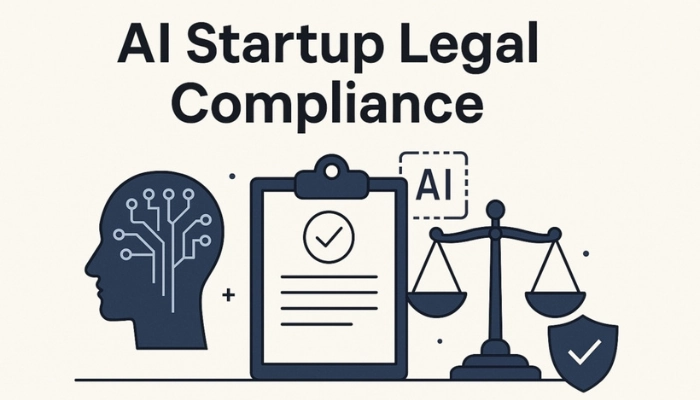
Unless handled with care, the practice of AI marketing can create legal and regulatory issues. The wrong use of AI-generated material or customer information may result in lawsuits or fines. Becoming aware of these risks will help companies to care about themselves and maintain confidence when using AI in a responsible manner.
Copyright and Intellectual Property Issues
AI–generated content can create confusion around ownership and rights. Companies must be careful to avoid infringement. Examples include:
- Using AI to copy existing content without permission
- Confusion over who owns AI–created designs or copy
- Licensing issues for AI–generated images or music
- Potential disputes with creators over intellectual property
Regulatory and Compliance Challenges
Businesses must follow privacy laws and marketing regulations when using AI. Ignoring these can lead to fines and loss of trust. Key points include:
- Compliance with GDPR, CCPA, and other privacy laws
- Transparent collection and use of customer data
- Following ethical marketing standards
- Ensuring AI tools meet regulatory guidelines
Case Studies of AI Marketing Failures
Real–world examples show how AI mistakes can harm brands. Learning from these cases helps prevent repetition. Examples include:
- Ads or campaigns generating public backlash
- AI content producing offensive or inaccurate messages
- Misuse of customer data leading to fines
- Loss of brand reputation due to automated errors
How to Mitigate AI Marketing Risks
AI may be very potent, and a critical approach requires comprehensive planning to utilise it ethically. The firms may reduce risks through the combination of technology with good morals, human decision-making, and strict privacy. Through proactive approaches, organisations will be guaranteed that AI marketing does not affect performance in a negative manner.
Establishing Ethical Standards
Set clear rules for AI use to prevent bias and unfair practices. Ethical standards guide decision–making and protect your brand. Steps include:
- Define acceptable AI behavior in marketing campaigns
- Avoid biased targeting or exclusion of groups
- Maintain transparency in AI–generated content
- Regularly review AI decisions for fairness
Human Oversight and Creative Checks
AI should assist, not replace, human judgment. People ensure content is accurate, creative, and empathetic. Best practices include:
- Review AI–generated content before publishing
- Ensure campaigns align with brand voice and values
- Make final decisions on sensitive messages
- Use AI suggestions as a guide, not a replacement
Privacy-First Data Policies
Protecting customer data is essential when using AI. Clear policies build trust and avoid legal issues. Key practices include:
- Obtain explicit consent before collecting data
- Store data securely and limit access
- Be transparent about how AI uses data
- Comply with GDPR, CCPA, and other privacy laws
Balancing AI Benefits and Risks
The marketing benefits of AI are enormous; however, there is a strong necessity to be cautious when using it. Businesses are able to attain a greater efficiency and understanding, and maintain morale, creative energy, and the confidence of the stakeholders. Finding the best balance will make AI support the goals of the institutions, but will also avoid the traditional pitfalls that destroy the relations with the customers or the reputation of the company.
Maximizing Efficiency Without Compromise
AI can save time and improve results, but it should not replace thoughtful decision-making. Ways to balance efficiency include:
- Automate repetitive tasks but keep human checks
- Use AI insights to guide strategy, not dictate it
- Ensure campaigns maintain empathy and authenticity
- Avoid shortcuts that compromise long-term goals
Responsible AI Use in Strategy
Incorporating AI responsibly strengthens marketing without creating risk. Best practices include:
- Set clear ethical boundaries for AI applications
- Use human oversight for sensitive campaigns
- Regularly audit AI tools for fairness and accuracy
- Align AI decisions with brand values and customer trust
Lessons from Real-World Campaigns
Learning from past mistakes helps marketers avoid repeating errors. Key takeaways include:
- Test AI campaigns in small, controlled ways before scaling
- Monitor outcomes closely for unexpected results
- Be ready to intervene if AI outputs are biased or inaccurate
- Maintain transparency with your audience about AI use
GET IN TOUCH
Get 1 Free Consultation Call
Conclusion
AI marketing has a transformative potential for businesses, and its inattention can be costlier in terms of both finances and reputation. Enhance ethical values, human control, and privacy to apply AI in a responsible way. Take a step now to audit AI artefacts, implement consistent policies, and ensure intelligent and trustworthy marketing operations.
FAQS!
What are the major risks that AI marketing poses to organisations?
The main threats are the violation of data privacy, ethical issues, and loss of human contact. Trust and brand reputation may be affected negatively when AI is used without regulation.
What is the point of ethics in AI-based marketing?
The reason why ethics is important is that AI systems have the ability to promote the biases present in their inputs. Ethical marketing upholds fair treatment of consumers and clear and transparent decision-making.
What effect does AI have on the privacy of data in marketing?
Personalisation on AI demands enormous volumes of consumer data. In the absence of express permission and strong security, legal consequences and the invasion of privacy can follow.
Will the human marketer be replaced by AI?
No, AI will never be able to replace human marketers completely. It enhances efficiency, creativity, empathy, and ethical judgement, but these latter are inherently human.
What are the pitfalls in AI marketing campaigns?
Such pitfalls as deceptive content, redundant messages, and an excessively high focus on short-term analytics are some of them, all of which sabotage credibility and value over time.
What can the firms do to reduce the risks of AI marketing?
Risk can be minimized by having clear ethical guidelines, human review, and strict policies regarding the protection of data. Considerable AI responsibility balances trust and creativity with automation.
Is AI marketing worth risking, even though it has risks?
In fact, AI marketing can be useful if it is used in a responsible way. Having proper controls, AI helps to increase efficiency without harming ethics, privacy, and brand authenticity.