
Pakistan’s E-Commerce Market in 2026: The SEO Opportunity
Pakistan’s e-commerce market reached $6.7 billion USD in 2025 and is projected to cross $9.3 billion by 2027 — growing at 22% annually according to Pakistan’s State Bank E-Commerce Report. With 42 million active online shoppers and mobile commerce accounting for 78% of transactions, Pakistan’s digital retail landscape represents one of Asia’s fastest-growing e-commerce opportunities.
Yet the majority of Pakistani e-commerce businesses — whether operating direct-to-consumer (D2C) stores on WooCommerce, Shopify, or custom platforms — are almost entirely dependent on paid advertising (Facebook Ads, Google Shopping) and marketplace commissions (Daraz, Telemart) for visibility. Organic search — the most sustainable, highest-ROI, and most scalable e-commerce traffic source — remains dramatically underutilised, which is exactly why E-Commerce SEO Tips for Pakistan are becoming increasingly important for long-term growth and independence from paid channels.
The data is unambiguous: Clickmasters’ analysis of 120 Pakistani e-commerce brands shows that the top 10% of organic traffic earners generate 4.2x more revenue per visitor than paid traffic and have customer acquisition costs 71% lower than brands relying primarily on Facebook Ads. E-commerce SEO is not a nice-to-have — it is the difference between a business that scales profitably and one that burns ad budget faster than it grows.
This guide delivers the complete E-Commerce SEO blueprint for Pakistani online retailers — from category architecture and URL structure through product page optimisation, schema markup implementation, Daraz SEO strategy, and the unique technical challenges facing Pakistani e-commerce platforms.
Clickmasters E-Commerce SEO Credentials
Clickmasters has implemented e-commerce SEO strategies for 120+ Pakistani online retailers across fashion, electronics, health & beauty, home goods, food, and industrial supplies. Our average client result: 280% organic traffic increase and 190% organic revenue growth within 12 months. We have managed e-commerce SEO campaigns ranging from 50-product boutique stores to 15,000+ SKU enterprise platforms.Understanding Pakistan’s E-Commerce Search Landscape
Before implementing any e-commerce SEO strategy, Pakistani business owners must understand the unique search behaviour patterns of Pakistani online shoppers — patterns that differ significantly from UK, US, or even Indian e-commerce markets.
| Search pattern | Pakistani Context | SEO Implication |
| Brand name searches | Pakistani shoppers frequently search brand name + ‘price in Pakistan’ or ‘original vs fake’ | Optimise product titles for ‘price in Pakistan’ modifier. Create authenticity/original product content. |
| Comparison queries | ‘Daraz vs direct site price’ searches are common — consumers check both | Price match signals in meta descriptions. ‘Buy direct from brand’ content. |
| Mobile search dominance | 82% of e-commerce searches on mobile. Urdu search on mobile growing rapidly. | Mobile-first page design. Roman Urdu product titles in metadata. |
| Cash-on-delivery intent | COD preference drives ‘COD available’ as a search qualifier for many queries | Include ‘Cash on Delivery available across Pakistan’ in product descriptions and schema. |
| City-level delivery intent | ‘same day delivery Karachi,’ ‘deliver to Lahore in 2 days’ — delivery as search filter | Delivery location landing pages. City-specific delivery promise content. |
| Size/spec searches | ‘Shirt size XL Pakistan,’ ‘Samsung 256GB price Pakistan’ — specific attributes | Filterable attributes in product schema. Attribute-rich product titles. |
PART 1: E-COMMERCE SITE ARCHITECTURE
E-Commerce Site Architecture: The Foundation of Product Rankings
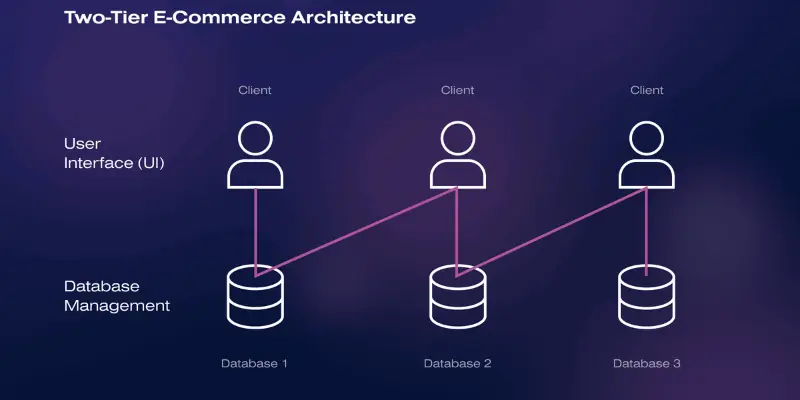
E-commerce site architecture — how your store’s URLs, categories, subcategories, and product pages are structured and interlinked — is the most impactful technical SEO decision for an e-commerce platform. A well-architected e-commerce site distributes PageRank efficiently across all product pages, ensures complete crawl coverage, and clearly communicates product hierarchy to Google’s algorithms.
The Optimal URL Architecture for Pakistani E-Commerce
The optimal URL structure follows a flat, logical hierarchy:
⦁ Homepage: yourdomain.pk
⦁ Category: yourdomain.pk/category-name/
⦁ Subcategory: yourdomain.pk/category-name/subcategory-name/
⦁ Product: yourdomain.pk/category-name/product-name/
URL rules for Pakistani e-commerce: (a) All lowercase, (b) Hyphens between words — never underscores, (c) Include the primary keyword in the product URL slug (‘samsung-galaxy-s25-ultra-256gb’ not ‘product-SKU-12847’), (d) Keep URLs under 75 characters, (e) No session IDs, tracking parameters, or dynamic characters in crawlable URLs.
Category Page Architecture: The Most Neglected E-Commerce SEO Asset
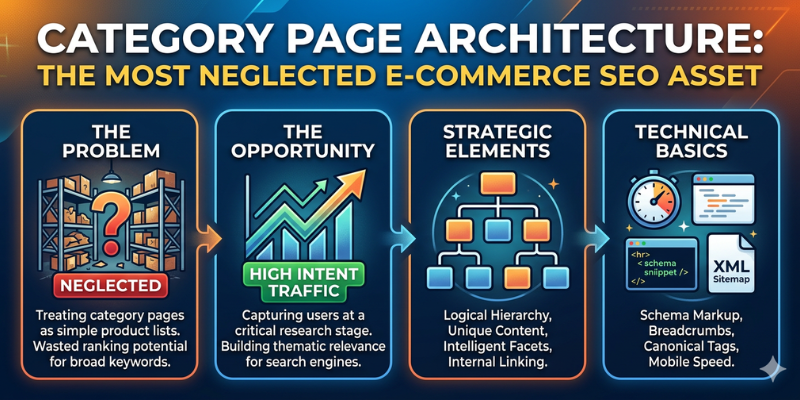
Category pages are the highest-traffic, highest-converting pages on most e-commerce sites — yet Pakistani online stores consistently treat them as simple product listing grids with no editorial content. This is a critical SEO mistake.
Google cannot rank a page without content. A category page that is purely a grid of product images has no keyword relevance signals, no semantic context, and no reason for Google to trust it over a competitor with editorial content. The solution: category page editorial content.
Optimal category page structure for Pakistani e-commerce:
- Category H1: Keyword-rich, descriptive heading. ‘Women’s Lawn Suits — Summer Collection 2026’ not ‘Suits.’
- Editorial introduction (150–250 words): Describe the category, its key features, current trends, and why your store is the best source. Include 3–5 primary keywords naturally.
- Filterable product grid: Filterable by price, brand, size, colour, rating. Filters should use JavaScript filtering — not URL parameters that create duplicate pages.
- Bottom editorial content (200–400 words): Style guides, buying advice, frequently asked questions about the category. This content adds keyword depth without disrupting the shopping UI.
- Internal links to subcategories and related categories: Builds internal link equity distribution.
- Category-specific breadcrumbs with BreadcrumbList schema
Handling Faceted Navigation: Pakistan’s #1 E-Commerce Technical SEO Problem
Faceted navigation — the filter sidebars that allow customers to filter by brand, price, colour, size, and other attributes — is the most common source of technical SEO disaster on Pakistani e-commerce sites. When implemented naively, faceted navigation generates tens of thousands of near-duplicate URLs that exhaust Googlebot’s crawl budget and dilute your site’s ranking authority across hundreds of useless pages.
Pakistani e-commerce platforms most affected: WooCommerce with AJAX filters that generate URL parameters, custom Magento or Laravel stores with filterable attributes, and Shopify stores with collection filters.
| Faceted Navigation Approach | Recommendation for Pakistani E-Commerce |
| JavaScript filtering (no URL change) | Best practice for most filter combinations. Filters update the page content without creating new URLs. Googlebot sees one canonical URL. |
| URL parameter-based filtering | Acceptable if Google Search Console parameter handling is configured. Risk: parameter explosion. Never crawl: ?sort=, ?page=, ?color=, ?size= without canonical tags. |
| Canonical tags on filtered pages | Essential safety net. Every filtered page canonical to the base category URL. Prevents index pollution even if parameter pages are crawled. |
| Noindex on filter combinations | Safe fallback. Noindex + follow on filter combination pages. They pass link equity but don’t dilute the index. |
| Dedicated subcategory pages | Best for high-search-volume attribute combinations. ‘Blue Lawn Suits Pakistan’ with 5,000 monthly searches deserves a real, indexable page. |
PART 2: PRODUCT PAGE OPTIMISATION
Product Page SEO: Ranking Individual Products on Google
Product pages are the conversion engine of your e-commerce store and the organic search entry point for high-intent purchase queries. A user searching ‘buy Galaxy S25 Ultra 256GB Karachi’ is ready to purchase — they just need the right product page to appear. Ranking for these high-intent product queries drives the highest-quality e-commerce traffic available from organic search.
The Anatomy of a High-Ranking Pakistani E-Commerce Product Page
- Product Title Optimisation
Product titles serve two masters: the customer (must be readable and compelling) and the search engine (must contain ranking keywords). The Clickmasters product title formula for Pakistani e-commerce:
[Brand Name] + [Product Type] + [Key Spec/Variant] + [Key Differentiator] — [Optional City/Availability]
Example: ‘Samsung Galaxy S25 Ultra 256GB Titanium Black — Official Samsung Pakistan Warranty | PTA Approved’
Avoid: purely technical titles (‘SKU-SM-S928-256-BK’), truncated titles (‘Samsung S25’), or keyword-stuffed titles (‘Best Samsung Galaxy S25 Ultra Buy Online Pakistan Cheap Price Free Delivery’). - Product Description: Dual Optimisation for Users and Search Engines
Pakistani e-commerce product descriptions are overwhelmingly copied from supplier catalogues or manufacturer spec sheets — producing thousands of near-identical product descriptions that provide zero SEO value. Original, comprehensive product descriptions are a significant competitive differentiator.
The optimal product description for Pakistani e-commerce (500–800 words for anchor products, 200–400 for SKU variants): - Opening paragraph: 2–4 sentences describing the product’s core value proposition and primary use case. Include main keyword.
- Key features section: 5–8 bullet points covering technical specifications, materials, dimensions, and unique selling points.
- Use case content: 1–2 paragraphs describing who the product is for and how it solves their problem. Includes semantic keywords and entity mentions.
- Pakistan-specific context: Delivery timeframe, warranty type (official Pakistan warranty vs. PTA compliance for phones, original vs. compatible for accessories), COD availability.
- Comparison mentions: ‘Compared to [competing product], this model offers…’ — targets comparison search intent.
- Product Images: SEO Value Beyond ALT Tags
Pakistani e-commerce brands consistently underutilise product image SEO. Image optimisation goes beyond adding keyword-rich ALT text:
⦁ File names: Rename images before uploading — ‘samsung-galaxy-s25-ultra-titanium-black-front.webp’ not ‘IMG_4872.jpg’
⦁ ALT text: Descriptive, unique, keyword-inclusive but natural — ‘Samsung Galaxy S25 Ultra 256GB Titanium Black — Front View’ for main image
⦁ Image sitemaps: Include product images in your XML sitemap. Google Image Search is a significant traffic source for fashion, food, and lifestyle products in Pakistan.
⦁ Multiple angles: 5–8 product images per product — front, back, detail, lifestyle, scale reference, packaging. More images signal product completeness to Google’s crawlers.
⦁ Format: WebP or AVIF. Maximum 200KB per product image. Lazy load below-fold images. - User-Generated Content: Reviews as SEO Amplifiers
Product reviews are the most valuable SEO content on e-commerce sites because they contain natural language that exactly mirrors the search queries real customers use. A product page with 50 genuine customer reviews contains hundreds of keyword variations organically — keywords that keyword research tools never reveal but that real buyers actually type.
Pakistani e-commerce review acquisition strategy: (a) Post-delivery SMS/WhatsApp review request (highest conversion: 3–5 days after delivery confirmation), (b) Email sequence for registered customers, (c) Loyalty points for verified purchase reviews, (d) Review reminder on account dashboard.
Product Schema Markup: The Technical SEO Layer That Transforms Rankings
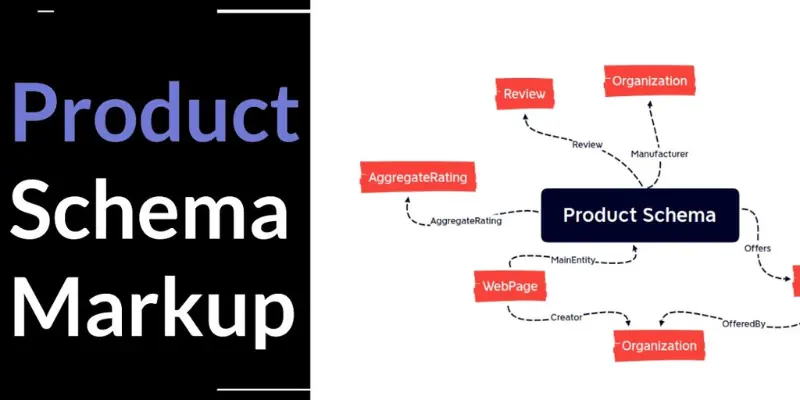
Product schema is the single highest-impact technical implementation for Pakistani e-commerce SEO. Pages with complete Product schema consistently outrank schema-less competitors by 1–4 positions for the same queries, and are exclusively eligible for Google Shopping rich results — the image-with-price-and-rating format that appears at the top of product search results.
Complete Product schema for Pakistani e-commerce must include:
⦁ @type: ‘Product’
⦁ name: Exact product title matching H1
⦁ image: Array of all product image URLs (minimum 3)
⦁ description: Product description text (first 300 characters minimum)
⦁ brand: @type ‘Brand’ with brand name
⦁ sku: Your internal SKU code
⦁ mpn: Manufacturer Part Number where available
⦁ offers: @type ‘Offer’ with price (PKR), priceCurrency ‘PKR’, availability (‘InStock’ or ‘OutOfStock’), url, seller, priceValidUntil, hasMerchantReturnPolicy, shippingDetails
⦁ aggregateRating: @type ‘AggregateRating’ with ratingValue, reviewCount
⦁ review: Array of @type ‘Review’ objects for featured reviews
Critical: Keep Product Schema Prices Current
Google’s structured data policies require that Product schema prices match the prices displayed on the page. Stale or inaccurate prices in Product schema trigger a ‘Misrepresentation’ manual action — a severe Google penalty that removes your products from all rich results and Shopping listings. Use dynamic schema generation (via your CMS or a schema plugin like Yoast WooCommerce SEO or RankMath’s WooCommerce schema) that automatically syncs with live product prices.
PART 3: DARAZ SEO vs. OWN-SITE SEO STRATEGY
Daraz SEO vs. Own-Site SEO: The Strategic Decision Every Pakistani E-Commerce Business Must Make
The most important strategic question for Pakistani e-commerce businesses is: should I invest in Daraz marketplace SEO, own-site organic SEO, or both? This question has no universal answer — it depends on your product category, brand maturity, margin structure, and growth objectives.
Dimension Daraz Marketplace SEO Own-Site Organic SEO
| Dimension | Daraz Marketplace SEO | Own-Site Organic SEO |
| Discovery traffic | Immediate access to 30M+ Daraz users. Fast initial visibility. | Builds gradually. Months to significant traffic. High long-term ROI. |
| Competition | Competing against thousands of sellers in the same marketplace. Price competition intense. | Competing against websites. Quality and SEO quality determine rankings. |
| Commission cost | 5–15% per transaction across most categories. | Zero per-transaction cost once organic traffic is earned. |
| Brand building | Limited. Customers see ‘Daraz’ more prominently than your brand. | Full brand ownership. Customer data. Repeat purchase control. |
| SEO control | Limited. Daraz algorithm controlled by Daraz. | Full control of technical SEO, content, and schema. |
| Customer data | Daraz owns customer data. No remarketing capability. | Own customer data. Email, WhatsApp, and social remarketing possible. |
| Ideal for | New brands, commodity products, price-competitive categories. | Brand-differentiated products, premium positioning, D2C strategy. |
The Clickmasters Hybrid Strategy: Daraz + Own-Site
For most Pakistani e-commerce businesses at growth stage, the optimal strategy is a staged hybrid: use Daraz for initial discovery and volume while simultaneously building own-site SEO authority that eventually provides a direct, commission-free channel for the majority of sales.
- Phase 1 (Months 1–6): Daraz-first. Establish product listings, earn reviews, validate pricing and messaging. Simultaneously launch own-site with technical SEO foundation.
- Phase 2 (Months 7–12): Parallel growth. Scale both Daraz presence and own-site organic. Incentivise Daraz buyers to purchase direct (exclusive bundles, loyalty programme, WhatsApp community).
- Phase 3 (Month 13+): Own-site dominance for hero products. Use Daraz for clearance, new product launches, and volume categories where margins support commission.
Daraz Marketplace SEO: Ranking Your Products Within Daraz
Daraz’s internal search algorithm is separate from Google’s — it uses its own ranking factors to determine which products appear first in Daraz search results. Clickmasters digital marketing agency Daraz SEO analysis identifies six primary ranking factors within the Daraz marketplace:
- Factor 1: Listing completeness score: Daraz assigns a completeness score to every product listing. Listings at 100% completeness (all attributes filled, high-quality images, full descriptions) rank significantly higher than incomplete listings.
- Factor 2: Seller rating and response rate: Daraz’s algorithm prioritises sellers with high ratings (4.5+ stars), fast response times (under 2 hours), and low dispute rates.
- Factor 3: Product keyword optimisation: Daraz’s search uses TF-IDF style keyword matching. Product titles and descriptions must include the exact keywords buyers use in Daraz search.
- Factor 4: Sales velocity and conversion rate: Products with higher sales volume and click-to-purchase rates rank higher — a positive feedback loop that rewards initial promotional investment.
- Factor 5: Price competitiveness: Daraz’s algorithm has price competitiveness signals. Significantly above-market pricing suppresses rankings even for high-rated sellers.
- Factor 6: Fulfilment method: Daraz Fulfilled (DF) listings — where Daraz handles warehousing and shipping — receive algorithmic ranking preference over seller-fulfilled listings.
PART 4: TECHNICAL E-COMMERCE SEO FOR PAKISTAN

Technical SEO Challenges Specific to Pakistani E-Commerce Platforms
Pakistani e-commerce platforms face a unique set of technical SEO challenges that require specific solutions. The most common Pakistani e-commerce platforms — WooCommerce on shared hosting, custom Laravel/PHP stores, and Shopify with Pakistani payment gateway integrations — each have platform-specific technical issues.
WooCommerce SEO for Pakistani Stores (The Most Common Platform)
| WooCommerce | Issue Solution for Pakistani Stores |
| Product URL structure defaults | Change Woo permalink base from /product/ to /[category]/ in Settings > Permalinks > Shop Base. Allows category breadcrumb in URLs. |
| Duplicate content from variations | WooCommerce creates separate URL for each product variation by default. Use RankMath or Yoast to canonicalise variation pages to parent product URL. |
| JazzCash/EasyPaisa redirect URLs | Payment gateway redirects create crawlable transaction URLs. Add /checkout/, /order-received/, and /cart/ to robots.txt Disallow. Noindex all checkout-flow pages. |
| Shop page duplicate content | The main /shop/ page often duplicates category listing content. Add editorial description unique to the shop page. Canonical tag on paginated shop pages (/shop/page/2/) to /shop/. |
| Review pages without schema | Install WooCommerce Product Reviews Pro or WooCommerce’s native review schema. Ensure star ratings appear in Google rich results. |
| Image delivery on shared hosting | Shared hosting delivers WooCommerce images slowly. Implement Cloudflare Image Resizing or Imagify/ShortPixel for compression and delivery. |
Google Merchant Center for Pakistani E-Commerce
Google Merchant Center (GMC) feeds your product data to Google Shopping, Google’s free product listing results, and Google’s Product search rich results. Pakistani e-commerce businesses that connect GMC to their store gain free product visibility that paid competitors buy at high CPC.
Merchant Center setup for Pakistan:
- Create Google Merchant Center account at merchants.google.com. Select Pakistan as business country.
- Verify your domain in GMC using Google Search Console verification (fastest method).
- Set up product feed via Google Merchant Center’s automatic feed generation (for Shopify and WooCommerce) or create a custom XML feed.
- Required feed attributes for Pakistan: id, title, description, link, image_link, availability, price (PKR), brand, condition, gtin (where available).
- Submit feed and resolve disapprovals. Common Pakistani disapprovals: mismatched prices between feed and website, missing GTINs (acceptable for custom/handmade products with ‘identifier_exists: false’), shipping settings not configured for Pakistan.
- Free Product Listings: Opt in to Surfaces Across Google > Free Listings. Pakistani products are eligible for free Shopping results without Google Ads spend.
E-Commerce SEO Case Study: Pakistani Fashion Brand — 0 to PKR 4.2M Monthly Organic Revenue
In early 2024, Clickmasters partnered with a Lahore-based women’s fashion brand selling premium lawn, linen, and embroidered clothing online. The brand had a 2-year-old WooCommerce store with 800 products, 100% reliance on Facebook Ads and Daraz, and zero organic search revenue.
Audit Findings
⦁ URL structure: All product URLs used default WooCommerce /product/slug format — no category hierarchy
⦁ Faceted navigation: Filter URLs generating 4,200+ near-duplicate category pages being indexed
⦁ Product descriptions: 89% copied verbatim from supplier catalogues — duplicate content across 712 products
⦁ Product schema: Zero schema markup across 800 products
⦁ Category pages: Pure product grids with no editorial content
⦁ Page speed: LCP 7.4 seconds on 4G — caused entirely by uncompressed product photography
⦁ Images: 800+ product images with generic filenames (DSC_001.jpg) and no ALT text
12-Month Implementation
- Restructured URL architecture with category hierarchy and keyword-rich slugs
- Implemented JavaScript faceted navigation — eliminated 4,200 duplicate parameter URLs
- Rewrote product descriptions for top 200 hero products (original, keyword-rich, 300–500 words each)
- Deployed programmatic Product schema via RankMath WooCommerce schema — 800 products fully schemaed in 3 weeks
- Added category editorial content to all 28 category pages
- Image migration to WebP with keyword-rich filenames and ALT text across 800 products — LCP improved from 7.4s to 1.9s
- Google Merchant Center setup with 800-product free product listing feed
- Blog content: 24 fashion guides targeting style-intent queries (‘how to style lawn suit,’ ‘best summer colours Pakistan 2026’)
| Metric | Start (Jan 2024) | End (Jan 2025) |
| Organic Sessions/Month | 820 | 48,400 (+5,800%) |
| Organic Revenue/Month | PKR 0 | PKR 4.2M |
| Product Rankings (Top 10) | 3 keywords | 847 keywords |
| Google Shopping Impressions | 0 | 320,000/month (free listings) |
| Facebook Ads Spend (same revenue) | PKR 2.8M/month | PKR 0.9M/month (71% reduction) |
| Product Schema Rich Results | 0 | 800 products with Shopping rich results |
| DA Growth | 12 | 28 |
E-Commerce Keyword Research: Finding Pakistan’s Purchase-Intent Queries

E-commerce keyword research for Pakistan requires a different methodology than standard SEO keyword research. You are hunting for purchase-intent queries — searches that indicate readiness to buy, not just browse.
Intent Type Pakistani E-Commerce Query Patterns & Targeting
| Intent Type | Pakistani E-Commerce Query Patterns & Targeting |
| Product + ‘price in Pakistan’ | Highest volume purchase intent. ‘iPhone 15 price in Pakistan,’ ‘Samsung 65 inch TV price Pakistan.’ Target on product pages and category pages. |
| Product + ‘buy online Pakistan’ | Direct purchase intent. ‘buy gaming laptop Pakistan,’ ‘order sneakers online Pakistan.’ Optimise product and category page meta descriptions for these. |
| Brand + ‘original/authentic’ | Trust-verification intent. ‘original Polo shirt Pakistan,’ ‘authentic perfume online Pakistan.’ Create authenticity guarantee content. |
| Product comparison queries | ‘iPhone 15 vs Samsung S25 price Pakistan’ — comparison-intent. Create comparison landing pages. High CTR from undecided buyers. |
| Product + ‘with COD/cash on delivery’ | Pakistan-specific intent. ‘shoes COD delivery Pakistan,’ ‘electronics cash on delivery Karachi.’ Add COD availability to product titles and schema. |
| Product + specific city + ‘delivery’ | ‘laptop delivery Lahore same day,’ ‘clothes delivery Islamabad.’ Create city-specific delivery landing pages. |
Frequently Asked Questions: E-Commerce SEO in Pakistan
Should I focus on Shopify or WooCommerce for SEO in Pakistan?
Both platforms are SEO-capable with the right configuration. WooCommerce on optimised hosting (VPS + LiteSpeed + Cloudflare) offers more SEO flexibility and lower cost for large catalogs. Shopify offers easier setup, integrated CDN, and a managed platform — but limits some technical SEO customisation. For Pakistani businesses, Clickmasters typically recommends: WooCommerce for stores with 500+ SKUs needing custom functionality, and Shopify for brands prioritising speed-to-market and ease of management. How important is page speed for Pakistani e-commerce SEO?
Critically important — more so than in international markets. Pakistan’s mobile-dominant user base on 4G networks means that every additional second of load time results in a disproportionately high abandonment rate. Clickmasters’ data shows Pakistani e-commerce sites with LCP under 2.5 seconds have 42% lower cart abandonment rates and rank an average 2.3 positions higher than comparable slow sites. Speed optimisation ROI in Pakistan is exceptional.
Should I translate my product listings into Urdu for SEO?
Yes, strategically. Urdu search intent for product queries is growing at 34% YoY. For mass-market products (clothing, appliances, food), Urdu and Roman Urdu product content unlocks a large, less-competitive search audience. For premium or B2B products, English-language SEO typically delivers higher-value traffic. Bilingual product descriptions (English primary, Urdu secondary) with proper hreflang implementation is the optimal approach for mass-market Pakistani brands.
How do I handle out-of-stock products from an SEO perspective?
Never delete product pages for temporarily out-of-stock items — they carry ranking authority and inbound links. Instead: (a) Update availability in Product schema to ‘OutOfStock,’ (b) Keep the page live with a ‘Notify me when available’ CTA, (c) Add related in-stock products. Only delete (with 301 redirect to most relevant alternative) permanently discontinued products. Permanent 404s waste earned link equity.