Why Internal Linking Is the Most Undervalued SEO Tactic in Pakistan
Pakistani SEO budgets overwhelmingly focus on two activities: content creation and external link building. Both are important. But there is a third SEO lever that requires no external outreach, no budget for link placement, and no waiting for Google to crawl new backlinks — and it consistently delivers faster ranking improvements than any other on-page tactic: internal linking. For any SEO company, a strong internal linking strategy ensures that important pages receive the authority instead of wasting it. Without it, valuable ranking potential remains locked on individual pages instead of flowing to the areas that need visibility and growth.
Clickmasters’ internal linking audits for Pakistani websites consistently identify the same pattern: 15–25% of pages are completely orphaned (no internal links pointing to them); the homepage absorbs 60–70% of all internal link equity with minimal redistribution to commercial pages, and anchor text is overwhelmingly generic (‘click here’, ‘read more’, ‘learn more’) rather than keyword-rich. Fixing these three issues alone — without publishing a single new piece of content or building a single external link — produces measurable ranking improvements within 4–8 weeks.
Table of Contents
What This Guide Covers
(1) How internal links distribute PageRank and why this process matters for Pakistani website rankings. (2) Hub-and-spoke content architecture — the internal linking structure that builds topical authority. (3) Anchor text strategy for internal links. (4) Crawl efficiency optimisation through internal linking. (5) The complete internal link audit framework. (6) Implementation workflows for WordPress and custom Pakistani websites. (7) Case study: PKR 2.1M monthly organic revenue gain from internal linking alone
How Internal Links Distribute PageRank — The Technical Foundation
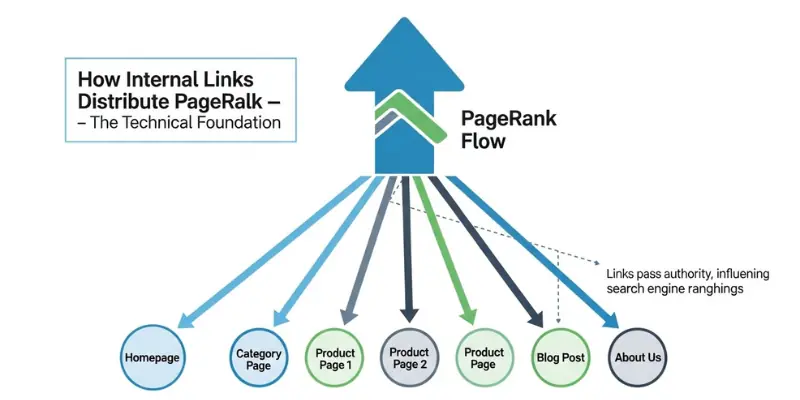
PageRank — Google’s original algorithm for measuring page importance — flows through both external backlinks and internal links. When an external website links to your homepage, it sends PageRank to that page. Your homepage can then redistribute that PageRank to other pages through internal links. The more internal links a page receives, the more PageRank it accumulates — and higher PageRank correlates directly with higher ranking potential.
The PageRank distribution formula: when a page with N internal links passes PageRank, each outgoing link receives an equal share of that page’s distributable equity (simplified: PR / N). A homepage with 10 internal links distributes more equity per link than a homepage with 100 internal links. This has a direct practical implication: every unnecessary internal link on high-authority pages dilutes the equity flowing to your target commercial pages.
The PageRank Concentration Problem on Pakistani Websites
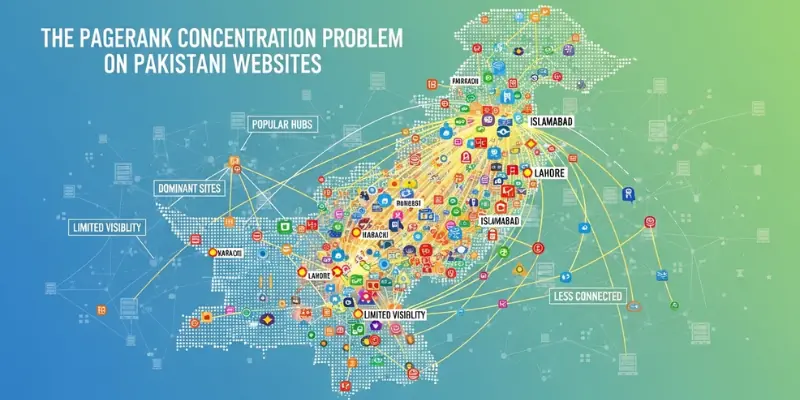
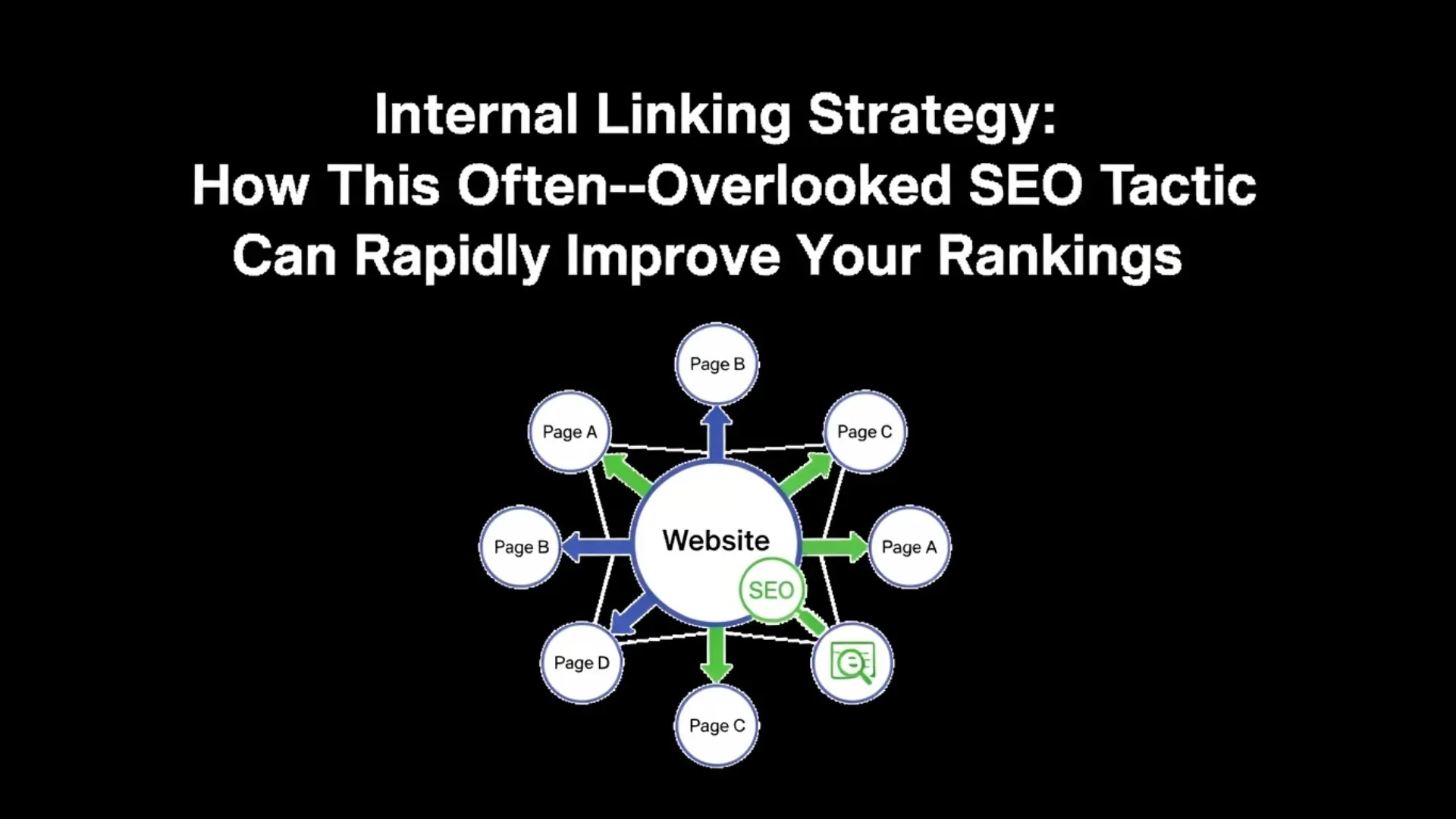
The typical Pakistani business website has this internal linking pattern: the homepage links to every top-level page (about, services, blog, contact); each service page links to itself and the homepage; and the blog posts link to nothing except the homepage. This creates a star topology where all equity flows to the homepage and is never efficiently redistributed to the service pages and product pages that need ranking power.
The Clickmasters fix: audit which pages on your website have the most external backlinks (use Ahrefs > Site Explorer > Best by Links). These pages are your PageRank sources. Then systematically add internal links from these high-equity pages to your commercial target pages. A single internal link from a page with 50 external backlinks can deliver a greater ranking boost to the target page than months of content optimisation.
THE HUB-AND-SPOKE ARCHITECTURE MODEL
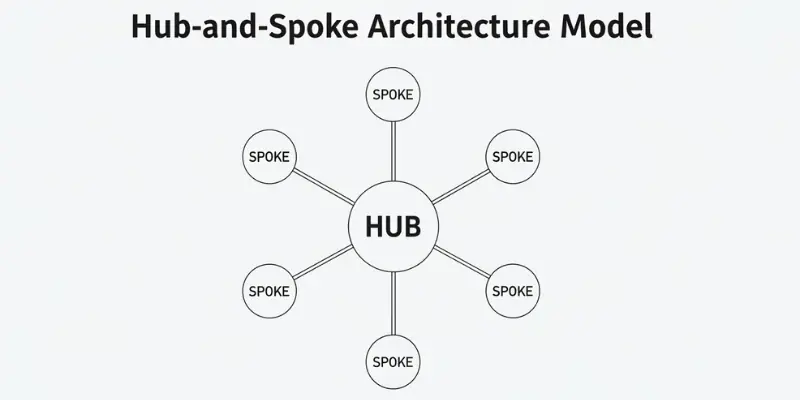
Hub-and-Spoke Content Architecture: The Internal Linking Strategy That Builds Topical Authority
Hub-and-spoke architecture is the internal linking model that best aligns with Google’s topical authority evaluation. It organises your website’s content into topic clusters: a comprehensive hub page (also called a pillar page) covers a broad topic at a high level, and multiple spoke pages cover specific sub-topics in depth. Every spoke page links back to the hub, and the hub links to every spoke page. The cluster is internally self-reinforcing.
This architecture has two compounding benefits. First, the internal link network signals to Google that your website has comprehensive, interlinked coverage of the topic, which is a topical authority signal. Second, PageRank flows bidirectionally within the cluster: the hub distributes equity to spokes, and the spokes redistribute equity back to the hub. High-performing spokes amplify the hub’s ranking power.
Building Hub-and-Spoke for Pakistani Digital Marketing Topics
| Content Level | Example: Digital Marketing Hub | Internal Linking Direction |
| Hub Page (Pillar) | ‘The Complete Guide to Digital Marketing in Pakistan 2026’ — comprehensive overview, 5,000+ words, links to all spokes | Links OUT to all 8–12 spoke pages. Is the primary internal link target for all spoke pages? |
| Spoke Page 1 | ‘SEO Services Pakistan: How to Rank on Google’ — in-depth guide to SEO specifically | Links to hub. Links to other related spokes (e.g., a link to the keyword research spoke and to the technical SEO spoke). |
| Spoke Page 2 | ‘Social Media Marketing Pakistan: Complete Strategy Guide’ — detailed social media guide | Links to hub. Links to related spokes (content marketing and paid ads). |
| Spoke Page 3 | ‘Google Ads for Pakistani Businesses: PPC Management Guide’ | Links to hub. Links to Facebook Ads spoke; conversion rate optimisation spoke. |
| Supporting Pages | Blog posts, case studies, FAQ pages related to the cluster topic | Link TO the most relevant spoke or hub page. Cross-link between complementary supporting pages. |
| Service/Product Pages | ‘Digital Marketing Services Karachi’ — commercial page | Receives links from the hub and relevant spokes. Links back to hub. Links to contact page. |
Anchor Text Strategy for Internal Links
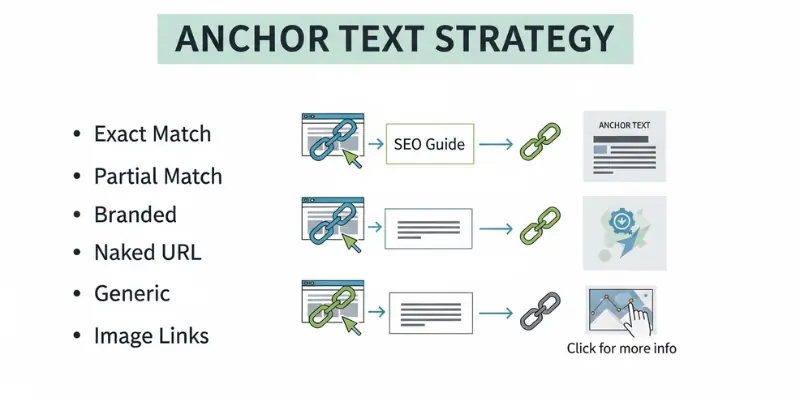
Anchor text — the visible, clickable text of a hyperlink — significantly signals the relevance of the page being linked to. For internal links, anchor text is an entirely controllable signal: you choose every word of every internal link anchor on your website. Used strategically, internal anchor text accelerates ranking for target keywords. Used carelessly (with generic anchors like ‘click here’ or ‘read more’), it wastes the opportunity.
The Clickmasters Internal Anchor Text Distribution Framework
| Anchor Text Type | Usage Guidelines for Pakistani Websites |
| Exact-match keyword anchors | ‘SEO services in Karachi’ and ‘digital marketing in Pakistan’. Use sparingly — a maximum of 15–20% of internal links to any single page. Highest relevance signal, but overuse looks manipulative even internally. |
| Partial-match keyword anchors | ‘Our SEO services in Karachi’ and ‘Pakistan’s leading digital marketing’ are 30–40% of internal links. Strong relevance signal with natural phrasing. |
| Topical/semantic anchors | ‘Search engine optimisation’, ‘online marketing strategy,’ ‘Google ranking guide’ – 25–30% of internal links. Builds topical relevance without exact-match concentration. |
| Brand + keyword anchors | ‘Clickmasters SEO services’ and ‘our digital marketing team’. 10–15%. Combines brand authority with keyword relevance. |
| Generic anchors (avoid) | ‘click here’, ‘read more’, ‘learn more’, ‘this article’. Zero relevance signal. Reduce to under 5% of all internal links. Replace with descriptive anchors wherever possible. |
| URL anchors (avoid) | ‘https://clickmasters.pk/seo-services.’ No relevance signal. Use this only in places where no other anchor is editorially natural. |
Crawl Efficiency: Using Internal Links to Control Googlebot
Googlebot has a limited crawl budget for each website — the number of pages it will crawl during each visit. For small Pakistani websites (under 500 pages), crawl budget is rarely a constraint. For large Pakistani e-commerce sites (5,000+ product pages) or news publishers with thousands of articles, crawl budget becomes a critical SEO variable. Internal linking directly controls how Googlebot allocates its crawl budget across your site.
Crawl Budget Optimisation Through Internal Linking
- Prioritise crawl paths to commercial pages: ensure your highest-value commercial pages (service pages, product category pages, key landing pages) receive internal links from multiple high-traffic pages. Multiple internal links to a page = more frequent recrawling.
- Orphaned page resolution: pages with zero internal links pointing to them may never be crawled after initial discovery. Audit for orphaned pages monthly using Screaming Frog: Spider > Inlinks filter = 0.
- Reduce crawl waste on low-value pages: avoid internally linking to thank-you pages, checkout flows, filtered search result pages, or other pages you have noindexed. Every link to a noindexed page wastes crawl budget that could be directed to indexed content.
- Deep content discovery: newly published pages are discovered fastest when they receive internal links from recently crawled, frequently updated pages — like your homepage, recent blog posts, or sitemap-linked category pages. Link to new content from existing, high-crawl-frequency pages on the publication day.
THE INTERNAL LINK AUDIT: A STEP-BY-STEP FRAMEWORK
The Complete Internal Link Audit for Pakistani Websites
Tool Requirements
- Screaming Frog SEO Spider (free up to 500 URLs, paid for larger sites) — the primary internal link audit tool
- Ahrefs or Semrush — for identifying your highest-authority pages (most external backlinks)
- Google Search Console — for identifying your highest-impression pages (most Google visibility)
- Google Sheets — for organising audit findings and tracking implementation
Audit Step 1: Crawl Your Website with Screaming Frog
- Open Screaming Frog. Enter your domain and run a full crawl. For large sites: ensure JavaScript rendering is enabled if your site uses React/Vue/Angular.
- Export: All pages report (Internal tab > HTML). This gives you every page on your website with its current inlink count.
- Filter by Inlinks = 0: These are your orphaned pages — they receive no internal links and may be invisible to Googlebot beyond the sitemap.
- Sort by inlinks (ascending): pages with 1–3 internal links are your underlinked pages — likely important pages starved of equity.
Audit Step 2: Map Your PageRank Sources
- In Ahrefs, go to Site Explorer > your domain > Best by Links. Export the top 50 pages by referring domains — these are your highest-authority pages.
- Cross-reference with GSC: Performance > Pages sorted by Impressions. Your highest-impression pages are also high-authority equity sources.
- Create a ‘PageRank Source’ list: the top 20 pages on your site that have the most external link equity and Google visibility.
Audit Step 3: Map Your PageRank Targets
- Identify your top 10–15 commercial target pages: service pages, product category pages, and key landing pages that need ranking boosts.
- For each target page: how many internal links currently point to it? What are the anchor texts? Which high-authority pages link to it? Which ones do not?
- Gap analysis: Which PageRank sources do NOT currently link to your commercial target pages? These are your quick-win internal link opportunities.
Audit Step 4: Anchor Text Audit
- In Screaming Frog, go to Bulk Export and select All Inlinks. This exports every internal link on your site with source URL, destination URL, and anchor text.
- Filter to your target commercial pages. Analyse the anchor text distribution: what percentage is exact-match, partial-match, topical, generic?
- Identify over-concentration: if 80%+ of internal links to one page use the same anchor text, diversify with semantic variants.
- Identify under-optimisation: if most anchors are generic (‘click here’, ‘learn more’), prioritise rewriting them to keyword-relevant anchors.
The 10 Internal Linking Quick Wins for Pakistani Websites
(1) Link from your homepage to your five highest-value commercial pages with keyword-rich anchors. (2) Add a ‘Related Guides’ section to every blog post linking to 3–5 topically related posts. (3) Add a ‘Related Services’ section to every service page linking to complementary service pages. (4) Resolve all orphaned pages — add internal links from the most topically relevant existing pages. (5) Add contextual internal links from your 10 most-visited blog posts to your commercial service/product pages. (6) Replace all ‘click here’ and ‘read more’ anchor texts with keyword-descriptive anchors. (7) Ensure that every new content piece receives at least three internal links from existing content on the day of publication. (8) Add breadcrumb navigation to all pages (and BreadcrumbList schema simultaneously). (9) Add category or topic navigation hubs linking to all content within each cluster. (10) Link from high-converting pages (testimonials, case studies) to the service pages they validate.
Hub-and-Spoke Implementation for Pakistani E-Commerce
E-commerce websites have a natural hub-and-spoke structure through their category hierarchy. But most Pakistani e-commerce sites under-exploit this by relying on navigation menus alone for internal link flow — missing the much higher equity value of contextual in-content links.
| E-Commerce Internal Linking Element | Implementation for Pakistani Online Stores |
| Category pages → Product pages | Category page editorial text (150–250 words at the top of the page) should include contextual links to featured/bestselling products using keyword-rich anchor text. ‘Shop our premium unstitched lawn’ links more directly than the navigation grid alone. |
| Product pages → Related products | ‘You may also like’ / ‘Frequently bought together’ internal links pass equity to related products AND improve cross-sell conversion. Anchor text: product names. |
| Blog posts → Product/category pages | Fashion and lifestyle blog posts (‘How to Style a Formal Shalwar Kameez for Eid’) should link directly to the relevant product category with keyword anchor. This is the highest-value content-to-commercial internal link pattern. |
| Homepage → Category hubs | The homepage should link to the top 5–8 product categories prominently — not just in navigation but also in the editorial hero and featured sections with keyword-rich anchor text. |
| Size/filter pages | Do NOT internally link to faceted navigation filter URLs (size/colour/brand filter combinations). These create crawl budget waste. Use JavaScript filtering to avoid filterable URLs entirely. |
Case Study: Karachi Fashion E-Commerce — PKR 2.1M Monthly Revenue Gain from Internal Linking Alone
In Q2 2025, Clickmasters conducted an internal linking audit for a Karachi-based modest fashion e-commerce store. The store had 1,200 products, 85 blog posts, and PKR 1.4M in monthly organic revenue – but had been stagnant for 6 months despite ongoing content production. No new external backlinks, no technical changes.
Internal Linking Audit Findings
⦁ 247 product pages: zero internal links pointing to them (orphaned)
⦁ Homepage: 94 internal links — 71 pointing to navigation/utility pages (cart, account, policy pages), only 12 to category pages, zero to individual products
⦁ 85 blog posts: all contained internal links to homepage only — zero links to product categories or products
⦁ Top 10 blog posts by traffic (combined 28,000 monthly sessions): total 0 links to any commercial page
⦁ Anchor text audit: 78% of all internal links used ‘click here’, ‘shop now’, or ‘view collection’
Actions Taken (No New Content, No New Backlinks)
- Added contextual links from all 85 blog posts to relevant product categories: average 3 links per post, keyword-rich anchors
- Added ‘Shop the Look’ sections to top 10 blog posts: 3–5 direct product links per post
- Resolved 247 orphaned product pages: linked from category pages, editorial sections, and ‘related products’ on similar product pages
- Rebuilt homepage internal link structure: reduced utility page links to 8 and added 15 category page links with keyword anchors
- Replaced 890 generic anchor texts with keyword-descriptive alternatives across site
Results at 60 Days (Internal Linking Changes Only)
| Metric | Before | 60 Days After |
| Monthly organic revenue | PKR 1.4M | PKR 3.5M (+150%) |
| Product pages ranking top 10 | 142 | 384 (+170%) |
| Category page rankings (avg position) | 14.2 | 7.8 (-45% improvement) |
| Organic sessions/month | 38,400 | 89,200 (+132%) |
| Orphaned product pages | 247 | 0 |
| Pages with zero inlinks | 31% of site | 4% of site |
Internal Linking for Pakistani WordPress Websites: Plugin Recommendations
| Plugin/Tool | Role & Recommendation |
| Link Whisper | AI-powered internal link suggestion engine. As you write content, suggest relevant internal links from your existing posts. Generates internal link reports showing orphaned pages and link equity distribution. Best internal linking tool for WordPress. ~$77/year. |
| Yoast SEO / RankMath | Both show internal link count and suggest links during post editing. Free tier sufficient for basic internal link monitoring. RankMath’s free version shows orphaned content alerts. |
| Screaming Frog | Not a plugin — desktop application. Essential for comprehensive internal link audits. Free up to 500 URLs. For larger Pakistani sites (e-commerce), the paid version (~$259/year) is worth the investment for monthly crawl audits. |
| Pretty Links | For managing internal redirect structures and URL consistency. Useful when Pakistani websites have URL architecture changes and need consistent redirect management across internal links. |
Frequently Asked Questions: Internal Linking
Q: How many internal links should each page have?
There is no fixed rule, but Clickmasters’ practical guidance is the following: (a) Important commercial pages (service pages, product categories): target 20–50 internal links from across the site, drawn from multiple content types. (b) Blog posts: 3–8 outgoing internal links to related content. (c) Homepage: 15–30 internal links to key pages — prioritise commercial pages over utility pages. Avoid ‘link stuffing’ — adding internal links solely for SEO that do not serve the reader’s navigation needs
Q: Does internal link equity flow work the same as external backlink equity?
The same PageRank principles apply, but internal links are generally lower in equity value than external links – because internal links are self-referential (you control them entirely), while external links represent third-party endorsement. Google likely applies some discount to internal link equity compared to equivalent external link equity. However, internal links are entirely within your control and cost nothing to optimise — making them a high-ROI tactic despite the equity discount
Q: Should I add internal links to older existing blog posts?
Yes — this is one of the highest-ROI internal linking activities. Existing blog posts that rank well and generate traffic are proven PageRank sources. Adding contextual internal links from these posts to your commercial pages passes accumulated equity immediately, without publishing new content. Prioritise your top 20 blog posts by traffic and add 2–4 keyword-rich internal links to commercial pages in each. This single action typically shows ranking improvements for target commercial pages within 4–8 weeks.