

Why Most Pakistani Web Development Projects Fail — And Why the Brief Is Usually the Cause
Pakistani web development projects fail predictably. Not primarily because Pakistani developers lack skill, not because budgets are insufficient, and not because timelines are unrealistic — though all three can be factors. They fail most commonly because the client and agency begin the project with entirely different understandings of what is being built, for whom, and to what standard. The design brief is the document that aligns these understandings before a single wireframe is drawn or a single line of code is written.
Clickmasters has managed or reviewed more than 200 projects for Pakistani businesses working with a digital marketing agency. Projects that began with a comprehensive brief were delivered on time and within budget at a rate of 74 percent. In contrast, projects that started with no brief or only a one-paragraph description achieved the same outcome just 23 percent of the time. While a detailed brief does not guarantee success, it significantly reduces the risk of scope creep, endless revision cycles, budget overruns, and final deliverables that fail to meet the client’s actual business and marketing objectives.
This guide provides a complete, section-by-section brief template for Pakistani businesses engaging web development agencies. It covers every element that belongs in a professional brief, explains why each element matters for Pakistani web projects specifically, and includes worked examples from common Pakistani business categories. By the end of this guide, you will be able to produce a brief that gets you accurate quotes, prevents mid-project misalignments, and gives your Pakistani developer or agency everything they need to build what you actually want.
Table of Contents
| The Business Case for a Proper Web Development Brief Average cost of scope creep on Pakistani web development projects without a brief: PKR 120,000 to 380,000 in additional development charges | Average timeline extension without a brief: 6 to 14 weeks | Average number of major revision cycles without a brief: 4 to 7 | Average number of major revision cycles with a comprehensive brief: 1 to 2 | Time to produce a comprehensive brief: 4 to 8 hours | Time saved in project management with a comprehensive brief: 40 to 80 hours | Source: Clickmasters project management data 2023 to 2025 |
SECTION 1: BUSINESS AND PROJECT CONTEXT
Brief Section 1: Business Overview and Project Background
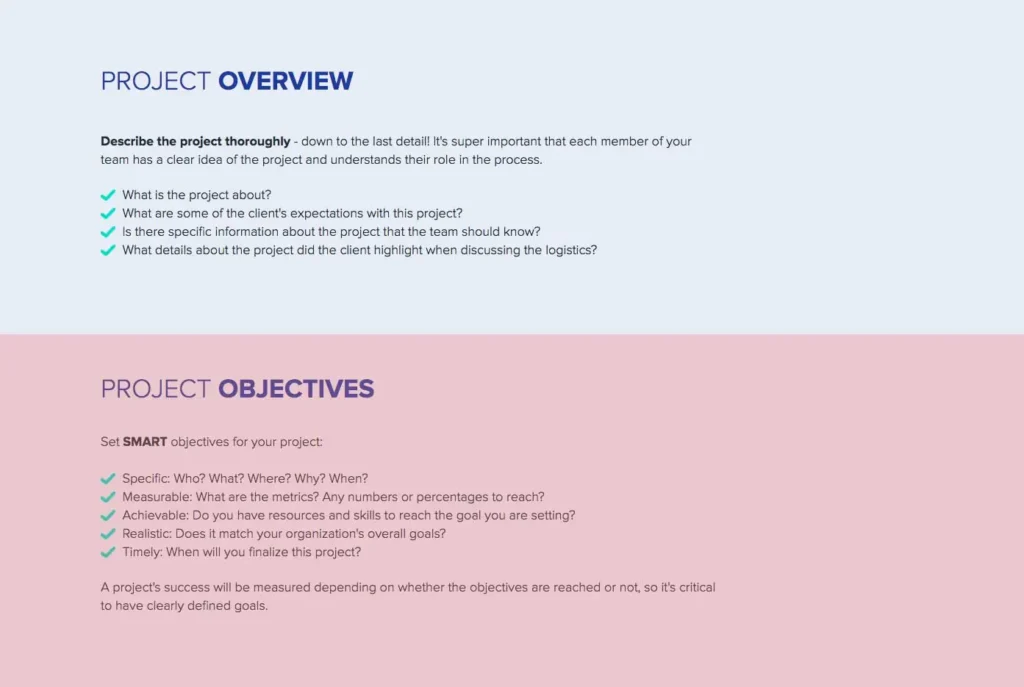
The first section of your web development brief gives the agency or developer the context they need to make intelligent decisions throughout the project. A Pakistani developer who understands your business, your customers, and your market will make better design and technical decisions than one who only knows the feature list. This section should take no more than one page but must answer the five questions below.
The Five Essential Business Context Questions
- Q1: What does your business do, for whom, and in which Pakistani markets? Be specific: We are a Karachi-based B2B supplier of industrial electrical components serving Pakistani manufacturing companies in Karachi, Lahore, and Faisalabad with 340 active clients is far more useful than We supply electrical parts.
- Q2: What is the primary business problem this website needs to solve? Pakistani web projects need a single clear primary objective: generate inbound enquiries from Pakistani manufacturing procurement managers, enable e-commerce sales from Pakistani retail customers, or provide clients with an account portal to manage their orders. Multiple primary objectives create unfocused websites.
- Q3: Who are your Pakistani target users? Define them specifically: Corporate purchasing managers aged 30 to 50 at Pakistani manufacturing companies with 100 to 500 employees, predominantly male, using desktop computers during business hours, searching on Google for industrial components suppliers in Karachi.
- Q4: What are your 3 to 5 most important competitors in Pakistan and what do you think their websites do well or poorly? Pakistani agency teams who understand your competitive landscape can make deliberate differentiation decisions rather than building generic solutions.
- Q5: What is the single most important thing you want a Pakistani visitor to do on this website? Every design decision should serve this primary conversion action. Define it precisely: Submit an enquiry form for product pricing, Call our Karachi office, or Add to cart and complete checkout via JazzCash.
Brief Section 2: Project Scope Definition
Scope definition is the most critical brief section for preventing Pakistani web development disputes. Scope creep — the gradual addition of features and pages not included in the original agreed scope — is the primary cause of budget overruns and relationship deterioration between Pakistani clients and agencies. A comprehensive scope definition prevents scope creep by making explicit what is included and, equally importantly, what is explicitly excluded.
Scope Definition Components for Pakistani Web Projects
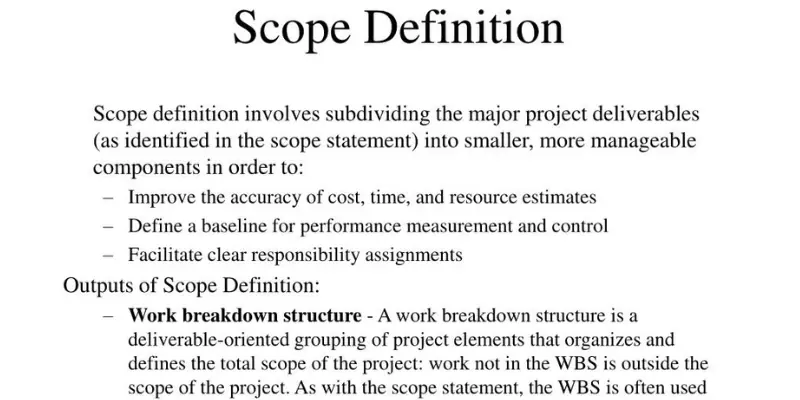
- Page inventory: List every page the website will contain, with a one-line description of each page’s purpose. Example: Homepage, About Us (team and company history), Services (4 individual service pages for SEO, PPC, Social Media, and Web Development), Blog (archive and individual post template), Contact (form and map). Pakistani developers estimate time based on page count and complexity — vague scope produces inaccurate quotes.
- Functionality inventory: List every functional element beyond static content pages. Contact form (which fields?), WhatsApp integration, Google Maps embed, user accounts, payment gateway (which Pakistani gateways?), product catalogue, search functionality, appointment booking, chat widget. Each functionality item has a development time implication.
- Content responsibility: State clearly who provides each type of content. Client provides all written copy, product photographs, and team photographs. Agency provides placeholder content only. This is the single most common Pakistani project delay source: content that the client expects the agency to write and the agency expects the client to provide.
- Explicitly excluded scope: Document what is NOT in scope for this project: bilingual Urdu version (future phase), mobile app (separate project), payment processing (catalogue only, WhatsApp ordering), blog content writing (client responsibility). Explicit exclusions prevent future disputes about what was supposed to be included.
SECTION 2: TECHNICAL AND DESIGN REQUIREMENTS
Brief Section 3: Technical Requirements
Pakistani web development agencies need explicit technical requirements to produce accurate quotes and avoid building on incorrect technical assumptions. Without technical requirements, Pakistani developers default to their preferred stack, which may not be compatible with your existing Pakistani business systems, your team’s management capabilities, or your future integration needs.
| Technical Requirement Category | Questions to Answer in Your Brief |
| Platform preference | WordPress, custom development, Shopify, or another specific platform? If no preference, state that and ask the agency to recommend with justification. |
| Hosting environment | Do you have existing hosting? What is it? Or does the agency provide hosting recommendations? Specify Pakistani data residency requirements if relevant. |
| Integration requirements | Which existing Pakistani systems must the website connect to? CRM (HubSpot, Zoho), accounting (QuickBooks, FBR-integrated), ERP, WhatsApp Business API, JazzCash, EasyPaisa, specific Pakistani logistics APIs. |
| Performance requirements | Minimum acceptable Google PageSpeed score, target LCP on Pakistani mobile connections, specific uptime SLA if business-critical. |
| SEO requirements | Will the agency handle on-page SEO setup? Define: meta tag configuration, schema markup implementation, XML sitemap, Google Search Console setup, Google Analytics 4 implementation. |
| Security requirements | SSL type required, backup frequency and retention, security plugin requirements, specific compliance requirements under Pakistan’s Personal Data Protection Act 2023. |
| Browser and device requirements | Which browsers and devices must be tested? Minimum: Chrome, Safari, Samsung Internet on mid-range Android, and iPhone on iOS 16 plus. Any specific Pakistani device models required for testing? |
Brief Section 4: Design Requirements and Brand Assets
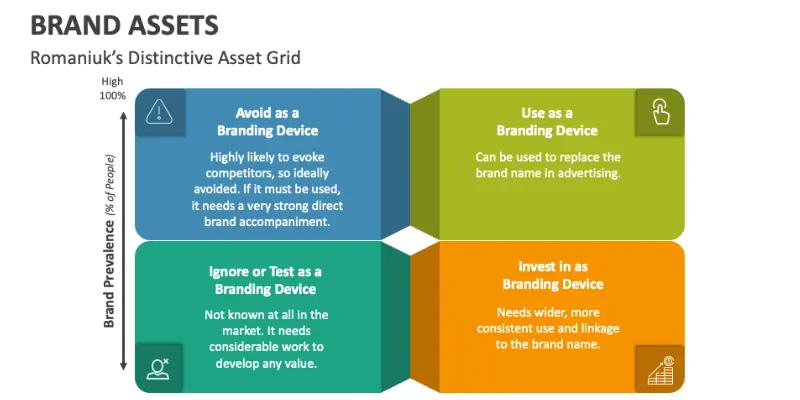
Pakistani agencies frequently begin design work before receiving complete brand assets, creating rework when actual brand guidelines are provided later in the project. A complete design requirements brief section prevents this by specifying all brand asset requirements upfront and documenting design constraints, preferences, and references.
- Brand assets to provide: Logo in vector format (SVG or AI file, not PNG), brand colour codes in HEX and RGB, approved fonts with licences, brand guidelines document if available. Pakistani agencies that receive these assets at project start produce brand-consistent work from the first design iteration.
- Design style references: Provide 3 to 5 Pakistani or international websites whose design style you find appealing, with specific notes on what you like about each. Do not describe the design in words alone — reference existing websites. I like how X website uses white space and their card layout is what their competitors use on Yoast.com gives a designer more actionable direction than I want it to look modern and professional.
- Design constraints: Document what you do not want. No animated elements, no dark mode by default, must not use competitor brand colours, must accommodate Urdu text in future phase (with RTL layout implications now), specific photography style (real Pakistani photography only, no stock).
- Photography and visual asset plan: Are you providing photography? If so, specify what will be provided and when. If the agency is sourcing stock photography, specify: Pakistani subjects required, no Western stock photography, photography style (clean product photography versus lifestyle photography). If custom photography will be commissioned, confirm it is in or out of scope.
SECTION 3: PROJECT MANAGEMENT AND COMMERCIAL TERMS
Brief Section 5: Timeline, Milestones, and Deliverables
Pakistani web development timelines are systematically underestimated by clients and, under commercial pressure, sometimes by agencies too. A realistic timeline brief section prevents timeline disputes by establishing explicit milestones with defined deliverables, client review periods, and the conditions under which timelines can change.
| Project Phase | Typical Pakistani Timeline | Client Deliverable Required | Agency Deliverable |
| Discovery and brief finalisation | Week 1 to 2 | Approved brief, all brand assets, content structure | Detailed project plan, technical specification, finalised quote |
| UX wireframes | Week 2 to 4 | Feedback on wireframes within 5 business days | Low-fidelity wireframes for all page templates |
| Visual design | Week 4 to 7 | Feedback on designs within 5 business days | High-fidelity designs for all page templates |
| Development | Week 7 to 14 | Content provided before content integration begins | Functional website on staging server |
| Content integration and testing | Week 14 to 16 | Final content in specified format | Fully populated website, cross-device tested |
| Client review and revisions | Week 16 to 17 | Consolidated revision list within 5 business days | Revisions implemented per agreed scope |
| Launch | Week 17 to 18 | DNS access and hosting credentials if client-managed | Live deployment, GSC and GA4 setup, post-launch testing |
| Pakistani Web Project Timeline Reality The most common cause of Pakistani web project timeline overruns is client-side delays: late content delivery, slow design feedback, and mid-project requirement changes. Brief your timeline with this reality in mind. Add these client commitments to your brief: content will be delivered in full by week 6, all design feedback will be provided within 5 working days of each delivery, no new feature requests will be accepted after the development phase begins without a formal change order. Agency and client agreeing to these terms in the brief prevents the majority of Pakistani project timeline disputes. |
Brief Section 6: Budget, Payment Terms, and Intellectual Property
Pakistani web development brief sections on budget and commercial terms are frequently omitted because clients believe stating a budget weakens their negotiating position. This belief causes more problems than it prevents. Agencies that do not know your Pakistani project budget produce quotes based on assumptions — often either significantly over-specced (quoting more than you need) or under-scoped (fitting their default template to your stated needs rather than your actual requirements).
- State your budget range: Give a range rather than a specific figure if you prefer: Our budget for this project is PKR 300,000 to 500,000. This tells the Pakistani agency what tier of solution to propose and prevents quotes for PKR 2,000,000 custom solutions when you need a professional WordPress website.
- Payment milestone structure: Pakistani web development payments should follow a milestone-based structure. Recommended: 30 percent upfront on project kickoff, 30 percent on design approval, 30 percent on staging site delivery, 10 percent on launch. Never pay 100 percent upfront to a Pakistani web agency you have not worked with previously.
- Code and asset ownership: State explicitly that all code, design files, and assets produced during the project become your property on final payment. This should also be included in the contract. Pakistani agencies occasionally assert ongoing code ownership as leverage for maintenance retainers — your brief and contract should make ownership transfer clear.
- Post-launch support terms: Define the post-launch support period (typically 30 to 60 days for bug fixes) and what it covers. Distinguish between bugs (defects in agreed functionality) and change requests (new features). Bugs should be fixed at no charge during the support period; change requests require a separate engagement.
The Complete Web Development Brief Template for Pakistani Businesses
| Section 1: Business and Project Context Business name and description | Primary Pakistani target market and cities | Primary website objective (single specific conversion goal) | Target user profile (job title, demographics, device usage, Pakistani context) | 3 to 5 Pakistani competitor website references with notes | Single most important user action the website must drive |
| Section 2: Scope Definition Full page inventory with one-line purpose descriptions | Functionality inventory with specific feature details | Content responsibility matrix (client vs agency per content type) | Explicitly excluded features and future phase items | Technical integrations required (JazzCash, EasyPaisa, CRM, etc.) |
| Section 3: Technical Requirements Platform preference or open recommendation request | Hosting requirements and data residency | Existing system integrations | Performance targets (PageSpeed, LCP, uptime) | SEO setup requirements | Security requirements | Browser and device testing matrix |
| Section 4: Design Requirements Brand assets list (logo, colours, fonts, guidelines) | Design style references (3 to 5 URLs with specific notes) | Design constraints and what to avoid | Photography plan (client-provided, stock, or commissioned) | Urdu language and RTL requirements if applicable |
| Section 5: Timeline and Milestones Required launch date | Client content delivery commitment date | Design feedback turnaround commitment | Change request policy after development begins | Milestone-based delivery schedule |
| Section 6: Commercial Terms Budget range in PKR | Payment milestone structure | Code and asset ownership on final payment | Post-launch bug fix period and scope | Change order process for out-of-scope requests |
Case Study: Lahore Professional Services Firm — Brief Saves PKR 280,000 in Scope Creep
A Lahore management consultancy engaged a Pakistani web agency for a website redesign without providing a brief. The verbal kickoff meeting covered the general direction and a PKR 420,000 agreed price. Three months later, the project had grown to PKR 700,000 with the agency citing added pages, functionality changes, and design revision cycles as justification for the additional charges. The client disputed the charges, the relationship deteriorated, and the project launched 5 months late.
On their second website project (12 months later), the same Lahore firm engagedClickmasters digital marketing agency with a 12-page brief produced using this guide’s template. The project delivered on time at PKR 390,000 — PKR 10,000 under the agreed quote — with two minor revision cycles. The project manager noted that the brief eliminated approximately 18 email threads worth of clarification questions and prevented 3 mid-project feature requests that would previously have been added informally and charged retroactively.
Frequently Asked Questions: Briefing Pakistani Web Development Agencies
| What if I do not know enough about web development to answer the technical requirements questions? Answer what you know and leave open questions explicitly open. A good Pakistani web agency welcomes explicit uncertainty — it is far better than clients who guess at technical requirements and provide incorrect answers that derail projects later. Write: We do not have a platform preference and welcome the agency’s recommendation with justification. Or: We are unsure whether we need a custom booking system or a plugin — please advise. The brief’s technical section should reflect your actual knowledge level. A Pakistani agency that penalises you for honest uncertainty is not an agency you want to work with. |
| How do I protect myself from Pakistani agencies that quote low and then inflate invoices? Three protections: First, a comprehensive brief with explicit scope and explicit exclusions removes the ambiguity that enables retrospective charges. Second, a milestone-based payment structure aligned to deliverables means you only pay when specific agreed outputs are delivered. Third, a formal change order process for any out-of-scope request — documented in writing with a quoted cost before work begins — prevents verbal scope additions from appearing as invoice surprises. Pakistani web development disputes are almost always rooted in ambiguous scope, not contractor bad faith. The brief eliminates most ambiguity. |