AI is radically changing the way businesses interact with their customers. It goes beyond simple automation to enable highly customized marketing campaigns, creating strong opportunities for improved engagement and increased business revenue. As companies offering digital marketing services in Pakistan increasingly adopt AI-driven strategies, they can deliver more personalized and data-backed customer experiences. However, alongside these benefits, AI in marketing also carries risks that may lead to brand equity loss, declining consumer trust, and growing data privacy AI concerns if not managed responsibly.
Table of Contents
Understanding the Growing Role of AI in Marketing
The field of marketing has entered a highly information-driven age, and AI stands at the center of this transformation. Corporations now rely on advanced algorithmic applications to analyze consumer behavior, optimize advertising budgets, and deliver personalized customer experiences. With the growing demand for AI Development Services in Pakistan, businesses are increasingly adopting intelligent marketing solutions to stay competitive in global markets. However, AI in marketing also comes with risks that must be carefully managed, including ethical AI in marketing practices and data privacy concerns related to AI. Addressing these challenges is essential to ensure responsible, transparent, and sustainable AI adoption.
Why AI Has Become Essential for Modern Marketing
AI is not a choice anymore; it is an inevitable element of business-consumer communication. It gives marketers the capability to process bulk data sets, decode multifaceted behavioral cues, and make decisions faster. Without AI, companies face AI in marketing risks and may fall behind competitors using responsible AI use and ethical AI in marketing for automation and personalized messaging.
Marketers use AI to:
- Automate repetitive tasks, saving time
- Analyze large volumes of customer data quickly
- Personalize messaging based on behavior and preferences
- Predict trends and improve decision-making
Common AI Tools and Their Applications in Marketing
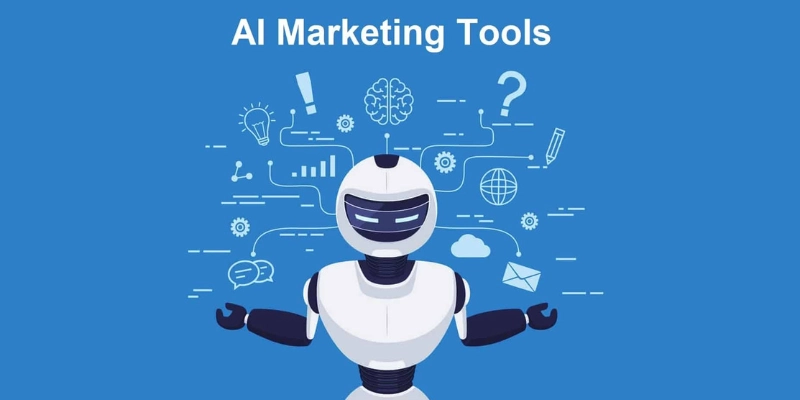
The selection of AI tools designed for specific marketing functions is abundant. These tools shorten operational time, enhance customer targeting, and increase efficiency. Nevertheless, the use of these tools requires close supervision to prevent mistakes and mitigate AI in marketing risks, ensuring responsible AI use, ethical AI in marketing, and protection of data privacy AI and brand credibility.
Common AI tools:
- Content generation tools (e.g., AI copywriting software)
- Customer analytics platforms that predict behavior
- Ad optimization tools that automatically adjust campaigns
- Email automation systems for personalized messaging
The Fine Line Between Innovation and Risk
On the one hand, AI can be a tool that helps businesses become more efficient and produce accurate results; on the other hand, it can generate mistakes, prejudices, or unethical conduct. The latter shows the AI inmarketing risks. Marketers need to behave responsibly with AI and adhere toethical AI inmarketing principles while also ensuring that data privacy is maintained.
Key risks:
- Over-automation may reduce human oversight
- Errors in AI outputs can mislead customers
- Sensitive data may be exposed or misused
Identifying AI in Marketing Risks
AI can provide unprecedented efficiency, but it also creates AI in marketing risks that affect ethical principles, data privacy, AI, brand image, business continuity, and legal regulations. Understanding these risks helps marketers ensure responsible AI use, follow ethical AI in marketing, avoid malfunctions, and protect both customer interests and brand reputation.
Ethical Risks: Bias and Manipulation
AI systems can easily replicate biases or create manipulative communication if neglected. Such AI in marketing risks and unethical practices may harm consumers and erode trust. This is why marketers must ensure ethical AI in marketing and maintain responsible AI use, guaranteeing fairness and transparency in every campaign activity.
Key ethical risks:
- Algorithmic bias in targeting
- Manipulative AI-generated content
- Loss of transparency in marketing campaigns
Data Privacy and Security Risks
AI customer data stewardship carries significant responsibility. Poor data practices create AI in marketing risks, including breaches, legal consequences, and loss of trust. Marketers must ensure every AI tool complies with data privacy AI regulations and supports responsible AI use to maintain strong protection of sensitive customer information..
Main data and privacy risks:
- Customer data protection failures
- GDPR compliance and consent issues
- Risks from third-party AI tools
Brand and Reputation Risks
AI-made mistakes can quickly impact brand image. Misinformation in content, tonally inappropriate messaging, or AI-generated content that does not align with brand principles are significant AI in marketing risks. Ensuring responsible AI use and following ethical AI in marketing practices helps protect consumer trust and long-term brand reputation.
Common brand and reputation risks:
- Inauthentic or tone-deaf messaging
- AI-generated errors going public
- Loss of customer trust
Legal and Regulatory Risks
AI-based marketing should be in line with copyright laws, data privacy laws, and dynamic regulations. Failure to comply can give rise to fines, litigation, and reputation destruction.
Key legal and regulatory risks:
- Copyright and IP issues
- Emerging AI regulations
- Liability concerns for marketers
How to Mitigate AI Risks in Marketing
Although AI opens diverse possibilities, marketers must take proactive steps to mitigate AI in marketing risks. An organized system ensures campaigns remain ethical, compliant, and effective, leveraging the speed and analytical power of responsible AI use and following ethical AI in marketing and data privacy AI best practices.
Adopting Responsible AI Use
Responsible AI use requires extensive planning, ongoing tracking, and compliance with organizational values. Without a transparent system of governance, there is a high probability that AI will cause harm or drift out of brand moorings. An ethical course of action will see that AI does not supersede the marketing strategy without jeopardizing ethical stances or customer loyalty.
Key practices:
- Developing a responsible AI framework
- Aligning AI with brand values
Implementing AI Ethics in Marketing
Ethical AI ensures fairness, transparency and accountability in the marketing adjudication. To achieve effective and convincing campaigns, practitioners need to actively identify bias, make AI outputs accessible, and thereby create an engaging and trustworthy campaign.
Ensuring Data Privacy and Compliance
Data is the lifeblood of AI marketing, and its mismanagement can lead to legal issues or reputational damage. Proper custodianship, adherence to data privacy AI regulations, and systematic auditing are essential for responsible AI use and ensuring ethical AI in marketing in any organization implementing AI solutions.
Key privacy and compliance actions:
- Secure data handling
- GDPR, CCPA, and consent management
- Regular audits and risk assessments
Maintaining Human Oversight and Brand Integrity
The discernment of humans cannot be entirely replaced by cutting-edge AI. To avoid mistakes and maintain the corporate reputation, marketers need to monitor AI outputs, maintain unique brand voice, and balance between automation and creative human input.
Oversight strategies:
- Balancing automation with human decision-making
- Monitoring AI-generated content for quality
- Maintaining brand voice consistency
Real-World Examples of AI Marketing Risks
Analyzing real-life case studies helps to understand how the risks caused by AI are cross-contaminated across brands, impacting the consumers, and causing disruptions to operations. Lessons based on such situations will give the marketer a practical understanding of the traps and tell the architects to formulate preemptive measures, thus, turning hypothetical issues into practical ideas.
Case Studies of Ethical Failures
Several companies have faced criticism for discriminatory or deceptive AI marketing. Poor oversight or unregulated algorithmic actions can unintentionally discriminate against certain groups or spread misleading content, creating AI in marketing risks, eroding consumer trust, and harming brand reputation. Practicing ethical AI in marketing and responsible AI use mitigates these risks effectively.
Notable ethical failures:
- AI-powered ad campaigns showing biased targeting
- Automated recommendations that reinforce stereotypes
- Manipulative AI–generated messaging without disclosure
Data Breach Incidents Involving AI
Artificial intelligence systems handle large volumes of sensitive customer information regularly. The lack of security or the mismanagement of data may cause breaches, revealing personal information, and the creation of legal and reputational damages.
Common AI data breaches:
- Unauthorized access to customer databases via AI platforms
- Data leaks from third-party AI vendors
- Mismanagement of consent and privacy settings
Lessons Learned and Industry Takeaways
Companies that fail to handle AI risks appropriately have to face financial losses, fines, and bad publicity. Taking the lessons of others can help to build stronger policies, controls and ethics, so that AI reinforces rather than weakens marketing goals.
Key takeaways:
- Implement ethical frameworks before deploying AI
- Maintain strong data privacy and security protocols
- Combine AI automation with human oversight for accuracy
- Regularly audit AI outputs and campaign outcomes
Responsible AI as a Strategic Advantage
Responsible AI use is not only about avoiding AI in marketing risks, but it can also strengthen brand reputation and provide a competitive edge. Companies that integrate ethical AI in marketing inspire consumer confidence, optimize campaign performance, and achieve dominance in a technology-driven market while ensuring data privacy AI and overall responsible AI use.
How Ethical AI Builds Customer Trust
Engagement of consumers increases when the brands are viewed as responsible custodians. Open, fair, and privacy-aware AI-based procedures are indicative of respect to user privacy and will generate long-term loyalty.
Ways ethical AI builds trust:
- Ensuring bias-free targeting and messaging
- Providing clear explanations of AI decisions
- Protecting customer data at every step
Competitive Benefits of Risk-Aware AI Marketing
Companies that take the initiative to coordinate AI risk management also have a strong advantage over their rivals who do not focus on such issues. Respectful and ethical AI marketing elevates reputation, reduces the occurrence of errors, and boosts the campaign strength.
Benefits:
- Higher customer engagement and retention
- Reduced legal and reputational risks
- Improved brand perception and authority
- More accurate and reliable marketing insights
Creating a Sustainable AI Marketing Strategy
Sustainability in AI marketing requires implementing tools and methodologies that deliver long-term results and minimize negative impact. A strategically balanced approach combines automation with human oversight while addressing AI in marketing risks, adhering to ethical AI in marketing standards, and ensuring responsible AI use in line with evolving data privacy AI and regulatory requirements.
Steps to create a sustainable strategy:
- Regularly audit AI tools and outputs
- Train teams on ethical AI practices
- Maintain strong data privacy and security protocols
- Continuously refine AI processes for effectiveness and fairness
GET IN TOUCH
Get 1 Free Consultation Call
Conclusion
The potential of AI in marketing is huge, however, the practical risks of AI in marketing can endanger ethics, data privacy, AI, brand reputation, and operational stability. By critically evaluating these risks and compliantly implementing responsible AI use and ethical AI in marketing practices, marketers can safely utilize the latest technological innovation.
Key takeaways to mitigate AI risks:
- Implement a responsible AI framework that is in line with the brand identity. Check the outputs regularly to avoid bias and ensure quality
- Have robust data privacy, consent management, and compliance measures in place. Keep human oversight and ethical decision-making
FAQS!
What are the principal AI threats in marketing?
The key threats associated with artificial intelligence use in marketing include bias in targeting algorithms, data privacy issues, the possibility of producing false information, and errors in the operation that can lead to a fall in the integrity of the processes..
What is the best way to secure AI ethics marketing?
To be sure of AI ethics in marketing, one must make sure to optimize the presence of bias in algorithms, ensure transparenc,y and ensure that the outputs of artificial-intelligence as per the overall brand values.
Will AI-generated content have any impact on brand reputation?
The creation of mistakes or communication with the help of AI can destroy brand reputation and damage customer trust.
What is my step to use AI responsibly in campaigns?
The fair use of AI in marketing initiatives involves integrating robotics with manual screening, adoption of ethical decision-making models, and adherence to data-regulation lawsI.
Are there AI legal implications in marketing?
The copyright law, consent, and regulatory non-compliance subject organizations to lawsuits. The knowledge of such implications is the key to responsible AI usage in marketing.
What is the reason AI needs to be monitored in marketing?
Constant oversight minimizes bias in the algorithms, limits the inaccuracy of content, and avoids malfunctions to benefit AI ethics and preserve customer information.