
Why Competitor SEO Analysis Is the Fastest Path to Rankings in Pakistan
The fastest way to rank in any competitive Pakistani market is not to guess at what Google wants — it is to study what Google already rewards in your specific competitive landscape, and systematically build a better version. Your competitors who rank above you have already done the difficult work of proving what content depth, what keyword strategy, what authority signals, and what technical standards produce page-1 results in your industry. Competitor SEO analysis is the process of reverse-engineering that proof.
Pakistani businesses waste enormous SEO effort targeting keywords their competitors have already fortified with years of content and link building — while leaving dozens of high-opportunity, lower-competition gaps entirely uncontested. A thorough competitor analysis typically reveals 50–150 keyword opportunities that your competitors rank for, but you do not, 20–40 content gap opportunities where no competitor has produced genuinely comprehensive content, and 30–60 link acquisition opportunities from publications and directories that already link to your competitors.
This guide walks through the complete Clickmasters competitor analysis process — the same framework our SEO team uses at the start of every new client engagement and quarterly strategy review. It is built around Ahrefs and Semrush as primary tools, supplemented by Google Search Console and manual SERP analysis. This structured approach is a core part of professional SEO services, helping identify opportunities, benchmark performance, and build data-driven strategies for higher rankings and improved visibility.
What This Guide Delivers
A step-by-step competitor SEO analysis framework producing: (1) Your top 5 organic competitors identified and ranked by competitive threat level. (2) Full keyword gap analysis — keywords they rank for that you don’t. (3) Content gap analysis — topics they cover comprehensively that you do not. (4) Backlink gap analysis — authority sites linking to competitors but not to you. (5) Technical benchmark comparison — how your site’s technical health compares. (6) A prioritised action plan for capturing competitor-validated opportunities.
Table of Contents
STEP 1: IDENTIFY YOUR TRUE SEO COMPETITORS
Step 1: Identifying Your True Organic Competitors
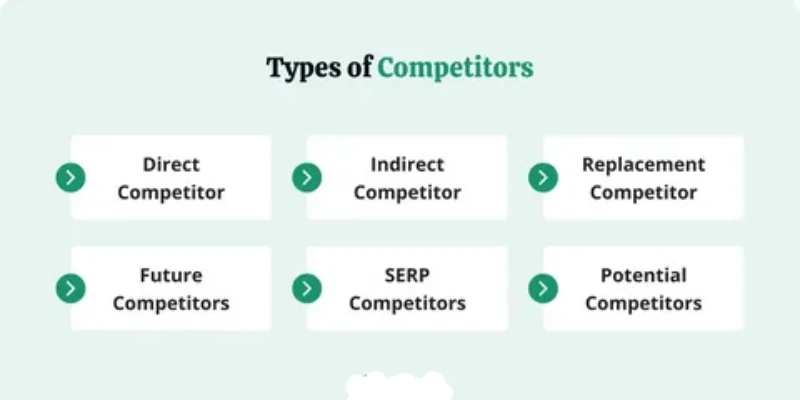
Your SEO competitors are not necessarily your business competitors. Your true organic competitors are the websites that rank for the same keywords you target on Google — regardless of whether they are direct business rivals. A Pakistani digital marketing agency may compete organically against international marketing blogs, Pakistani news sites, freelancer platforms, and YouTube channels — none of which are direct business competitors.
The Ahrefs Competing Domains Method
- In Ahrefs, go to Site Explorer > enter your domain > Competing Domains. This report shows websites that rank for the same keywords as you, sorted by the number of shared ranking keywords.
- Export the top 20 competing domains. Review manually: which are Pakistani businesses in your actual market? Which are international content sites? Which are aggregate platforms (Clutch, GoodFirms)?
- Select your top 5 true organic competitors — Pakistani websites or key international sites that dominate your target keyword space. These are your analysis subjects.
The Manual SERP Method (For New Websites Without Ahrefs Data)
- Google your top 10 target keywords. Record which websites appear in positions 1–5 for each keyword.
- Create a frequency count: which websites appear most often across your target keywords? The top 5 most frequent are your primary organic competitors.
- For each competitor, check their Domain Rating in Ahrefs (free trial or Ahrefs Webmaster Tools for your own site). DR indicates the authority level you need to match to compete effectively.
Pakistan-Specific Competitor Identification Note
For Pakistani market keyword analysis, you will often find that international websites (HubSpot, Neil Patel, Moz) rank for broad marketing keywords even in Pakistan-filtered searches. These are authority-based rankings, not relevance-based. Your true Pakistani market competitors are the local websites competing for Pakistan-specific keywords (‘SEO agency Karachi,’ ‘digital marketing Pakistan’). Both types matter: international sites reveal the content standard you must meet; local competitors reveal the link and authority level achievable in your market.
STEP 2: KEYWORD GAP ANALYSIS
Step 2: Competitor Keyword Gap Analysis
Keyword gap analysis identifies keywords your competitors rank for (Top 10 positions) that your website does not rank for at all. These are proven, search-volume-validated opportunities — the market has already demonstrated demand, and your competitors have already demonstrated that ranking is achievable.
Ahrefs Content Gap Tool Workflow
- In Ahrefs, go to Competitive Analysis > Content Gap.
- Enter your domain in the ‘This target’ field. Enter your top 3 competitors in the ‘But these competitors rank for’ fields.
- Run the analysis. Set filters: Positions 1–10 for at least one competitor. Volume minimum 100. KD maximum 40 (adjust based on your site’s authority).
- Export the full gap list. This is your opportunity inventory — keywords with proven demand and demonstrable competition that you currently miss.
- Categorise by intent: Informational (blog content needed), Commercial Investigation (comparison/review pages), Transactional (service/product pages). Different gaps require different content responses.
Semrush Keyword Gap Tool Workflow
- In Semrush, go to the Keyword Gap tool. Enter your domain and up to 4 competitors.
- Filter to show ‘Missing’ keywords — keywords your competitors rank for, but you don’t appear for in the top 100.
- Sort by Volume (highest first). Export the top 200 missing keywords.
- Apply additional filters: Intent = Commercial or Transactional for highest-value gaps. CPC > PKR 50 for keywords with commercial value. SERP Features = Featured Snippet to identify quick-win content opportunities.
The Pakistani Keyword Gap Classification Matrix
Gap Type Description Action Required
High-volume, low-KD gaps Competitor ranks in top 10 for a keyword (500+ monthly searches, KD under 30) that you completely miss. Immediate content creation priority. New dedicated page targeting this keyword. Target page-1 ranking within 60–90 days.
Medium-volume, medium-KD gaps Keyword with 100–500 monthly searches, KD 30–50, competitor ranking position 5–10. Content brief creation and scheduling. Target 3–6 months to page 1. Requires both content quality and link support.
High-volume, high-KD gaps Competitor strongly entrenched (position 1–3) for a high-volume keyword (1,000+ searches), KD 50+. Long-term target. Build topical authority in the cluster first. Target after achieving DR 35+ and establishing cluster coverage.
Featured snippet gaps: Competitor holds a featured snippet (position zero) for a keyword you target. Restructure your existing page content to directly answer the query in the first 50–100 words. Add a summary paragraph, table, or numbered list format.
Pakistani-specific gaps: Competitor targets ‘Pakistan’ or city-specific keyword variants that you don’t target. Create location-specific content targeting Pakistani market variations. These are often the easiest wins — lower competition than generic terms.
STEP 3: CONTENT GAP ANALYSIS
Step 3: Content Gap Analysis — Topics They Cover That You Don’t
Content gap analysis goes deeper than keyword gaps — it identifies entire topic areas that your competitors have established content authority in, while your website has no presence. Keyword gaps tell you specific terms to target; content gaps reveal strategic topic clusters you are entirely missing.
Manual Content Gap Analysis Process
- For each competitor, review their blog/resource section. Sort by traffic (use Ahrefs > Site Explorer > competitor domain > Top Pages by traffic). Identify their top 20 content pieces.
- For each high-traffic competitor content piece, ask: Does your website have an equivalent, competitive piece on this topic? If no equivalent exists, you have a content gap.
- Prioritise gaps by: Search volume of the competitor’s content (Ahrefs shows estimated monthly organic traffic per page), commercial relevance to your business (does the topic audience have buying intent?), and topical authority value (does covering this topic strengthen your site’s expertise signals?).
- Create a content gap register: a Google Sheet listing all identified gaps, the competitor who owns the traffic, estimated monthly traffic volume, intent classification, and production priority.
The Three Types of Content Gaps
| Gap Type | Examples & Action |
| Format gaps: Right topic, wrong format | The competitor has a detailed step-by-step guide; you have a short overview. The competitor has a comparison table; you have only text. The competitor has a video tutorial; you have only written content. Action: Upgrade your existing content to match or exceed the format quality of the ranking competitor. |
| Depth gaps: Topic covered, but too shallowly | Your page on ‘SEO for Pakistani Businesses’ is 800 words. The competitor’s page is 4,500 words with case studies, data, and implementation checklists. Action: comprehensive content expansion — adding depth, data, examples, and frameworks that the competitor lacks. |
| Missing topic gaps: Topic not covered at all | Competitor ranks for ‘Google Business Profile for Pakistani restaurants’ — you have no content on GBP for food businesses. Action: new content creation targeting the gap. Especially valuable when the gap represents a subtopic within your claimed expertise area. |
STEP 4: BACKLINK GAP ANALYSIS
Step 4: Competitor Backlink Gap Analysis
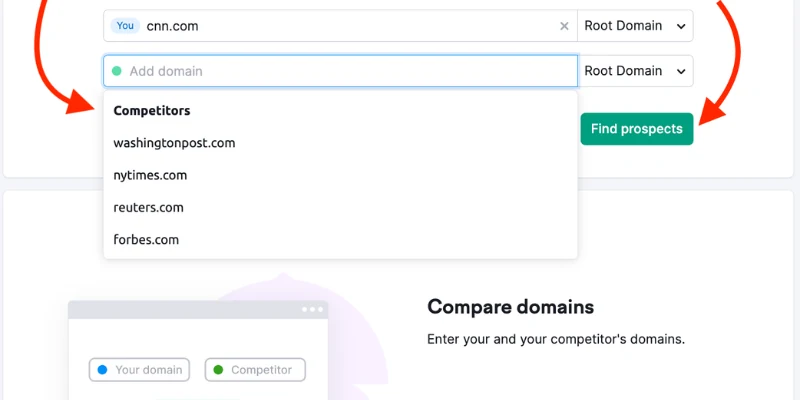
Backlink gap analysis identifies websites that link to your competitors but not to you. These are pre-qualified link targets: they have already demonstrated willingness to link to sites in your category, reducing the barrier to earning a link. For Pakistani websites, this is the most efficient method for identifying high-quality, relevant link acquisition targets.
Ahrefs Link Intersect Tool Workflow
- In Ahrefs, go to Link Intersect. Enter up to 5 competitor domains in the ‘Show me who links to these’ fields. Enter your domain in the ‘But doesn’t link to’ field.
- Run the analysis. Export all results. Filter: DR 30+ (quality threshold), DoFollow links only, One link per domain (avoid link farms).
- Categorise the backlink gap list: Pakistani media and news sites (digital PR targets), industry directories and associations (citations to build), educational institutions (edu.pk targets), Pakistani blogs and content sites (guest post or partnership targets), international publications (higher difficulty, higher value).
- For each target, research the link placement: what type of content earned the link on the competitor’s site? A news story, a data resource, a guest post, a product mention? This tells you exactly what content or outreach approach to use for each target.
Pakistani-Specific Link Target Categories from Competitor Analysis
⦁ Dawn.com, Tribune.com.pk, TechJuice.pk, Propakistani.pk: If competitors are earning media coverage on these sites, identify what story angles earned their coverage. Develop superior data stories or expert commentary to pitch to the same journalists.
⦁ PSEB, P@SHA, Chamber of Commerce directories: If competitors appear in these registries and you don’t, join immediately — these are straightforward acquisition targets.
⦁ Pakistani university websites (.edu.pk): If competitors have resource links from university courses or faculty pages, create the same type of resource (toolkit, guide, template) and pitch to course coordinators.
⦁ Pakistani industry blogs and niche publications: If a specific industry blog links to your competitor’s service page, reach out with a value-add proposal (guest post, expert quote, data contribution) to earn equivalent placement.
⦁ International platforms (Clutch, GoodFirms, G2): If competitors have verified profiles with reviews on these platforms and you don’t, create your profiles immediately. These are high-DR links and trust signals simultaneously.
Step 5: Technical SEO Benchmark Comparison
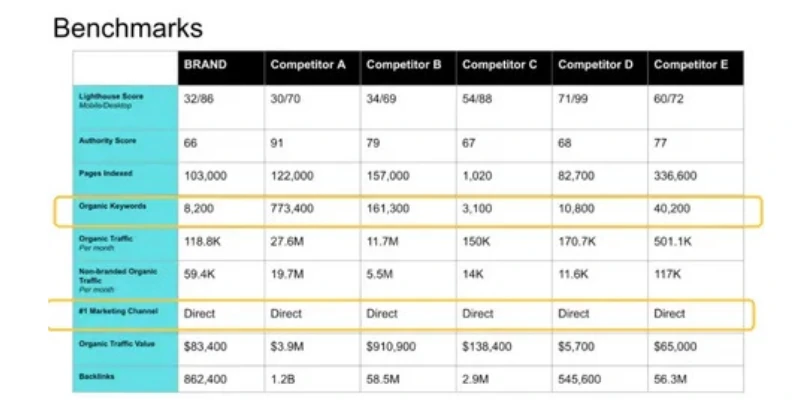
A complete competitor analysis includes benchmarking your website’s technical SEO health against your top competitors. Technical deficiencies relative to competitors can explain ranking gaps even when content quality is equivalent.
| Technical Metric | How to Benchmark | Pakistani Context |
| Domain Rating (DR) | Ahrefs DR for your domain vs. competitors. The ‘authority gap’ defines how much link building you need to compete on high-KD keywords. | Most Pakistani business websites: DR 10–30. Established Pakistani sites: DR 30–50. International ranking competitors: DR 50–80. |
| Core Web Vitals (Mobile LCP) | PageSpeed Insights for each competitor’s key pages vs. yours. ‘Good’ LCP = under 2.5s. | Average Pakistani website mobile LCP: 6.8s. Sites with Good CWV status have ranking advantage in post-Page Experience algorithm. |
| Indexed page count | Ahrefs > Site Explorer > Pages > All. Compare total indexed pages vs. competitors’ indexed pages in your topic area. | More indexed quality pages = more topical coverage = higher topical authority signals. |
| Schema markup | Google’s Rich Results Test on key competitor pages vs. yours. Which rich results do competitors trigger that you don’t? | Competitors with FAQPage, Product, and Article schema have SERP listing advantages (more screen space, higher CTR). |
| Mobile usability | GSC Mobile Usability vs. competitor sites tested via Chrome DevTools mobile emulation. | Competitors with zero mobile usability errors and fast mobile load times have Page Experience ranking advantages. |
Competitor Analysis Case Study: Islamabad IT Services Market
In October 2024, Clickmasters conducted a full competitor analysis for a new Islamabad IT services startup. The company offered managed IT support, cybersecurity consulting, and cloud migration services for Pakistani SMEs. No existing website presence, no content, no backlinks — starting from zero in a competitive market.
Competitor Identification Results
⦁ Identified top 5 organic competitors: 2 Islamabad-based IT firms (DR 22 and DR 18), 1 Karachi IT company with national content (DR 34), 1 international managed IT services blog (DR 58), 1 PSEB-registered technology directory (DR 46)
| Gap Keyword (Monthly Searches) | Competitor Ranking / Opportunity Assessment |
| ‘managed IT services Islamabad’ (390/mo) | Competitor A: position 4. KD 18. Zero high-quality local competitors. Immediate content target. |
| ‘IT support for small business Pakistan’ (480/mo) | International blog: position 6. KD 22. No Pakistani-specific content competing. High opportunity. |
| ‘cybersecurity services Pakistan’ (720/mo) | Competitor C (Karachi): position 7 with thin content. KD 35. Comprehensive guide could displace. |
| ‘cloud migration Pakistan’ (290/mo) | No strong competitor — top results are generic international pages. KD 15. High opportunity. |
| ‘IT company Islamabad’ (1,200/mo) | Competitor A: position 3. KD 28. GBP optimisation + local page needed. |
| ‘network setup for office Pakistan’ (340/mo) | YouTube video ranks position 1. No Pakistani website with dedicated guide. Immediate content gap. |
Content Gap: Top 5 Topics Competitors Own That Client Didn’t
⦁ ‘How to choose a managed IT provider in Pakistan’ — Competitor A had a 2,400-word guide ranking for 18 related keywords. Client had nothing.
⦁ ‘Cybersecurity audit checklist for Pakistani SMEs’ — No competitor had a genuinely comprehensive version. Opportunity to create the definitive guide.
⦁ ‘Microsoft 365 vs Google Workspace for Pakistani businesses’ — High commercial intent comparison page. Competitor C had a 600-word shallow comparison. Room for a comprehensive guide.
⦁ ‘IT budget planning for Pakistani SMEs’ — Zero competition. Valuable lead-generation content for the target buyer persona (business owner planning IT spend).
⦁ Remote work IT setup guide for Pakistani companies — Post-COVID, high volume. No local competitor had addressed this specifically.
Backlink Gap: Key Targets Identified
⦁ PSEB directory: Competitor A and C both listed. Client not registered. Immediate action: PSEB registration.
⦁ P@SHA membership: All 5 competitors listed. Client not a member. Join immediately.
⦁ TechJuice.pk: Competitor C had 4 articles citing their work. Identified the journalist and story angles.
⦁ 3 Pakistan .edu.pk universities linking to IT security resource on Competitor A’s site. Client could create a superior resource and pitch to same courses.
| Metric | Month 1 Baseline | Month 9 |
| Organic Traffic | 0 sessions | 14,800 sessions/month |
| Top-10 Rankings | 0 keywords | 187 keywords |
| Domain Rating | 0 | 28 |
| Inbound Enquiries (Organic) | 0 | 22/month |
| PSEB/P@SHA Citations | 0 | Both acquired in month 1 |
| TechJuice.pk Mentions | 0 | 3 articles featuring client |
Quarterly Competitor Analysis: Keeping Your Intelligence Current
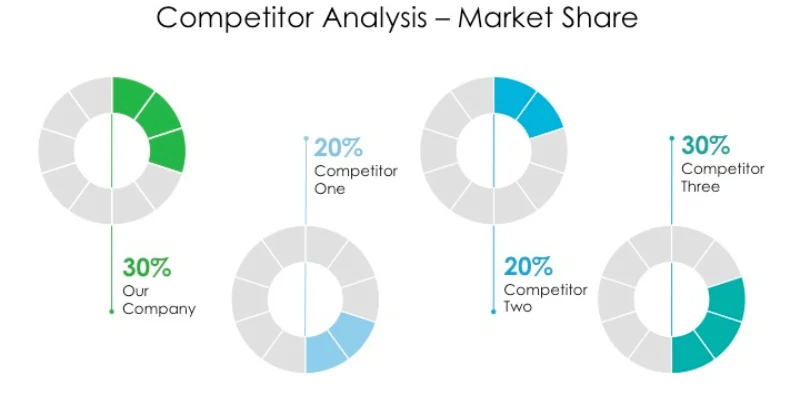
Competitor analysis is not a one-time exercise. Pakistani digital markets evolve continuously: new competitors emerge, existing competitors publish new content, algorithm updates reshuffle rankings. Clickmasters recommends a structured quarterly competitor intelligence review:
| Quarterly Review Task | Process & Tools |
| Competitor keyword ranking changes | Run Ahrefs Ranking History for top 5 competitors. Identify: new pages ranking for previously unranked keywords (new content targets), positions lost by competitors (opportunities to displace them with better content), featured snippets they have captured or lost. |
| New content published by competitors | Ahrefs > Site Explorer > competitor > New Pages (last 90 days). What new content have they published? Does it address gaps you haven’t covered? What keywords are they targeting? |
| New backlinks acquired by competitors | Ahrefs > Site Explorer > competitor > New Backlinks (last 90 days). Which new publications, directories, or sites now link to them? Add to your link acquisition target list. |
| DR trajectory comparison | Track your DR vs. top 3 competitors monthly. If the DR gap is widening, you need to accelerate link building. If narrowing, your authority-building strategy is working. |
| SERP position changes | Semrush Position Tracking: monitor your rankings and competitors’ rankings for your top 20 target keywords simultaneously. Identify where competitors are gaining on you (threat) and where you are gaining on them (opportunity to accelerate). |
Frequently Asked Questions: Competitor SEO Analysis
How do I find competitors’ keywords if I don’t have Ahrefs or Semrush?
Free alternatives that provide partial competitor keyword data: (1) Ubersuggest (free tier): Enter a competitor’s domain to see their top organic keywords. Limited to 3 searches per day on free tier. (2) SEMrush free trial (7 days): Full access to the keyword gap tool during the trial period. Use this time to export competitor keyword data comprehensively. (3) Google Search Console (your data only): Use your own GSC data to understand where competitors outrank you by searching your target keywords and noting which positions you hold vs. competitors. (4) Manual SERP analysis: Google your 20 most important target keywords and manually record which competitors rank. Build your gap list from direct SERP observation.
Should I copy my competitors’ content strategy?
Copying is the wrong framing — analysis is the right framing. Competitor analysis reveals what the market rewards, what users search for, and what authority levels are needed. Your content must be genuinely better than your competitors’, not a copy. Google’s Helpful Content system specifically devalues content that appears to be created primarily to match what already ranks rather than to serve users. Use competitor analysis to identify the opportunities and the quality standard, then create substantively superior content that addresses gaps your competitors leave unfilled.
How do I prioritise between competing gap opportunities?
Clickmasters’ prioritisation framework: (1) Quick wins first: keyword gaps with KD under 25, volume over 200, and commercial intent where you have existing topical relevance. These rank fastest with the least effort. (2) Content upgrades second: topics where you have existing content that is weaker than the competitor’s — improving existing pages is faster than creating new ones. (3) High-value long-term targets: high-volume, high-KD gaps that require authority building — start these early but expect 6–12 months to results. (4) Content creation for new topics: new pages targeting missed topics — schedule these in your content calendar based on commercial value.