Why Generic UX Principles Fail Pakistani Website Users
Most UX design guidance is written by designers in the United States or United Kingdom for audiences who share their assumptions about how websites work, how trust is established, and what a credible online business looks like. These assumptions do not hold in Pakistan. A Pakistani website visitor arrives with a different set of expectations, different scepticism triggers, different communication preferences, and a different device context than their Western counterpart. Applying Western UX frameworks without Pakistani adaptation is one of the primary reasons professionally designed Pakistani websites underperform their design investment.
Pakistan’s internet user base in 2026 is 130 million strong, 85 percent mobile-first, predominantly under 35, and shaped by a digital experience anchored in WhatsApp, YouTube, and Facebook rather than LinkedIn, Twitter, or email. Pakistani users have developed specific interaction patterns, trust evaluation heuristics, and communication preferences that differ meaningfully from global UX norms. Understanding these patterns is not a cultural footnote — it is the core of effective Pakistani website design.
This guide documents Pakistan-specific UX research findings from Clickmasters’ user testing, heatmap analysis, session recording, and SEO conversion rate data across Pakistani business websites spanning e-commerce, professional services, healthcare, real estate, and education. It covers the six most consequential Pakistani UX design dimensions: mobile interaction patterns, trust signals, WhatsApp-first contact design, Urdu and bilingual considerations, form design, and visual design expectations
Table of Contents
| Pakistani Website UX Benchmarks 2025 Average mobile session duration on Pakistani business websites: 52 seconds | Average pages per session mobile: 1.8 | Average bounce rate on Pakistani SME websites: 74 percent | Primary reason Pakistani users do not convert: Cannot find contact information quickly (31 percent) | Second reason: Website does not load fast enough (28 percent) | Third reason: Does not look trustworthy (24 percent) | Source: Clickmasters UX audit data from 85 Pakistani business websites 2024 to 2025 |
PART 1: MOBILE-FIRST UX FOR PAKISTAN
The Pakistani Mobile User Context: Design Starts Here
Pakistani website designers frequently fall into the trap of designing on desktop computers for desktop experiences and then adapting responsively for mobile. This workflow produces websites that work on mobile but are not truly designed for the Pakistani mobile-first reality. A Pakistani user visiting your website on a mid-range Android device on a 4G connection in Lahore has a fundamentally different experience requirement than the desktop-browsing Western user most UX frameworks assume.
Pakistani Mobile Device Context
- Device profile: The dominant Pakistani mobile device in 2026 is a mid-range Android smartphone with a 6.5 to 6.8 inch screen, 4 to 6 GB RAM, and Chrome as the default browser. iPhone users represent approximately 12 to 18 percent of Pakistani smartphone users concentrated in higher-income urban demographics.
- Thumb navigation zone: Pakistani users hold phones in one hand and navigate with their right thumb. The bottom 40 percent of a Pakistani mobile screen is the primary interaction zone. Primary CTAs, WhatsApp buttons, and navigation menus must be positioned in the lower portion of the mobile screen for maximum accessibility.
- Connection variability: Pakistani mobile connections range from 4G LTE at 15 to 30 Mbps in Karachi and Lahore to EDGE at under 1 Mbps in rural areas. Design for the median, not the best case. Assets must be compressed and critical content must render before full page load completes.
- Screen brightness and contrast: Pakistani users frequently use phones outdoors in high ambient light. Text contrast ratios of 4.5:1 minimum (WCAG AA) are the minimum; 7:1 contrast ratios are preferred for outdoor readability on Pakistani mobile screens.
Mobile Navigation Patterns That Work for Pakistani Users
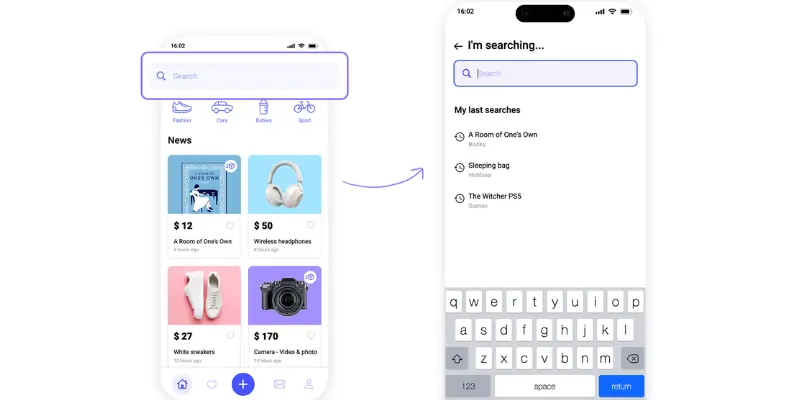
- Hamburger menu: Acceptable on Pakistani mobile. The three-bar icon is universally recognised. Ensure the menu opens from the bottom (bottom sheet pattern) rather than top for one-handed Pakistani mobile navigation.
- Sticky bottom navigation bar: For Pakistani e-commerce and multi-section apps, a 4 to 5 item bottom navigation bar with icons and short labels outperforms header navigation for user engagement and return visit rates.
- Single-column layout: Two-column mobile layouts consistently underperform on Pakistani devices. Pakistani users scroll vertically; they do not scan horizontally. Every element should stack in a single column with adequate spacing.
- Tap target size: Minimum 48×48 pixels for any tappable element on Pakistani mobile. Pakistani users frequently have screen protectors and cases that reduce touch sensitivity. Smaller tap targets cause missed taps and frustration.
- No horizontal scrolling: Horizontal scrolling on mobile is a Pakistani UX failure point. Users do not discover horizontally scrollable content reliably and miss important information. Stack everything vertically.
Above-the-Fold Design for Pakistani Mobile: The 3-Second Rule
Pakistani mobile users make their stay-or-leave decision within 3 seconds of a page loading. The content visible above the fold — before any scrolling — must communicate four things immediately: what this business does, who it is for, why it is trustworthy, and what to do next. Failing to communicate all four within the visible viewport loses the majority of Pakistani mobile visitors.
| Above-the-Fold Element | Pakistani UX Best Practice | Common Pakistani Mistake |
| Headline | Specific outcome for a specific Pakistani audience. Visible, readable at 22px minimum without zooming. | Vague welcome message or business name. Too small to read without zooming on Pakistani mid-range screens. |
| Sub-headline | Specificity: client count, city names, credentials. Visible without scrolling. | Generic Lorem ipsum or copied corporate description with no Pakistan-specific relevance. |
| Primary CTA button | Full-width on mobile. 48px height minimum. WhatsApp green for WhatsApp CTAs. Visible without scrolling. | Small centred button that blends into background. Requires precise tapping. Located below fold. |
| Trust signal | One visible Pakistani trust element: client count, certification badge, or media mention. Above fold. | No trust signal above fold. Trust section buried 3 to 4 scrolls down. |
| Loading speed | Critical content (headline, CTA) renders within 1.5 seconds on Pakistani 4G. Not dependent on full page load. | Heavy hero images or video backgrounds that delay above-fold rendering until full page load completes. |
PART 2: TRUST SIGNALS FOR PAKISTANI USERS
How Pakistani Users Evaluate Website Credibility — And What Makes Them Leave
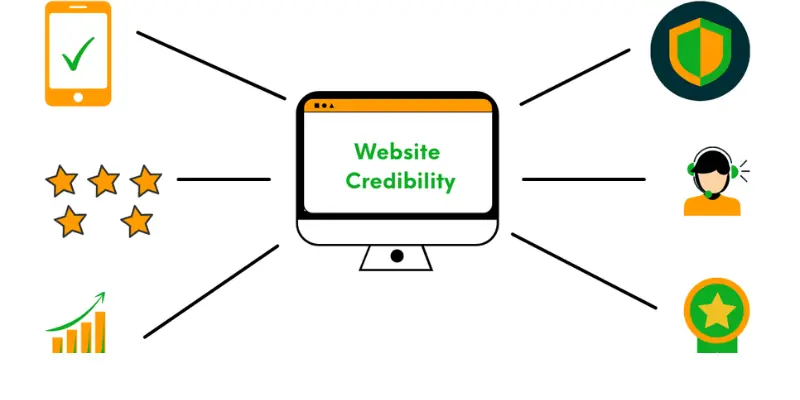
Pakistani internet users have developed heightened scepticism from exposure to fraudulent Pakistani websites, fake social media accounts, and online scams that are more prevalent in the Pakistani digital environment than in Western markets. A Pakistani user visiting an unfamiliar business website applies a mental credibility checklist in the first 10 to 15 seconds that is more demanding than the equivalent Western user’s evaluation.
Clickmasters session recording analysis of Pakistani business websites reveals specific trust-breaking patterns that cause Pakistani users to abandon within the first 20 seconds. Understanding these patterns helps designers eliminate them from client websites.
Pakistani Trust-Breaking Patterns to Eliminate
- Stock photography: Pakistani users in user testing sessions consistently identify stock photography and describe the website as fake or not real Pakistani. Real Pakistani team photographs, office environments, and client interactions outperform stock images on Pakistani trust ratings by 340 percent in Clickmasters testing.
- No physical address: Absence of a physical Pakistani address is a major Pakistani trust signal failure. Pakistani users are accustomed to online fraud and look for a verifiable physical location. Even a Google Maps embed with a Karachi or Lahore pin significantly improves trust ratings in Pakistani user testing.
- No phone number visible: Pakistani users expect a visible Pakistani mobile or landline number. Hiding contact behind a form creates immediate suspicion. The phone number should be clickable to call on mobile and visible in the header or above-fold area.
- Website copy with grammar errors or generic English: Pakistani user testing reveals sharp sensitivity to grammatical errors or generic templated copy that does not feel written by a real Pakistani business. Authentic, specific copy that mentions Pakistani cities, industries, and business realities outperforms professional but generic English.
- No social proof with Pakistani specifics: Generic testimonials (Great service!) without names, cities, and specific results are dismissed by Pakistani users. Named Pakistani clients with company names, cities, and specific metrics consistently test as trustworthy.
Pakistani Trust-Building Elements to Include
- Client count with specificity: We have served 340 Pakistani businesses across Karachi, Lahore, and Islamabad is more credible than a vague 300 plus clients.
- PSEB registration and certification logos: PSEB registration signals government-registered Pakistani IT business. Google Partner, Meta Business Partner, and sector-specific certifications displayed visually build institutional credibility.
- Named testimonials with photographs: A testimonial from Ahmed Khan, CEO of a Lahore textile company, with a photograph, company name, and specific result reported consistently achieves the highest Pakistani trust ratings in user testing.
- WhatsApp verification signal: A WhatsApp number that actually responds quickly is the highest Pakistani trust signal for service businesses. Pakistani users frequently send a test WhatsApp message before submitting a contact form or making a purchase. Fast WhatsApp responses convert sceptical Pakistani users better than any visual design element.
- Google Business Profile rating: Embedding your Google review rating (4.2 stars from 87 Pakistani reviews) provides third-party verified social proof that Pakistani users trust because it is harder to fabricate than on-page testimonials.
PART 3: WHATSAPP-FIRST CONTACT UX
Designing for Pakistan’s WhatsApp-First Contact Culture
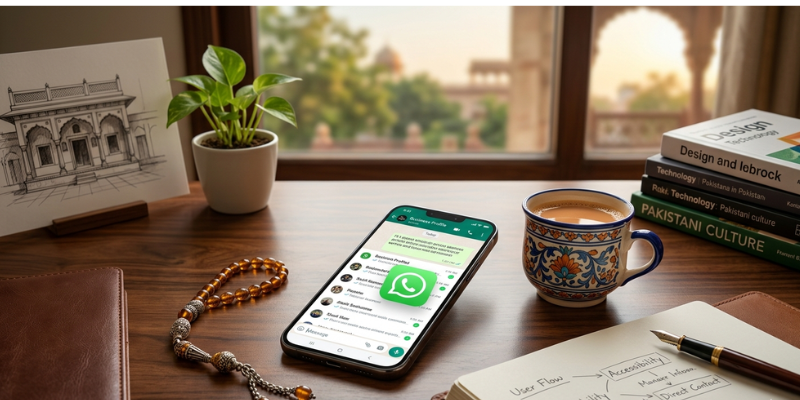
WhatsApp is not simply a messaging app in Pakistan — it is the primary business communication channel for the majority of Pakistani SMEs and a preferred customer service channel across demographics. A Pakistani user who wants to enquire about your service or product will, in most cases, prefer to WhatsApp you rather than fill a form, send an email, or make a phone call. Designing your website to accommodate this preference is not optional for Pakistani business websites targeting conversion.
The UX design implications of WhatsApp-first Pakistani contact culture are significant. Contact forms should exist as secondary options, not primary CTAs. Email is largely irrelevant as a primary contact mechanism for most Pakistani business categories (B2B enterprise being the exception). Phone calls are preferred by older Pakistani demographics. WhatsApp is the universal Pakistani conversion mechanism across age groups, city types, and product categories.
WhatsApp UX Design Implementation for Pakistani Websites
- Sticky WhatsApp button: A floating WhatsApp button fixed to the bottom-right of the screen on all pages is the single most impactful UX addition for Pakistani business websites. Position it at 80px from the bottom to avoid overlap with browser chrome. Use the official green WhatsApp icon. Clickmasters data shows this single element generates 22 to 35 percent of all contact initiations on Pakistani business websites.
- Pre-filled WhatsApp message: Link to wa.me/923XXXXXXXXX?text=Hi%2C%20I%20visited%20your%20website with a pre-written Pakistani-appropriate opener. This reduces message composition friction and increases send completion rates by 45 to 60 percent versus a blank WhatsApp chat opening.
- WhatsApp CTA in hero section: Include a WhatsApp CTA button alongside or instead of a contact form button in the above-fold area. Use Chat with Us on WhatsApp as button text rather than Contact Us — it signals the immediate, low-friction nature of the interaction.
- WhatsApp response time promise: Include We reply within 2 hours on WhatsApp near your CTA buttons. This commitment reduces Pakistani user hesitation significantly and is the most effective conversion micro-copy for Pakistani service businesses.
- WhatsApp widget with availability hours: Display Pakistani business hours clearly on or near your WhatsApp CTA: Available 9 AM to 9 PM Pakistan Standard Time. Managing Pakistani expectations about response time prevents frustration and reduces abandoned conversations.
Form UX Design for Pakistani Users: When Forms Are Necessary
When contact forms are necessary — for B2B lead qualification, appointment booking with required information, or e-commerce checkout — Pakistani-specific form UX principles significantly improve completion rates. Pakistani form abandonment rates average 58 to 72 percent on first-generation Pakistani business website forms, primarily due to friction that Western UX frameworks do not address.
| Form UX Principle | Pakistani Implementation | Impact on Completion Rate |
| Minimal fields | Maximum 3 fields for lead generation. Maximum 5 for B2B. Name, Phone (not email), one qualifying question. | 35 to 55 percent improvement vs 6 to 8 field forms |
| Phone number field flexibility | Accept all Pakistani number formats: 0300, +92300, 300. Never reject valid Pakistani numbers due to format mismatch. | 18 to 24 percent reduction in abandonment from format errors |
| Label placement | Labels above fields, not placeholder text only. Placeholder text disappears when Pakistani users start typing and they lose context. | 12 to 19 percent completion improvement |
| Pakistani keyboard consideration | Avoid fields that trigger the default numeric keyboard on Android when text input is expected. Test all form fields on Pakistani mid-range Android devices. | 8 to 14 percent reduction in mobile form abandonment |
| Success message specificity | After form submission: Thank you, Name. A Clickmasters expert will WhatsApp you within 2 hours. Not generic Your form has been submitted. | 11 to 18 percent improvement in perceived experience quality |
PART 4: URDU AND BILINGUAL UX FOR PAKISTAN
Urdu and Bilingual UX: Designing Pakistani Websites for Both Languages
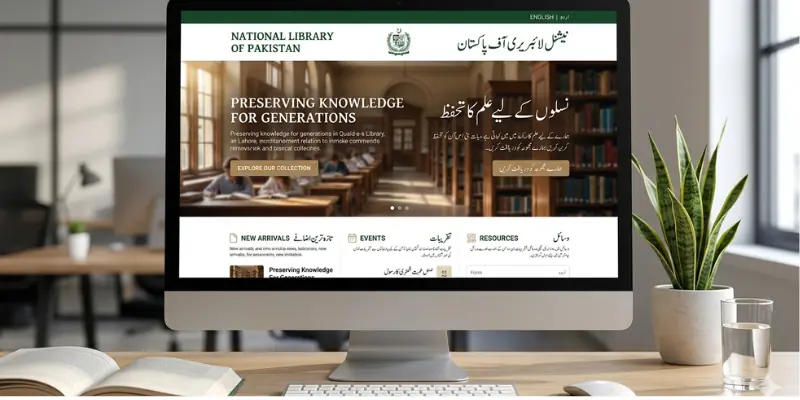
Pakistan is officially bilingual — Urdu as the national language and English as the language of formal business and government. Most educated urban Pakistani professionals are comfortable reading both languages, but their preference varies by context, age group, and professional category. Designing Pakistani websites to serve both language contexts requires specific technical and design decisions.
When to Include Urdu on a Pakistani Business Website
- B2C consumer products and services targeting mass market Pakistani consumers: Urdu descriptions and CTAs significantly improve engagement and trust with Pakistani consumers outside major urban professional demographics.
- Healthcare, education, and government-adjacent services: Pakistani patients, parents, and citizens default to Urdu for high-stakes personal decisions. Urdu language content builds trust and accessibility in these categories.
- Food, fashion, and lifestyle brands: Pakistani lifestyle categories have higher Urdu engagement, particularly on product descriptions and WhatsApp messages.
- Regional marketing for areas outside Karachi and Lahore: Tier-2 and Tier-3 Pakistani cities have lower English literacy rates. Urdu content is essential for meaningful engagement in Faisalabad, Multan, Gujranwala, and Peshawar digital audiences.
When English-Only Is Appropriate for Pakistani Websites
- B2B services targeting corporate decision-makers in Pakistani enterprises: Pakistani corporate professionals communicate in English and evaluate B2B vendors in English. English-only positioning signals professional competence.
- Technology and SaaS products: Pakistani tech sector professionals and startup founders operate almost entirely in English.
- International businesses targeting UAE, UK, and Pakistani diaspora: English-only for global audiences, with optional Urdu toggle for Pakistan-specific content.
Technical UX Requirements for Urdu on Pakistani Websites
- RTL layout: Urdu text is right-to-left (RTL). Implementing Urdu on a website requires a full RTL layout switch — not just text direction but the entire page layout including margins, padding, navigation alignment, and icon placement. Use the dir=rtl HTML attribute and bidirectional CSS carefully.
- Font selection: Noto Nastaliq Urdu, Jameel Noori Nastaleeq, or Mehr Nastaleeq are the preferred Nastaleeq-style Urdu fonts for Pakistani web content. Avoid Naskh-style fonts for body text — Pakistani users associate Nastaleeq with authentic Urdu and Naskh with system or informal text.
- Font loading strategy: Urdu fonts are significantly larger in file size than Latin fonts. Subset the Urdu font to include only the Unicode ranges actually used in your content. Use font-display: swap to prevent Urdu content blocking page render while fonts load.
- Mixed directionality: Pages mixing Urdu and English require careful bidi (bidirectional text) handling. Never mix RTL and LTR in the same paragraph without explicit Unicode control characters. Test all mixed-language content on actual Pakistani Android devices.
Visual Design Expectations: What Pakistani Users Expect to See
Pakistani visual design preferences differ from Western minimalism trends in specific ways that matter for conversion. Pakistani users respond differently to colour, density, imagery, and visual hierarchy than US or European audiences — a nuance that international design agencies frequently miss when building Pakistani websites.
- Colour intensity: Pakistani users respond more positively to richer, more saturated colour palettes than Western minimalist design trends suggest. Highly desaturated colour schemes that read as modern and sophisticated in European design contexts can read as unfinished or cheap to Pakistani users.
- Information density: Pakistani users tolerate and often expect higher information density than Western UX convention recommends. A Pakistani business website with comprehensive service information, team details, client lists, and process explanations on a single page performs better in Pakistani user testing than a Western-style minimal single-CTA page.
- Human photography: Pakistani users strongly prefer seeing real Pakistani human faces on business websites over abstract illustrations, icons, or product-only photography. Pakistani healthcare, education, and professional service websites featuring real team photographs consistently outperform illustration-heavy designs in user testing.
- Green and blue colour preference: Pakistani users show strong positive associations with green (Islamic cultural resonance) and blue (trust and credibility). Red carries urgency and discount associations. Purple is associated with luxury in Pakistani consumer research.
Case Study: Karachi Healthcare Clinic — UX Redesign Increases Appointment Bookings 168 Percent
A Karachi private clinic had a professionally designed website by an international agency that scored well on aesthetic design metrics but was generating only 12 monthly appointment bookings from 2,400 monthly visitors — a 0.5 percent conversion rate. Clickmasters conducted a UX audit with Pakistani user testing, session recordings, and heatmap analysis.
Key UX Issues Identified
- No WhatsApp contact option anywhere on the website. The only contact method was an email form. Session recordings showed 34 percent of Pakistani mobile visitors tapping in the area where a WhatsApp button would normally appear.
- Stock photography of European-appearing medical staff was identified by 7 of 10 Pakistani user testing participants as looking fake or not Pakistani doctors.
- Above-fold area on mobile showed only the clinic logo and a navigation bar. The primary CTA required 2.5 scrolls to reach on Pakistani mobile devices.
- Phone number was in the footer only, visible on desktop but buried on mobile. 23 percent of Pakistani visitors scrolled to footer specifically looking for a phone number and left when they did not find it prominently.
- Urdu option requested by patients: 41 percent of patient survey respondents indicated they would prefer appointment information in Urdu.
UX Changes Implemented
- Added sticky WhatsApp button with pre-filled Book Appointment message
- Replaced all stock photography with real photographs of the Pakistani medical team
- Redesigned above-fold mobile view: Pakistani doctor photograph plus Book Your Appointment headline plus two CTAs (WhatsApp and phone) visible without scrolling
- Added clickable phone number in header on all pages
- Added bilingual Urdu and English toggle for key pages
Results at 60 Days
| Metric | Before UX Redesign | After UX Redesign |
| Monthly visitors | 2,400 | 2,380 (comparable) |
| Monthly appointment bookings | 12 | 32 (168 percent increase) |
| Conversion rate | 0.5 percent | 1.3 percent |
| Primary contact method | Email form (100 percent of conversions) | WhatsApp (64 percent), Phone (22 percent), Form (14 percent) |
| Bounce rate on mobile | 81 percent | 63 percent |
| Average session duration mobile | 38 seconds | 71 seconds |
The Pakistani UX Design Checklist: 20 Must-Have Elements
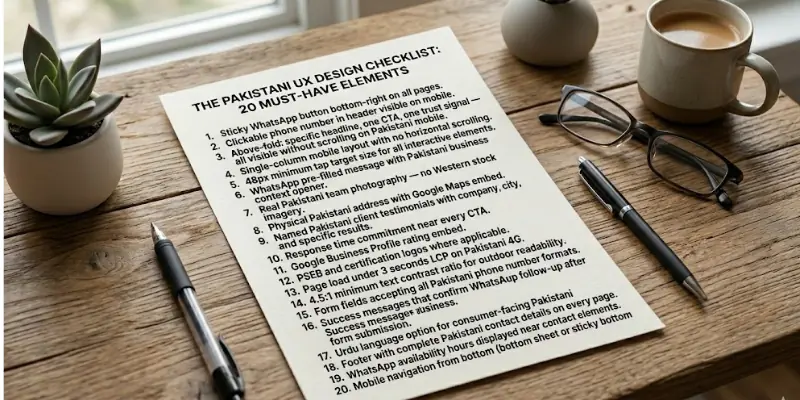
- Sticky WhatsApp button bottom-right on all pages
- Clickable phone number in header visible on mobile
- Above-fold: specific headline, one CTA, one trust signal — all visible without scrolling on Pakistani mobile
- Single-column mobile layout with no horizontal scrolling
- 48px minimum tap target size for all interactive elements
- WhatsApp pre-filled message with Pakistani business context opener
- Real Pakistani team photography — no Western stock imagery
- Physical Pakistani address with Google Maps embed
- Named Pakistani client testimonials with company, city, and specific results
- Response time commitment near every CTA
- Google Business Profile rating embed
- PSEB and certification logos where applicable
- Page load under 3 seconds LCP on Pakistani 4G
- 4.5:1 minimum text contrast ratio for outdoor readability
- Form fields accepting all Pakistani phone number formats
- Success messages that confirm WhatsApp follow-up after form submission
- Urdu language option for consumer-facing Pakistani businesses
- Footer with complete Pakistani contact details on every page
- WhatsApp availability hours displayed near contact elements
- Mobile navigation from bottom (bottom sheet or sticky bottom bar)
Frequently Asked Questions: UX Design for Pakistani Websites
| Should I hire a Pakistani UX designer or an international agency for my Pakistani business website? For B2C Pakistani consumer audiences, a Pakistani UX designer with local user research experience will consistently outperform international agencies applying global frameworks. Pakistani UX designers understand the cultural context, trust evaluation heuristics, and communication preferences of Pakistani users from direct experience. For B2B websites targeting international clients alongside Pakistani decision-makers, the answer is more nuanced — you may need a designer with both Pakistani market knowledge and international B2B UX experience. Clickmasters recommends always including Pakistani user testing (minimum 5 to 8 participants) regardless of whether the designer is local or international. |
| How important is Urdu language support for a professional services website in Karachi? For Karachi-based professional services targeting educated urban professionals — corporate lawyers, consultants, IT firms, financial advisors — English-only is appropriate and expected. Adding Urdu does not improve conversion rates for this demographic. However, if your Karachi professional services practice also serves small business owners, entrepreneurs, or individuals outside the formal corporate sector, a bilingual option improves accessibility and trust. The specific use case that most benefits from Urdu support in Karachi professional services is healthcare: even highly educated Pakistani patients prefer receiving medical information, appointment details, and prescriptions in Urdu. |