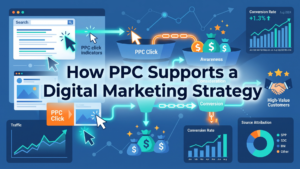
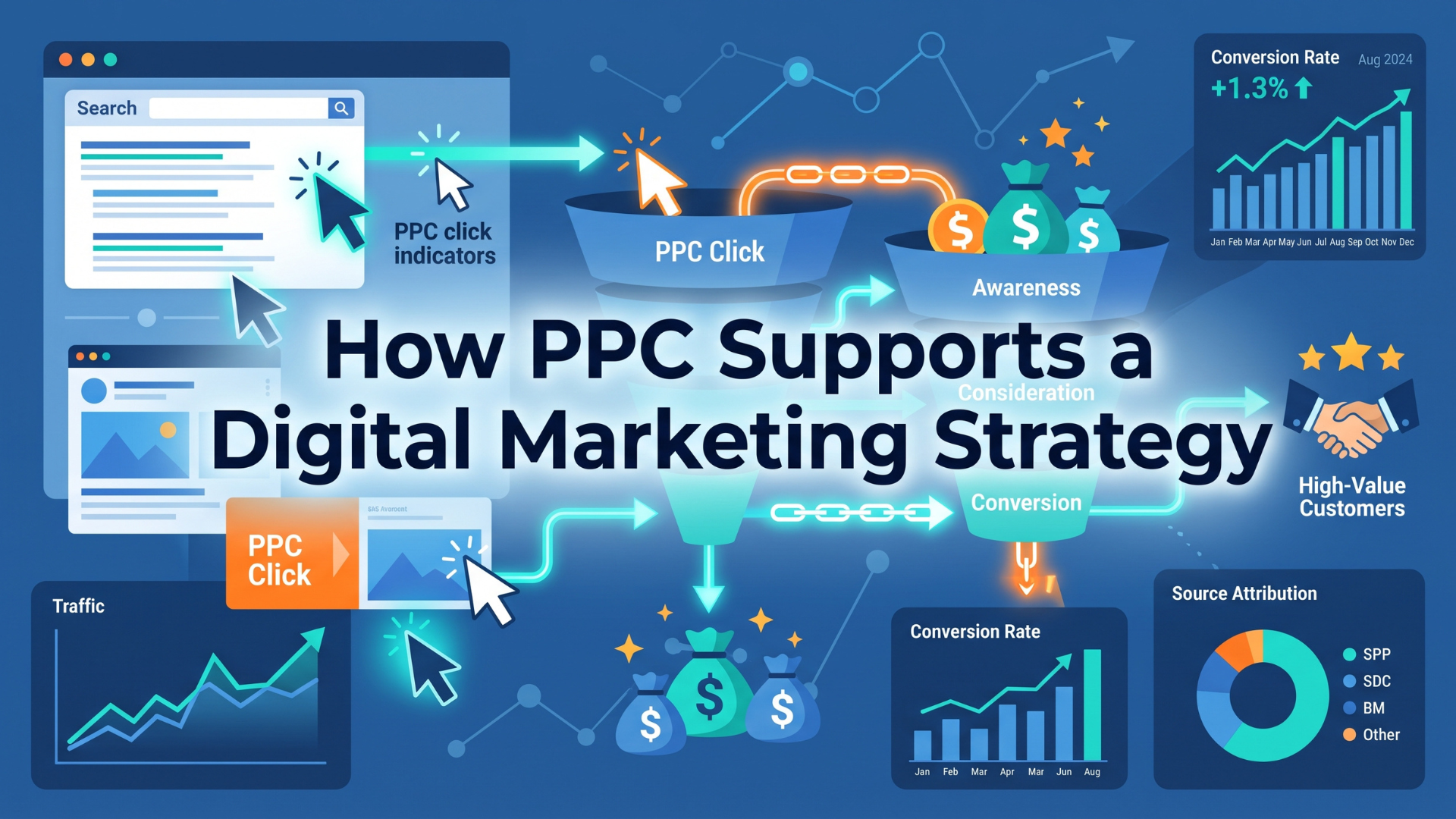
How PPC supports a digital marketing strategy is simple: paid ads help businesses reach the right audience quickly. If you’ve seen “Sponsored” results at the top of Google, you’ve already seen PPC in action. It drives targeted traffic and leads, often within hours.
For beginners, though, PPC in digital marketing can feel overwhelming. Bidding, Quality Score, CPC, negative keywords — the terminology alone is enough to make anyone pause. This guide breaks down everything you need to know about PPC in digital marketing, from the basics to how to launch your first campaign the right way – and how a team like ClickMasters can help you get there faster.
Table of Contents
What is PPC (Pay-Per-Click) Advertising?
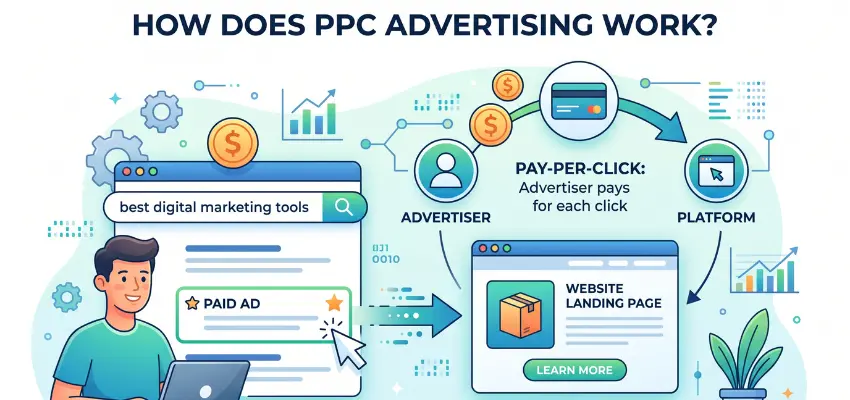
PPC, or Pay-Per- Click advertising is a digital marketing model where businesses pay a fee each time someone clicks on their ad. How PPC supports a digital marketing strategy is through targeted paid traffic. Instead of trying to “earn” traffic organically, you’re essentially buying visits to your website.
For example, when you search “best running shoes” on Google, the ads that appear above the organic results are PPC ads. The advertiser only pays when a user actually clicks — not just for the ad being shown.
How PPC Differs from SEO
SEO (Search Engine Optimisation) focuses on earning organic rankings over time through content creation, backlinks, and technical optimisation. It’s a gradual process — search engines need time to crawl, evaluate, and trust your website before rewarding it with higher rankings. PPC, on the other hand, delivers instant visibility because you’re literally paying for placement at the top of the results page, bypassing the wait entirely. How PPC supports a digital marketing strategy is through this instant visibility.
The biggest difference lies in sustainability versus speed. SEO traffic keeps coming even after you stop actively working on a page, making it a long-term asset. PPC traffic, however, stops the moment you pause your campaign or run out of budget — it’s rented visibility, not owned. That said, the two aren’t competitors; they’re complementary. Many businesses use PPC to generate quick wins and test which keywords convert best, then invest in SEO for those same keywords to build lasting, cost-free traffic over time.
How Does PPC Advertising Work?
PPC operates on an auction-based system. Advertisers choose keywords relevant to their business and place a bid on how much they’re willing to pay per click. When a user searches for that keyword, an automated auction decides which ads appear and in what order.
Understanding the PPC Bidding System
Bidding isn’t just about who pays the most. Platforms like Google Ads consider your bid amount alongside your ad’s relevance and quality, combining them into what’s known as “Ad Rank”. This means even a smaller business with a well-optimised, highly relevant ad can outrank a competitor with a much bigger budget but a poorly targeted campaign.
There are also several bidding strategies to choose from, depending on your goals. Manual bidding gives you full control over how much you pay per click, which is useful when you’re still learning how your campaigns perform. Automated bidding, on the other hand, lets the platform’s algorithm adjust bids in real time based on the likelihood of a click or conversion – ideal once you have enough performance data for the system to optimise accurately. Understanding which strategy fits your business stage is key to avoiding wasted spend early on.
What is a quality score in PPC?
Quality Score is Google’s rating (1–10) of how relevant and useful your ad, keywords, and landing page are to users. It’s calculated using three main factors: expected click-through rate, ad relevance to the search query, and the overall quality of your landing page experience.
A higher Quality Score typically means lower costs and better ad positions, since Google rewards ads that provide genuine value to searchers rather than simply outbidding competitors. In practical terms, this means two advertisers bidding the same amount can end up paying very different prices per click — the one with the higher quality score gets a discount, while the one with a lower score pays more for the same position. This is why beginners are often advised to focus on relevance and landing page quality just as much as budget when planning pay-per-click marketing services.
Types of PPC Campaigns You Should Know
PPC isn’t limited to search engine ads. Here are the main formats beginners should understand:
Search Ads
Text-based ads that appear on search engine results pages when someone searches a relevant keyword. These ads target users who are actively looking for a solution, making them highly effective for capturing high-intent traffic and driving quick conversions, especially for service-based businesses.
Display Ads
Visual banner ads are shown across a network of websites, apps, and blogs — great for brand awareness. Unlike search ads, display ads reach users who aren’t actively searching for your product, making them ideal for staying top-of-mind and introducing your brand to a wider audience.
Shopping Ads
Product-based ads that show an image, price, and store name directly in search results are commonly used by e-commerce businesses. Because they display key product details upfront, shopping ads tend to attract more qualified clicks from users who already know what they want to buy.
Social Media PPC Ads
Paid ads run on platforms like Facebook, Instagram, and LinkedIn, targeting users based on interests, demographics, and behaviour rather than search intent alone. These ads work especially well for visually engaging products and services, and they allow for highly specific audience segmentation that search ads can’t always match.
Remarketing & Retargeting Ads
Ads shown to users who’ve previously visited your website, helping bring back potential customers who didn’t convert the first time. Since these users are already familiar with your brand, digital marketing services like remarketing typically deliver higher conversion rates and a lower cost per acquisition compared to targeting cold audiences.
Why PPC is Important for Business Growth
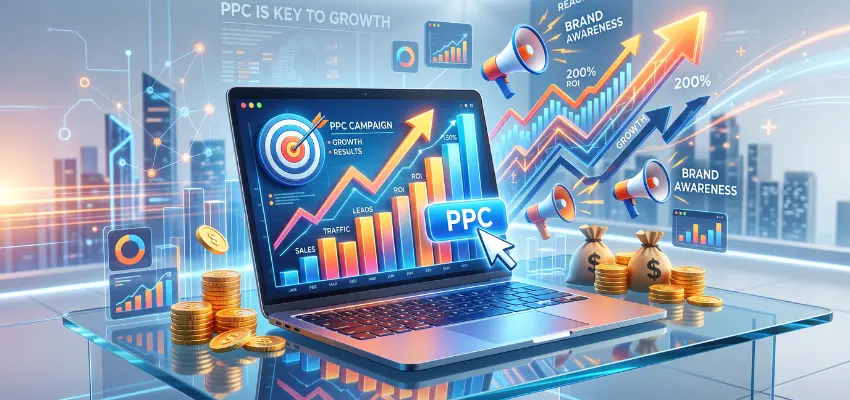
PPC gives businesses precise control over who sees their ads, when, and where. You can target by location, device, interests, and even time of day — ensuring your budget reaches the audience most likely to convert.
PPC vs SEO: Which One Gives Faster Results?
PPC wins when it comes to speed. While SEO can take months — sometimes even a year — to show measurable results, a well-structured PPC campaign can start driving traffic and leads within hours of going live. This makes PPC especially valuable for new businesses, product launches, or time-sensitive promotions where waiting isn’t an option.
That said, SEO tends to be more cost-effective long-term, since you stop paying per click once your pages start ranking organically. PPC costs scale directly with your traffic — more clicks always mean more spend. This is why most successful digital marketing strategies don’t choose one over the other; they run PPC to generate immediate results while building SEO in the background for sustainable, long-term growth.
Top PPC Advertising Platforms in 2026
Google Ads
The largest and most widely used PPC platform, ideal for capturing high-intent search traffic.
Meta Ads (Facebook & Instagram)
Strong for visual storytelling and audience targeting based on interests and behaviour.
LinkedIn Ads
Best suited for B2B businesses targeting professionals by job title, industry, or company size.
Microsoft (Bing) Ads
Often overlooked, but offers lower competition and cost-per-click compared to Google in many industries.
Essential PPC Terms Every Beginner Should Know
CPC, CTR, CPA & Conversion Rate Explained
| Term | Meaning |
| CPC (Cost Per Click) | The amount you pay each time someone clicks your ad |
| CTR (Click-Through Rate) | The percentage of people who click your ad after seeing it |
| CPA (Cost Per Acquisition) | The cost to gain one paying customer or lead |
| Impressions | The number of times your ad is displayed |
| Conversion Rate | The percentage of clicks that result in a desired action (purchase, sign-up, etc.) |
These metrics work together to tell the real story behind a campaign’s performance. A high CTR means your ad is compelling and relevant to searchers, but if your conversion rate is low, it usually points to a mismatch between the ad and the landing page experience. Similarly, a low CPC looks great on paper, but it only matters if those clicks are actually turning into leads or sales — otherwise, you’re just paying less for traffic that goes nowhere. Beginners should track all of these together rather than focusing on just one number, since optimising for CPC alone (without watching CPA and conversion rate) can quietly drain a budget on cheap but unproductive clicks.
Common PPC Mistakes Beginners Make
Poor Keyword Targeting
Choosing overly broad or irrelevant keywords wastes budget on clicks that never convert. For example, bidding on a generic term like “shoes” instead of “buy running shoes online” attracts a much wider – and far less qualified – audience, driving up costs without improving results. Beginners often make this mistake by prioritising search volume over search intent, when the two don’t always align.
Ignoring Negative Keywords
Without negative keywords, your ads may show up for unrelated searches, draining your budget on unqualified clicks. For instance, a paid PPC agency running ads for “PPC services” might unknowingly show up for searches like “free PPC course”, attracting clicks from people with no intention of hiring anyone. Regularly reviewing your search terms report and adding irrelevant queries as negative keywords is one of the simplest ways to immediately improve campaign efficiency.
Weak Landing Pages
Even a great ad fails if it sends users to a slow, cluttered, or irrelevant landing page. Your landing page should match the ad’s promise and make the next step obvious — whether that’s filling a form, making a purchase, or booking a call. A mismatch between what the ad promises and what the landing page delivers is one of the fastest ways to tank your conversion rate, no matter how well the rest of the campaign is optimised.
How to Start a PPC Campaign: Step-by-Step Guide
Setting Campaign Goals
Decide what success looks like — leads, sales, website traffic, or brand awareness — before spending a single rupee. Every decision that follows, from keyword selection to ad copy to budget allocation, depends on this goal. A campaign built for brand awareness looks very different from one built purely to generate sales, so skipping this step often leads to unfocused campaigns that don’t deliver clear results.
Keyword Research for PPC
Use tools like Google Keyword Planner to find relevant, high-intent keywords with reasonable competition and cost. Beyond just finding keywords, pay attention to search intent — someone searching “what is PPC” is looking for information, while someone searching “hire PPC agency near me” is ready to buy. Prioritising keywords that match commercial or transactional intent will generally give you a much better return than chasing high-volume but low-intent terms.
Budget & Bid Strategy
Start with a modest daily budget, choose a bidding strategy (manual or automated), and adjust based on performance data as you learn what works. It’s normal for early campaigns to have a “testing phase” where costs may seem high relative to results – this is when you’re gathering data on which keywords, ads, and audiences perform best. Resist the urge to shut everything down too early; give a campaign at least a couple of weeks of consistent data before making major budget decisions.
Once your goals, keywords, and budget are set, build your campaign structure, write compelling ad copy, launch, and monitor performance closely during the first few weeks.
Why Hire a Professional PPC Agency?
Benefits of Expert PPC Management
Running PPC campaigns without experience can lead to wasted ad spend and missed opportunities, since even small setup mistakes — like the wrong match type or a poorly structured campaign — can quietly eat into a budget for weeks before anyone notices. A professional PPC agency like Clickmasters brings the following:
- Expertise in keyword research, bidding strategies, and ad copywriting, built from managing campaigns across multiple industries and budgets
- Time savings so you can focus on running your business instead of learning platform algorithms through trial and error
- Continuous optimization based on real performance data, with regular adjustments to keywords, bids, and ad creatives to keep improving results
- Better ROI through experience-driven decision-making, since agencies know how to spot underperforming elements early and reallocate budget before it’s wasted
- Access to advanced tools and reporting that give clearer visibility into what’s actually driving conversions, not just clicks
If you’re ready to turn your ad budget into real, measurable results, working with a dedicated PPC team can make all the difference.
GET IN TOUCH
Get 1 Free Consultation Call
Final Thoughts on PPC in Digital Marketing
PPC is one of the most effective tools in digital marketing when used strategically. From understanding how bidding works to avoiding common beginner mistakes, the fundamentals covered in this guide give you a solid foundation to get started — or to make smarter decisions if you’re already running campaigns.
Want to run profitable PPC campaigns without the guesswork? Get in touch with the Clickmasters team today, and let’s build a campaign strategy tailored to your business goals.
Frequently Asked Questions About PPC in Digital Marketing
What is PPC in digital marketing, with an example?
PPC (Pay-Per-Click) in digital marketing is a paid advertising model where businesses pay a fee only when someone clicks their ad. For example, a shoe brand bidding on the keyword “buy running shoes online” pays Google each time a user clicks its sponsored ad, rather than paying a flat fee for the ad to simply appear.
How much does PPC advertising cost for beginners?
PPC costs vary widely depending on industry, competition, and platform, with cost-per-click ranging from a few cents to well over a dollar for competitive keywords. Beginners are generally advised to start with a small daily budget (even $5–$10) to test performance before scaling spend based on real results.
Is PPC better than SEO for a new business?
For a new business, PPC is usually better for generating immediate traffic and leads, since SEO can take several months to build organic rankings. However, the strongest long-term strategy combines both – using PPC for quick wins while SEO grows in the background.
How long does it take to see results from a PPC campaign?
PPC campaigns can start generating clicks and traffic within hours of launching, but meaningful, optimised results typically take 2–4 weeks as the algorithm gathers performance data. This initial learning period is normal and shouldn’t be mistaken for a failed campaign.
Which platform is best for PPC advertising in 2026?
Google Ads remains the top choice for capturing high-intent search traffic, while Meta Ads (Facebook & Instagram) works best for visual targeting and brand awareness. The “best” platform ultimately depends on where your target audience spends time and what your campaign goals are.
Can small businesses afford PPC advertising?
Yes, PPC is highly scalable, meaning small businesses can start with modest daily budgets and increase spend only as campaigns prove profitable. Unlike traditional advertising, you’re never locked into a high upfront cost, which makes PPC accessible even for businesses just starting.
Do I need a professional agency to run PPC campaigns?
While it’s possible to run PPC campaigns independently, a professional agency like Clickmasters helps avoid costly beginner mistakes, optimises campaigns using real performance data, and typically delivers a stronger return on ad spend. This is especially valuable for businesses without the time to monitor and adjust campaigns daily.