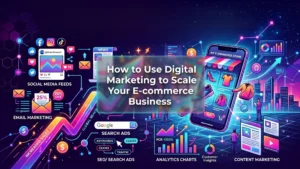
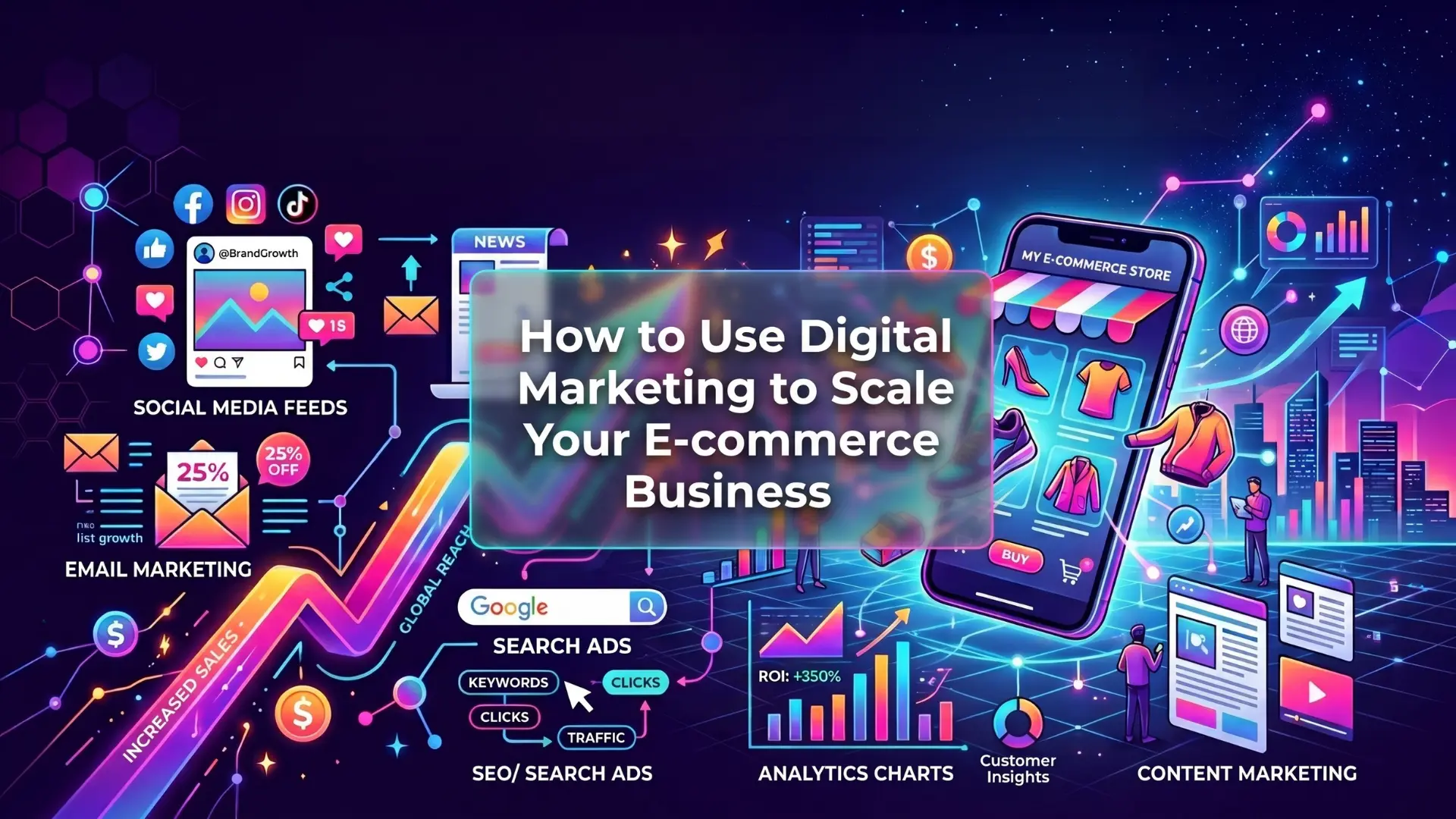
Picture this: you’re wondering how to use digital marketing to scale your e-commerce business as your online store continues to grow. Orders are coming in, revenue is increasing month over month, and you decide it’s time to push harder. Instead, something strange happens. Sales go up — but profit doesn’t. Your ad costs spike, your return on ad spend (ROAS) drops, and your team is suddenly firefighting instead of growing. Sound familiar?
This is what we call the ‘growth trap’ – and it’s one of the most common (and least talked about) reasons e-commerce brands stall out right when they should be taking off.
The good news? It’s almost always fixable. But the fix isn’t “do more marketing”. It’s understanding digital marketing as a diagnostic tool first and a growth tool second.
This post breaks down the right way to grow an e-commerce business with digital marketing — not by throwing more budget at every channel, but by following a simple framework: Diagnose → Fix → Multiply. It’s the approach we use at Clickmasters with growing e-commerce brands, and it’s what separates businesses that grow sustainably from those that burn cash chasing bigger numbers.
Table of Contents
The Myth: “More Marketing Equals More Growth”
There’s a common assumption in e-commerce: if sales are stalling, the answer is more marketing. More ad spend. More content. More channels. But marketing doesn’t fix a broken foundation — it amplifies it. If your checkout process leaks customers, more traffic just means more people abandoning at checkout. If your product pages don’t convert, more ad clicks just mean a lower ROAS on a bigger budget. Growth isn’t about volume. It’s about removing the constraints that are quietly capping your growth and only then applying pressure through digital marketing services (traffic, ad spend, and content) to the parts of your funnel that are actually ready to handle it.
That’s where the three-stage framework comes in.
Stage 1: Diagnose — Find What’s Actually Broken
Before touching your ad budget or hiring an agency, you need to know where the real bottleneck is. Most brands skip this step entirely, which is exactly why growth pushes backfire.
Ask yourself three questions:
1. Is this a traffic problem?
Are people even finding your store? If organic and paid traffic are both flat or shrinking, your issue is visibility – and that’s where SEO and paid acquisition come in.
2. Is this a conversion problem?
Are visitors landing on your site but not buying?
Check your conversion rate against industry benchmarks (typically 1.5–3% for most e-commerce categories). If traffic is healthy but conversions are weak, your funnel — not your marketing — is broken.
3. Is this a retention problem?
Are you acquiring customers but failing to bring them back? If your repeat purchase rate is low, you’re stuck paying full acquisition cost for every single sale, which makes growth financially unsustainable.
Most brands assume it’s a traffic problem by default. In reality, it’s often conversion or retention — and no amount of extra ad spend will fix either of those.

Stage 2: Fix — Use Digital Marketing as a Repair Tool
Once you know where the real gap is, the next step isn’t “push harder”. It’s “fix precisely”. This is the stage where most agencies — including our team at Clickmasters — spend the majority of their time before ever touching a paid ads budget.
SEO: Fixing the Silent Growth Cap
Many stores unknowingly cap their own organic growth through technical issues — slow page speed, poor mobile experience, thin product descriptions, or missing structured data. If you’re learning how to use digital marketing to scale your e-commerce business, these issues matter because they don’t just hurt rankings; they can quietly suppress conversions even from the traffic you already have.
A proper SEO fix means:
- Auditing site speed and mobile usability (both are ranking and conversion factors)
- Rewriting product and category pages around real buyer search intent, not just keywords
- Implementing structured data (schema) so products show up richer in search results
- Building supporting content — buying guides, comparisons, FAQs — that captures demand at every stage of intent
This isn’t about publishing more blog posts. It’s about closing the specific gaps that are costing you visibility and trust.
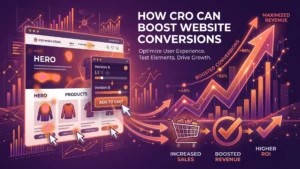
CRO: Fixing the Leak Before You Push More Traffic In
If your conversion rate is the bottleneck, increasing ad spend is like pouring more water into a leaking bucket. Common culprits include:
- Slow-loading checkout pages
- Lack of trust signals (reviews, guarantees, secure checkout badges)
- Confusing navigation or too many steps to purchase
- No urgency or clarity in product messaging
Fixing these often produces a bigger lift in revenue than any new marketing channel — because you’re getting more value out of traffic you’re already paying for.
Messaging: Fixing the Root Cause Behind Weak Performance
Sometimes the real issue isn’t technical at all — it’s positioning. If your messaging doesn’t clearly answer “Why buy from you, and why now?”, every channel underperforms, no matter how well it’s executed. A messaging fix means clarifying your value proposition with e-commerce digital marketing services before optimising anything else downstream.
Stage 3: Multiply — The Actual Mechanics of Growth
Once the leaks are fixed, this is where digital marketing shifts from repair mode to growth mode. But even here, sequencing matters more than most brands realise.
Layer Channels, Don’t Launch Them All at Once
Adding five new channels simultaneously makes it impossible to know what’s actually driving results. Instead:
- Strengthen your best-performing channel first
- Add a complementary channel (e.g., pairing Google Search with Meta retargeting)
- Expand only once each layer is stable and measurable
The 20% Rule for Increasing Ad Spend
A common (and effective) rule: increase ad budgets by no more than 20% every few days. Larger jumps often confuse ad platform algorithms, spike your cost-per-acquisition, and destabilise performance you’ve worked hard to build.
SEO as a Compounding Multiplier
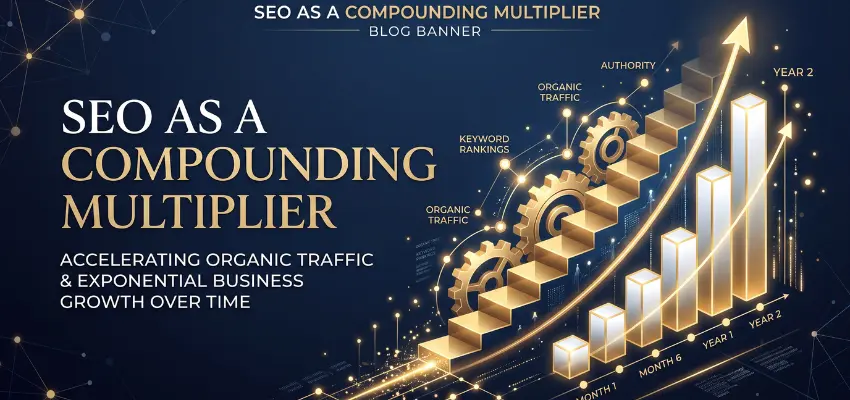
Unlike paid ads, SEO doesn’t reset when you stop spending. Every optimised page, every piece of content, and every backlink continues working in the background — which means your customer acquisition cost naturally decreases over time as organic traffic grows. This is what makes SEO one of the most underrated growth levers for e-commerce brands trying to reduce dependency on paid ads. At Clickmasters, we typically see SEO-driven traffic become a brand’s most profitable channel within 4–6 months of consistent execution.
Retention: The Multiplier Most Brands Ignore
Email and SMS marketing are often treated as an afterthought, but they’re one of the highest-ROI growth tools available. Abandoned cart flows, post-purchase sequences, and loyalty segmentation increase customer lifetime value — which means every new customer you acquire becomes more profitable over time, making your paid and SEO efforts go further without extra spend.
Silent Growing Without Data Feedback Loops
Even with all the right fixes in place, brands often grow blind – without a clear view of which channel, page, or campaign is actually driving profitable growth. This usually comes down to fragmented data: SEO, ads, and email are all tracked separately, with no unified view of the customer journey.
Before increasing spend anywhere, connect your data across:
- Organic and paid traffic sources
- On-site conversion behavior
- Post-purchase retention metrics
Without this feedback loop, you’re not growing on purpose — you’re gambling with a slightly better UI.
What Healthy Growth Actually Looks Like
Most content promises overnight results. Realistically, sustainable growth follows a more grounded timeline:
- Weeks 1–4: Diagnostic phase — identifying real bottlenecks, fixing technical/CRO issues
- Weeks 4–8: Controlled testing — small budget increases, content, and SEO fixes going live
- Months 3–6: Compounding growth — organic traffic rising, retention improving, paid efforts becoming more efficient
- Months 6+: Multiplication phase — channels reinforcing each other, CAC trending down, LTV trending up
This is slower than most “10x your store overnight” promises — but it’s the version that actually holds up.
Final Thoughts
Ultimately, growing an e-commerce business with digital marketing isn’t about doing more marketing. It’s about knowing exactly what’s broken, fixing it with precision, and then applying growth pressure only where your business is ready to handle it. Brands that skip the diagnostic stage end up spending more to get less. Brands that follow this sequence build growth that compounds rather than collapses.
If you’re not sure whether your current bottleneck is traffic, conversion, or retention, that’s usually the first sign you need a proper audit before spending another rupee on ads.
Want a clear, honest diagnosis of what’s actually holding your store back? At Clickmasters, we help e-commerce brands diagnose the real bottleneck first — then build a digital marketing plan (SEO, paid, CRO, and retention) around it. [Book a free growth audit] with our team, and we’ll show you exactly where the real opportunity is — before you spend a single extra dollar on marketing.
GET IN TOUCH
Get 1 Free Consultation Call
FAQs
What is the fastest way to grow an e-commerce business with digital marketing?
There’s no single “fastest” channel — the real speed comes from sequencing. Fix conversion and retention issues first, then push paid ads and SEO together. Skipping the fix stage is what makes growth attempts fail or feel slow.
Should I focus on SEO or paid ads first when growing my store?
It depends on your bottleneck. If you have little to no traffic, paid ads can create quick momentum while SEO builds in the background. If you already get traffic but conversions are weak, fix your site experience before adding more traffic through either channel.
How much budget do I need to grow an e-commerce business with digital marketing?
There’s no fixed number — it depends on your average order value, margins, and current CAC. A safer approach than a big upfront budget is the 20% rule: increase spend gradually as performance stays stable, rather than jumping to a large budget overnight.
How long does it take to see results from SEO when growing an e-commerce store?
Most brands start seeing meaningful organic traffic gains within 3–4 months, with compounding results by month 6 onwards. SEO is slower than paid ads initially, but it keeps working without ongoing spend, which makes it a strong long-term growth lever.
Why did my e-commerce sales drop after I increased my ad spend to grow faster?
This usually means the issue wasn’t traffic to begin with. If there is checkout friction, weak product pages, or poor targeting, more ad spend just amplifies those losses. Diagnosing the actual bottleneck before increasing spend prevents this.
Can Clickmasters help audit where my e-commerce store is losing money before I push for growth?
Yes—this diagnostic audit is exactly where we start with every e-commerce client at Clickmasters, covering traffic, conversion, and retention, before recommending any specific digital marketing or SEO strategy.