
Pakistan’s E-Commerce Market in 2026: The SEO Opportunity
Pakistan’s e-commerce market reached $6.7 billion USD in 2025 and is projected to cross $9.3 billion by 2027 — growing at 22% annually according to Pakistan’s State Bank E-Commerce Report. With 42 million active online shoppers and mobile commerce accounting for 78% of transactions, Pakistan’s digital retail landscape represents one of Asia’s fastest-growing e-commerce opportunities.
Yet the majority of Pakistani e-commerce businesses — whether operating direct-to-consumer (D2C) stores on WooCommerce, Shopify, or custom platforms — are almost entirely dependent on paid advertising (Facebook Ads, Google Shopping) and marketplace commissions (Daraz, Telemart) for visibility. Organic search — the most sustainable, highest-ROI, and most scalable e-commerce traffic source — remains dramatically underutilised, which is exactly why E-Commerce SEO Tips for Pakistan are becoming increasingly important for long-term growth and independence from paid channels.
The data is unambiguous: Clickmasters’ analysis of 120 Pakistani e-commerce brands shows that the top 10% of organic traffic earners generate 4.2x more revenue per visitor than paid traffic and have customer acquisition costs 71% lower than brands relying primarily on Facebook Ads. E-commerce SEO is not a nice-to-have — it is the difference between a business that scales profitably and one that burns ad budget faster than it grows.
This guide delivers the complete E-Commerce SEO blueprint for Pakistani online retailers — from category architecture and URL structure through product page optimisation, schema markup implementation, Daraz SEO strategy, and the unique technical challenges facing Pakistani e-commerce platforms.
Clickmasters E-Commerce SEO Credentials
Clickmasters has implemented e-commerce SEO strategies for 120+ Pakistani online retailers across fashion, electronics, health & beauty, home goods, food, and industrial supplies. Our average client result: 280% organic traffic increase and 190% organic revenue growth within 12 months. We have managed e-commerce SEO campaigns ranging from 50-product boutique stores to 15,000+ SKU enterprise platforms.Understanding Pakistan’s E-Commerce Search Landscape
Before implementing any e-commerce SEO strategy, Pakistani business owners must understand the unique search behaviour patterns of Pakistani online shoppers — patterns that differ significantly from UK, US, or even Indian e-commerce markets.
| Search pattern | Pakistani Context | SEO Implication |
| Brand name searches | Pakistani shoppers frequently search brand name + ‘price in Pakistan’ or ‘original vs fake’ | Optimise product titles for ‘price in Pakistan’ modifier. Create authenticity/original product content. |
| Comparison queries | ‘Daraz vs direct site price’ searches are common — consumers check both | Price match signals in meta descriptions. ‘Buy direct from brand’ content. |
| Mobile search dominance | 82% of e-commerce searches on mobile. Urdu search on mobile growing rapidly. | Mobile-first page design. Roman Urdu product titles in metadata. |
| Cash-on-delivery intent | COD preference drives ‘COD available’ as a search qualifier for many queries | Include ‘Cash on Delivery available across Pakistan’ in product descriptions and schema. |
| City-level delivery intent | ‘same day delivery Karachi,’ ‘deliver to Lahore in 2 days’ — delivery as search filter | Delivery location landing pages. City-specific delivery promise content. |
| Size/spec searches | ‘Shirt size XL Pakistan,’ ‘Samsung 256GB price Pakistan’ — specific attributes | Filterable attributes in product schema. Attribute-rich product titles. |
PART 1: E-COMMERCE SITE ARCHITECTURE
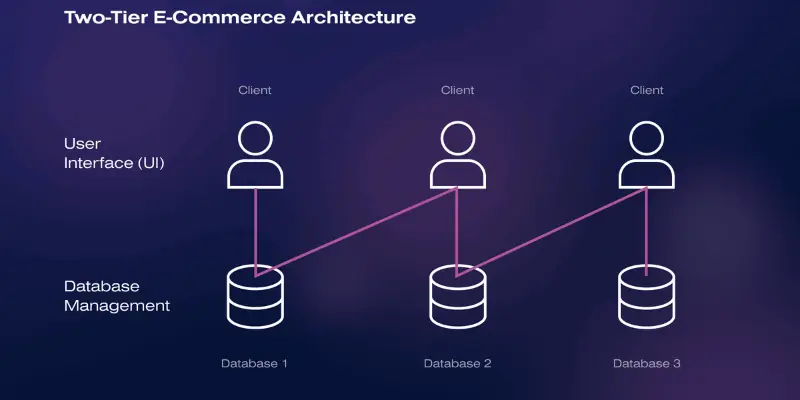
E-Commerce Site Architecture: The Foundation of Product Rankings
E-commerce site architecture — how your store’s URLs, categories, subcategories, and product pages are structured and interlinked — is the most impactful technical SEO decision for an e-commerce platform. A well-architected e-commerce site distributes PageRank efficiently across all product pages, ensures complete crawl coverage, and clearly communicates product hierarchy to Google’s algorithms.
The Optimal URL Architecture for Pakistani E-Commerce
The optimal URL structure follows a flat, logical hierarchy:
⦁ Homepage: yourdomain.pk
⦁ Category: yourdomain.pk/category-name/
⦁ Subcategory: yourdomain.pk/category-name/subcategory-name/
⦁ Product: yourdomain.pk/category-name/product-name/
URL rules for Pakistani e-commerce: (a) All lowercase, (b) Hyphens between words — never underscores, (c) Include the primary keyword in the product URL slug (‘samsung-galaxy-s25-ultra-256gb’ not ‘product-SKU-12847’), (d) Keep URLs under 75 characters, (e) No session IDs, tracking parameters, or dynamic characters in crawlable URLs.
Category Page Architecture: The Most Neglected E-Commerce SEO Asset
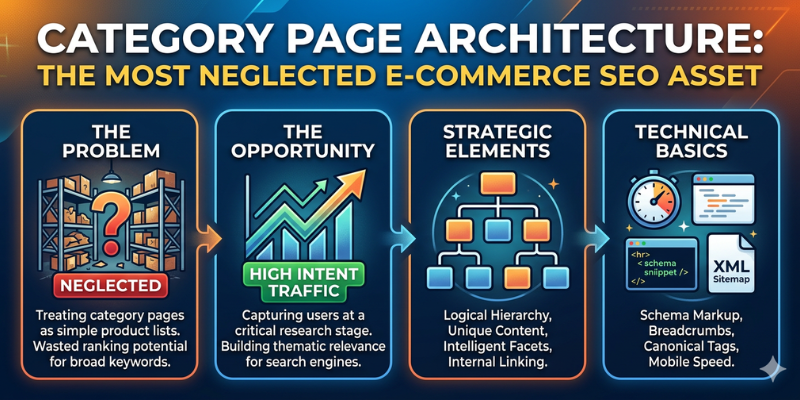
Category pages are the highest-traffic, highest-converting pages on most e-commerce sites — yet Pakistani online stores consistently treat them as simple product listing grids with no editorial content. This is a critical SEO mistake.
Google cannot rank a page without content. A category page that is purely a grid of product images has no keyword relevance signals, no semantic context, and no reason for Google to trust it over a competitor with editorial content. The solution: category page editorial content.
Optimal category page structure for Pakistani e-commerce:
- Category H1: Keyword-rich, descriptive heading. ‘Women’s Lawn Suits — Summer Collection 2026’ not ‘Suits.’
- Editorial introduction (150–250 words): Describe the category, its key features, current trends, and why your store is the best source. Include 3–5 primary keywords naturally.
- Filterable product grid: Filterable by price, brand, size, colour, rating. Filters should use JavaScript filtering — not URL parameters that create duplicate pages.
- Bottom editorial content (200–400 words): Style guides, buying advice, frequently asked questions about the category. This content adds keyword depth without disrupting the shopping UI.
- Internal links to subcategories and related categories: Builds internal link equity distribution.
- Category-specific breadcrumbs with BreadcrumbList schema
Handling Faceted Navigation: Pakistan’s #1 E-Commerce Technical SEO Problem
Faceted navigation — the filter sidebars that allow customers to filter by brand, price, colour, size, and other attributes — is the most common source of technical SEO disaster on Pakistani e-commerce sites. When implemented naively, faceted navigation generates tens of thousands of near-duplicate URLs that exhaust Googlebot’s crawl budget and dilute your site’s ranking authority across hundreds of useless pages.
Pakistani e-commerce platforms most affected: WooCommerce with AJAX filters that generate URL parameters, custom Magento or Laravel stores with filterable attributes, and Shopify stores with collection filters.
| Faceted Navigation Approach | Recommendation for Pakistani E-Commerce |
| JavaScript filtering (no URL change) | Best practice for most filter combinations. Filters update the page content without creating new URLs. Googlebot sees one canonical URL. |
| URL parameter-based filtering | Acceptable if Google Search Console parameter handling is configured. Risk: parameter explosion. Never crawl: ?sort=, ?page=, ?color=, ?size= without canonical tags. |
| Canonical tags on filtered pages | Essential safety net. Every filtered page canonical to the base category URL. Prevents index pollution even if parameter pages are crawled. |
| Noindex on filter combinations | Safe fallback. Noindex + follow on filter combination pages. They pass link equity but don’t dilute the index. |
| Dedicated subcategory pages | Best for high-search-volume attribute combinations. ‘Blue Lawn Suits Pakistan’ with 5,000 monthly searches deserves a real, indexable page. |
PART 2: PRODUCT PAGE OPTIMISATION
Product Page SEO: Ranking Individual Products on Google
Product pages are the conversion engine of your e-commerce store and the organic search entry point for high-intent purchase queries. A user searching ‘buy Galaxy S25 Ultra 256GB Karachi’ is ready to purchase — they just need the right product page to appear. Ranking for these high-intent product queries drives the highest-quality e-commerce traffic available from organic search.
The Anatomy of a High-Ranking Pakistani E-Commerce Product Page
- Product Title Optimisation
Product titles serve two masters: the customer (must be readable and compelling) and the search engine (must contain ranking keywords). The Clickmasters product title formula for Pakistani e-commerce:
[Brand Name] + [Product Type] + [Key Spec/Variant] + [Key Differentiator] — [Optional City/Availability]
Example: ‘Samsung Galaxy S25 Ultra 256GB Titanium Black — Official Samsung Pakistan Warranty | PTA Approved’
Avoid: purely technical titles (‘SKU-SM-S928-256-BK’), truncated titles (‘Samsung S25’), or keyword-stuffed titles (‘Best Samsung Galaxy S25 Ultra Buy Online Pakistan Cheap Price Free Delivery’). - Product Description: Dual Optimisation for Users and Search Engines
Pakistani e-commerce product descriptions are overwhelmingly copied from supplier catalogues or manufacturer spec sheets — producing thousands of near-identical product descriptions that provide zero SEO value. Original, comprehensive product descriptions are a significant competitive differentiator.
The optimal product description for Pakistani e-commerce (500–800 words for anchor products, 200–400 for SKU variants): - Opening paragraph: 2–4 sentences describing the product’s core value proposition and primary use case. Include main keyword.
- Key features section: 5–8 bullet points covering technical specifications, materials, dimensions, and unique selling points.
- Use case content: 1–2 paragraphs describing who the product is for and how it solves their problem. Includes semantic keywords and entity mentions.
- Pakistan-specific context: Delivery timeframe, warranty type (official Pakistan warranty vs. PTA compliance for phones, original vs. compatible for accessories), COD availability.
- Comparison mentions: ‘Compared to [competing product], this model offers…’ — targets comparison search intent.
- Product Images: SEO Value Beyond ALT Tags
Pakistani e-commerce brands consistently underutilise product image SEO. Image optimisation goes beyond adding keyword-rich ALT text:
⦁ File names: Rename images before uploading — ‘samsung-galaxy-s25-ultra-titanium-black-front.webp’ not ‘IMG_4872.jpg’
⦁ ALT text: Descriptive, unique, keyword-inclusive but natural — ‘Samsung Galaxy S25 Ultra 256GB Titanium Black — Front View’ for main image
⦁ Image sitemaps: Include product images in your XML sitemap. Google Image Search is a significant traffic source for fashion, food, and lifestyle products in Pakistan.
⦁ Multiple angles: 5–8 product images per product — front, back, detail, lifestyle, scale reference, packaging. More images signal product completeness to Google’s crawlers.
⦁ Format: WebP or AVIF. Maximum 200KB per product image. Lazy load below-fold images. - User-Generated Content: Reviews as SEO Amplifiers
Product reviews are the most valuable SEO content on e-commerce sites because they contain natural language that exactly mirrors the search queries real customers use. A product page with 50 genuine customer reviews contains hundreds of keyword variations organically — keywords that keyword research tools never reveal but that real buyers actually type.
Pakistani e-commerce review acquisition strategy: (a) Post-delivery SMS/WhatsApp review request (highest conversion: 3–5 days after delivery confirmation), (b) Email sequence for registered customers, (c) Loyalty points for verified purchase reviews, (d) Review reminder on account dashboard.
Product Schema Markup: The Technical SEO Layer That Transforms Rankings
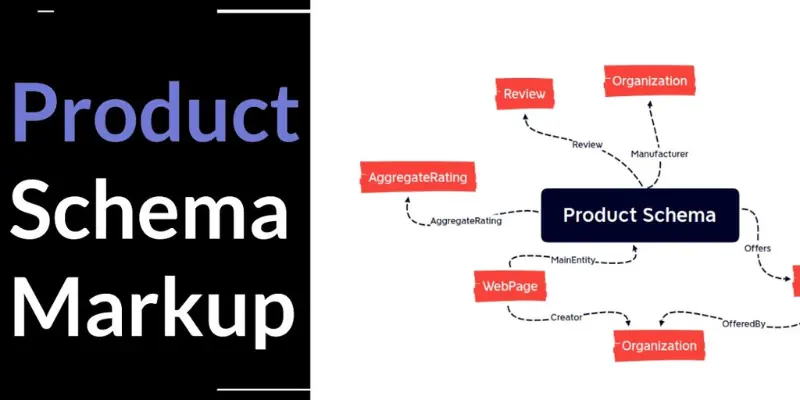
Product schema is the single highest-impact technical implementation for Pakistani e-commerce SEO. Pages with complete Product schema consistently outrank schema-less competitors by 1–4 positions for the same queries, and are exclusively eligible for Google Shopping rich results — the image-with-price-and-rating format that appears at the top of product search results.
Complete Product schema for Pakistani e-commerce must include:
⦁ @type: ‘Product’
⦁ name: Exact product title matching H1
⦁ image: Array of all product image URLs (minimum 3)
⦁ description: Product description text (first 300 characters minimum)
⦁ brand: @type ‘Brand’ with brand name
⦁ sku: Your internal SKU code
⦁ mpn: Manufacturer Part Number where available
⦁ offers: @type ‘Offer’ with price (PKR), priceCurrency ‘PKR’, availability (‘InStock’ or ‘OutOfStock’), url, seller, priceValidUntil, hasMerchantReturnPolicy, shippingDetails
⦁ aggregateRating: @type ‘AggregateRating’ with ratingValue, reviewCount
⦁ review: Array of @type ‘Review’ objects for featured reviews
Critical: Keep Product Schema Prices Current
Google’s structured data policies require that Product schema prices match the prices displayed on the page. Stale or inaccurate prices in Product schema trigger a ‘Misrepresentation’ manual action — a severe Google penalty that removes your products from all rich results and Shopping listings. Use dynamic schema generation (via your CMS or a schema plugin like Yoast WooCommerce SEO or RankMath’s WooCommerce schema) that automatically syncs with live product prices.
PART 3: DARAZ SEO vs. OWN-SITE SEO STRATEGY
Daraz SEO vs. Own-Site SEO: The Strategic Decision Every Pakistani E-Commerce Business Must Make
The most important strategic question for Pakistani e-commerce businesses is: should I invest in Daraz marketplace SEO, own-site organic SEO, or both? This question has no universal answer — it depends on your product category, brand maturity, margin structure, and growth objectives.
Dimension Daraz Marketplace SEO Own-Site Organic SEO
| Dimension | Daraz Marketplace SEO | Own-Site Organic SEO |
| Discovery traffic | Immediate access to 30M+ Daraz users. Fast initial visibility. | Builds gradually. Months to significant traffic. High long-term ROI. |
| Competition | Competing against thousands of sellers in the same marketplace. Price competition intense. | Competing against websites. Quality and SEO quality determine rankings. |
| Commission cost | 5–15% per transaction across most categories. | Zero per-transaction cost once organic traffic is earned. |
| Brand building | Limited. Customers see ‘Daraz’ more prominently than your brand. | Full brand ownership. Customer data. Repeat purchase control. |
| SEO control | Limited. Daraz algorithm controlled by Daraz. | Full control of technical SEO, content, and schema. |
| Customer data | Daraz owns customer data. No remarketing capability. | Own customer data. Email, WhatsApp, and social remarketing possible. |
| Ideal for | New brands, commodity products, price-competitive categories. | Brand-differentiated products, premium positioning, D2C strategy. |
The Clickmasters Hybrid Strategy: Daraz + Own-Site
For most Pakistani e-commerce businesses at growth stage, the optimal strategy is a staged hybrid: use Daraz for initial discovery and volume while simultaneously building own-site SEO authority that eventually provides a direct, commission-free channel for the majority of sales.
- Phase 1 (Months 1–6): Daraz-first. Establish product listings, earn reviews, validate pricing and messaging. Simultaneously launch own-site with technical SEO foundation.
- Phase 2 (Months 7–12): Parallel growth. Scale both Daraz presence and own-site organic. Incentivise Daraz buyers to purchase direct (exclusive bundles, loyalty programme, WhatsApp community).
- Phase 3 (Month 13+): Own-site dominance for hero products. Use Daraz for clearance, new product launches, and volume categories where margins support commission.
Daraz Marketplace SEO: Ranking Your Products Within Daraz
Daraz’s internal search algorithm is separate from Google’s — it uses its own ranking factors to determine which products appear first in Daraz search results. Clickmasters‘ Daraz SEO analysis identifies six primary ranking factors within the Daraz marketplace:
- Factor 1: Listing completeness score: Daraz assigns a completeness score to every product listing. Listings at 100% completeness (all attributes filled, high-quality images, full descriptions) rank significantly higher than incomplete listings.
- Factor 2: Seller rating and response rate: Daraz’s algorithm prioritises sellers with high ratings (4.5+ stars), fast response times (under 2 hours), and low dispute rates.
- Factor 3: Product keyword optimisation: Daraz’s search uses TF-IDF style keyword matching. Product titles and descriptions must include the exact keywords buyers use in Daraz search.
- Factor 4: Sales velocity and conversion rate: Products with higher sales volume and click-to-purchase rates rank higher — a positive feedback loop that rewards initial promotional investment.
- Factor 5: Price competitiveness: Daraz’s algorithm has price competitiveness signals. Significantly above-market pricing suppresses rankings even for high-rated sellers.
- Factor 6: Fulfilment method: Daraz Fulfilled (DF) listings — where Daraz handles warehousing and shipping — receive algorithmic ranking preference over seller-fulfilled listings.
PART 4: TECHNICAL E-COMMERCE SEO FOR PAKISTAN

Technical SEO Challenges Specific to Pakistani E-Commerce Platforms
Pakistani e-commerce platforms face a unique set of technical SEO challenges that require specific solutions. The most common Pakistani e-commerce platforms — WooCommerce on shared hosting, custom Laravel/PHP stores, and Shopify with Pakistani payment gateway integrations — each have platform-specific technical issues.
WooCommerce SEO for Pakistani Stores (The Most Common Platform)
| WooCommerce | Issue Solution for Pakistani Stores |
| Product URL structure defaults | Change Woo permalink base from /product/ to /[category]/ in Settings > Permalinks > Shop Base. Allows category breadcrumb in URLs. |
| Duplicate content from variations | WooCommerce creates separate URL for each product variation by default. Use RankMath or Yoast to canonicalise variation pages to parent product URL. |
| JazzCash/EasyPaisa redirect URLs | Payment gateway redirects create crawlable transaction URLs. Add /checkout/, /order-received/, and /cart/ to robots.txt Disallow. Noindex all checkout-flow pages. |
| Shop page duplicate content | The main /shop/ page often duplicates category listing content. Add editorial description unique to the shop page. Canonical tag on paginated shop pages (/shop/page/2/) to /shop/. |
| Review pages without schema | Install WooCommerce Product Reviews Pro or WooCommerce’s native review schema. Ensure star ratings appear in Google rich results. |
| Image delivery on shared hosting | Shared hosting delivers WooCommerce images slowly. Implement Cloudflare Image Resizing or Imagify/ShortPixel for compression and delivery. |
Google Merchant Center for Pakistani E-Commerce
Google Merchant Center (GMC) feeds your product data to Google Shopping, Google’s free product listing results, and Google’s Product search rich results. Pakistani e-commerce businesses that connect GMC to their store gain free product visibility that paid competitors buy at high CPC.
Merchant Center setup for Pakistan:
- Create Google Merchant Center account at merchants.google.com. Select Pakistan as business country.
- Verify your domain in GMC using Google Search Console verification (fastest method).
- Set up product feed via Google Merchant Center’s automatic feed generation (for Shopify and WooCommerce) or create a custom XML feed.
- Required feed attributes for Pakistan: id, title, description, link, image_link, availability, price (PKR), brand, condition, gtin (where available).
- Submit feed and resolve disapprovals. Common Pakistani disapprovals: mismatched prices between feed and website, missing GTINs (acceptable for custom/handmade products with ‘identifier_exists: false’), shipping settings not configured for Pakistan.
- Free Product Listings: Opt in to Surfaces Across Google > Free Listings. Pakistani products are eligible for free Shopping results without Google Ads spend.
E-Commerce SEO Case Study: Pakistani Fashion Brand — 0 to PKR 4.2M Monthly Organic Revenue
In early 2024, Clickmasters partnered with a Lahore-based women’s fashion brand selling premium lawn, linen, and embroidered clothing online. The brand had a 2-year-old WooCommerce store with 800 products, 100% reliance on Facebook Ads and Daraz, and zero organic search revenue.
Audit Findings
⦁ URL structure: All product URLs used default WooCommerce /product/slug format — no category hierarchy
⦁ Faceted navigation: Filter URLs generating 4,200+ near-duplicate category pages being indexed
⦁ Product descriptions: 89% copied verbatim from supplier catalogues — duplicate content across 712 products
⦁ Product schema: Zero schema markup across 800 products
⦁ Category pages: Pure product grids with no editorial content
⦁ Page speed: LCP 7.4 seconds on 4G — caused entirely by uncompressed product photography
⦁ Images: 800+ product images with generic filenames (DSC_001.jpg) and no ALT text
12-Month Implementation
- Restructured URL architecture with category hierarchy and keyword-rich slugs
- Implemented JavaScript faceted navigation — eliminated 4,200 duplicate parameter URLs
- Rewrote product descriptions for top 200 hero products (original, keyword-rich, 300–500 words each)
- Deployed programmatic Product schema via RankMath WooCommerce schema — 800 products fully schemaed in 3 weeks
- Added category editorial content to all 28 category pages
- Image migration to WebP with keyword-rich filenames and ALT text across 800 products — LCP improved from 7.4s to 1.9s
- Google Merchant Center setup with 800-product free product listing feed
- Blog content: 24 fashion guides targeting style-intent queries (‘how to style lawn suit,’ ‘best summer colours Pakistan 2026’)
| Metric | Start (Jan 2024) | End (Jan 2025) |
| Organic Sessions/Month | 820 | 48,400 (+5,800%) |
| Organic Revenue/Month | PKR 0 | PKR 4.2M |
| Product Rankings (Top 10) | 3 keywords | 847 keywords |
| Google Shopping Impressions | 0 | 320,000/month (free listings) |
| Facebook Ads Spend (same revenue) | PKR 2.8M/month | PKR 0.9M/month (71% reduction) |
| Product Schema Rich Results | 0 | 800 products with Shopping rich results |
| DA Growth | 12 | 28 |
E-Commerce Keyword Research: Finding Pakistan’s Purchase-Intent Queries

E-commerce keyword research for Pakistan requires a different methodology than standard SEO keyword research. You are hunting for purchase-intent queries — searches that indicate readiness to buy, not just browse.
Intent Type Pakistani E-Commerce Query Patterns & Targeting
| Intent Type | Pakistani E-Commerce Query Patterns & Targeting |
| Product + ‘price in Pakistan’ | Highest volume purchase intent. ‘iPhone 15 price in Pakistan,’ ‘Samsung 65 inch TV price Pakistan.’ Target on product pages and category pages. |
| Product + ‘buy online Pakistan’ | Direct purchase intent. ‘buy gaming laptop Pakistan,’ ‘order sneakers online Pakistan.’ Optimise product and category page meta descriptions for these. |
| Brand + ‘original/authentic’ | Trust-verification intent. ‘original Polo shirt Pakistan,’ ‘authentic perfume online Pakistan.’ Create authenticity guarantee content. |
| Product comparison queries | ‘iPhone 15 vs Samsung S25 price Pakistan’ — comparison-intent. Create comparison landing pages. High CTR from undecided buyers. |
| Product + ‘with COD/cash on delivery’ | Pakistan-specific intent. ‘shoes COD delivery Pakistan,’ ‘electronics cash on delivery Karachi.’ Add COD availability to product titles and schema. |
| Product + specific city + ‘delivery’ | ‘laptop delivery Lahore same day,’ ‘clothes delivery Islamabad.’ Create city-specific delivery landing pages. |
Frequently Asked Questions: E-Commerce SEO in Pakistan
Should I focus on Shopify or WooCommerce for SEO in Pakistan?
Both platforms are SEO-capable with the right configuration. WooCommerce on optimised hosting (VPS + LiteSpeed + Cloudflare) offers more SEO flexibility and lower cost for large catalogs. Shopify offers easier setup, integrated CDN, and a managed platform — but limits some technical SEO customisation. For Pakistani businesses, Clickmasters typically recommends: WooCommerce for stores with 500+ SKUs needing custom functionality, and Shopify for brands prioritising speed-to-market and ease of management. How important is page speed for Pakistani e-commerce SEO?
Critically important — more so than in international markets. Pakistan’s mobile-dominant user base on 4G networks means that every additional second of load time results in a disproportionately high abandonment rate. Clickmasters’ data shows Pakistani e-commerce sites with LCP under 2.5 seconds have 42% lower cart abandonment rates and rank an average 2.3 positions higher than comparable slow sites. Speed optimisation ROI in Pakistan is exceptional.
Should I translate my product listings into Urdu for SEO?
Yes, strategically. Urdu search intent for product queries is growing at 34% YoY. For mass-market products (clothing, appliances, food), Urdu and Roman Urdu product content unlocks a large, less-competitive search audience. For premium or B2B products, English-language SEO typically delivers higher-value traffic. Bilingual product descriptions (English primary, Urdu secondary) with proper hreflang implementation is the optimal approach for mass-market Pakistani brands.
How do I handle out-of-stock products from an SEO perspective?
Never delete product pages for temporarily out-of-stock items — they carry ranking authority and inbound links. Instead: (a) Update availability in Product schema to ‘OutOfStock,’ (b) Keep the page live with a ‘Notify me when available’ CTA, (c) Add related in-stock products. Only delete (with 301 redirect to most relevant alternative) permanently discontinued products. Permanent 404s waste earned link equity.