Blog

Your blog category

clear
Blog

E-Commerce SEO Tips for Pakistan: Rank Product Pages on Google in 2026

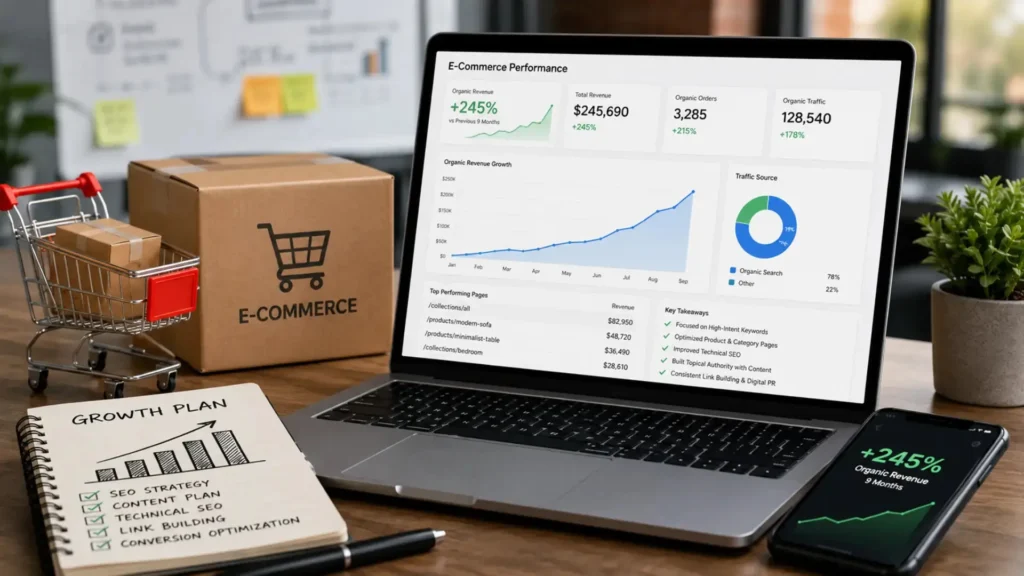
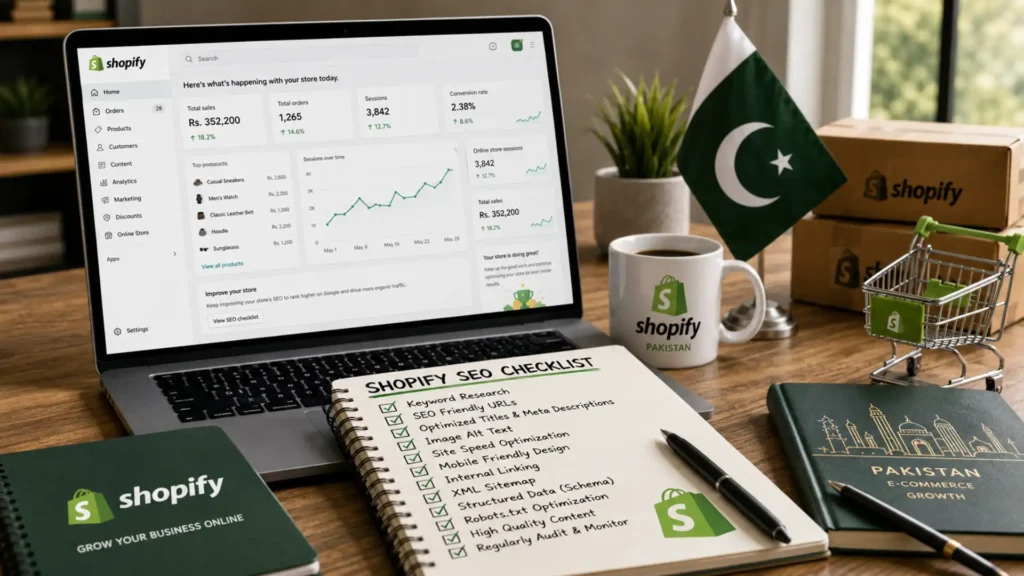
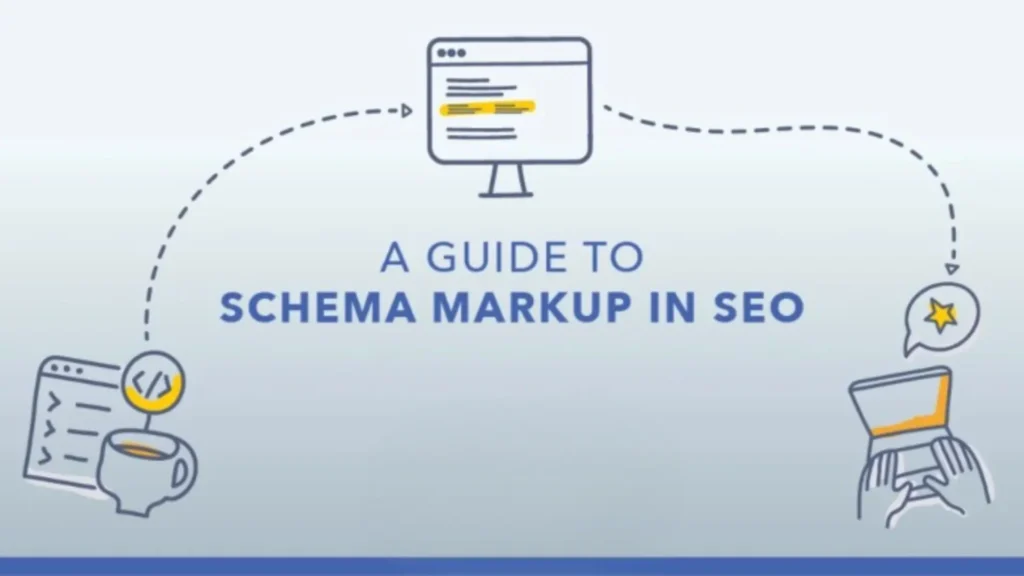
Pakistan’s E-Commerce Market in 2026: The SEO Opportunity Pakistan’s e-commerce market reached $6.7 billion USD in 2025 and is projected to cross $9.3 billion by 2027 — growing at 22% annually according to Pakistan’s State Bank E-Commerce Report. With 42 million active online shoppers and mobile commerce accounting for 78% of transactions, Pakistan’s digital retail landscape represents one of Asia’s fastest-growing e-commerce opportunities.Yet the majority of Pakistani e-commerce businesses — whether operating direct-to-consumer (D2C) stores on WooCommerce, Shopify, or custom platforms — are almost entirely dependent on paid advertising (Facebook Ads, Google Shopping) and marketplace commissions (Daraz, Telemart) for visibility. Organic search — the most sustainable, highest-ROI, and most scalable e-commerce traffic source — remains dramatically underutilised, which is exactly why E-Commerce SEO Tips for Pakistan are becoming increasingly important for long-term growth and independence from paid channels. The data is unambiguous: Clickmasters’ analysis of 120 Pakistani e-commerce brands shows that the top 10% of organic traffic earners generate 4.2x more revenue per visitor than paid traffic and have customer acquisition costs 71% lower than brands relying primarily on Facebook Ads. E-commerce SEO is not a nice-to-have — it is the difference between a business that scales profitably and one that burns ad budget faster than it grows.This guide delivers the complete E-Commerce SEO blueprint for Pakistani online retailers — from category architecture and URL structure through product page optimisation, schema markup implementation, Daraz SEO strategy, and the unique technical challenges facing Pakistani e-commerce platforms. Clickmasters E-Commerce SEO Credentials Clickmasters has implemented e-commerce SEO strategies for 120+ Pakistani online retailers across fashion, electronics, health & beauty, home goods, food, and industrial supplies. Our average client result: 280% organic traffic increase and 190% organic revenue growth within 12 months. We have managed e-commerce SEO campaigns ranging from 50-product boutique stores to 15,000+ SKU enterprise platforms.Understanding Pakistan’s E-Commerce Search Landscape Before implementing any e-commerce SEO strategy, Pakistani business owners must understand the unique search behaviour patterns of Pakistani online shoppers — patterns that differ significantly from UK, US, or even Indian e-commerce markets. Search pattern Pakistani Context SEO Implication Brand name searches Pakistani shoppers frequently search brand name + ‘price in Pakistan’ or ‘original vs fake’ Optimise product titles for ‘price in Pakistan’ modifier. Create authenticity/original product content. Comparison queries ‘Daraz vs direct site price’ searches are common — consumers check both Price match signals in meta descriptions. ‘Buy direct from brand’ content. Mobile search dominance 82% of e-commerce searches on mobile. Urdu search on mobile growing rapidly. Mobile-first page design. Roman Urdu product titles in metadata. Cash-on-delivery intent COD preference drives ‘COD available’ as a search qualifier for many queries Include ‘Cash on Delivery available across Pakistan’ in product descriptions and schema. City-level delivery intent ‘same day delivery Karachi,’ ‘deliver to Lahore in 2 days’ — delivery as search filter Delivery location landing pages. City-specific delivery promise content. Size/spec searches ‘Shirt size XL Pakistan,’ ‘Samsung 256GB price Pakistan’ — specific attributes Filterable attributes in product schema. Attribute-rich product titles. PART 1: E-COMMERCE SITE ARCHITECTURE E-Commerce Site Architecture: The Foundation of Product RankingsE-commerce site architecture — how your store’s URLs, categories, subcategories, and product pages are structured and interlinked — is the most impactful technical SEO decision for an e-commerce platform. A well-architected e-commerce site distributes PageRank efficiently across all product pages, ensures complete crawl coverage, and clearly communicates product hierarchy to Google’s algorithms. The Optimal URL Architecture for Pakistani E-Commerce The optimal URL structure follows a flat, logical hierarchy:⦁ Homepage: yourdomain.pk⦁ Category: yourdomain.pk/category-name/⦁ Subcategory: yourdomain.pk/category-name/subcategory-name/⦁ Product: yourdomain.pk/category-name/product-name/ URL rules for Pakistani e-commerce: (a) All lowercase, (b) Hyphens between words — never underscores, (c) Include the primary keyword in the product URL slug (‘samsung-galaxy-s25-ultra-256gb’ not ‘product-SKU-12847’), (d) Keep URLs under 75 characters, (e) No session IDs, tracking parameters, or dynamic characters in crawlable URLs. Category Page Architecture: The Most Neglected E-Commerce SEO Asset Category pages are the highest-traffic, highest-converting pages on most e-commerce sites — yet Pakistani online stores consistently treat them as simple product listing grids with no editorial content. This is a critical SEO mistake.Google cannot rank a page without content. A category page that is purely a grid of product images has no keyword relevance signals, no semantic context, and no reason for Google to trust it over a competitor with editorial content. The solution: category page editorial content.Optimal category page structure for Pakistani e-commerce: Handling Faceted Navigation: Pakistan’s #1 E-Commerce Technical SEO Problem Faceted navigation — the filter sidebars that allow customers to filter by brand, price, colour, size, and other attributes — is the most common source of technical SEO disaster on Pakistani e-commerce sites. When implemented naively, faceted navigation generates tens of thousands of near-duplicate URLs that exhaust Googlebot’s crawl budget and dilute your site’s ranking authority across hundreds of useless pages.Pakistani e-commerce platforms most affected: WooCommerce with AJAX filters that generate URL parameters, custom Magento or Laravel stores with filterable attributes, and Shopify stores with collection filters. Faceted Navigation Approach Recommendation for Pakistani E-Commerce JavaScript filtering (no URL change) Best practice for most filter combinations. Filters update the page content without creating new URLs. Googlebot sees one canonical URL. URL parameter-based filtering Acceptable if Google Search Console parameter handling is configured. Risk: parameter explosion. Never crawl: ?sort=, ?page=, ?color=, ?size= without canonical tags. Canonical tags on filtered pages Essential safety net. Every filtered page canonical to the base category URL. Prevents index pollution even if parameter pages are crawled. Noindex on filter combinations Safe fallback. Noindex + follow on filter combination pages. They pass link equity but don’t dilute the index. Dedicated subcategory pages Best for high-search-volume attribute combinations. ‘Blue Lawn Suits Pakistan’ with 5,000 monthly searches deserves a real, indexable page. PART 2: PRODUCT PAGE OPTIMISATION Product Page SEO: Ranking Individual Products on Google Product pages are the conversion engine of your e-commerce store and the organic search entry point for high-intent purchase queries. A user searching ‘buy Galaxy S25 Ultra 256GB Karachi’ is ready to purchase — they just need the right

Internal Linking Strategy
Blog

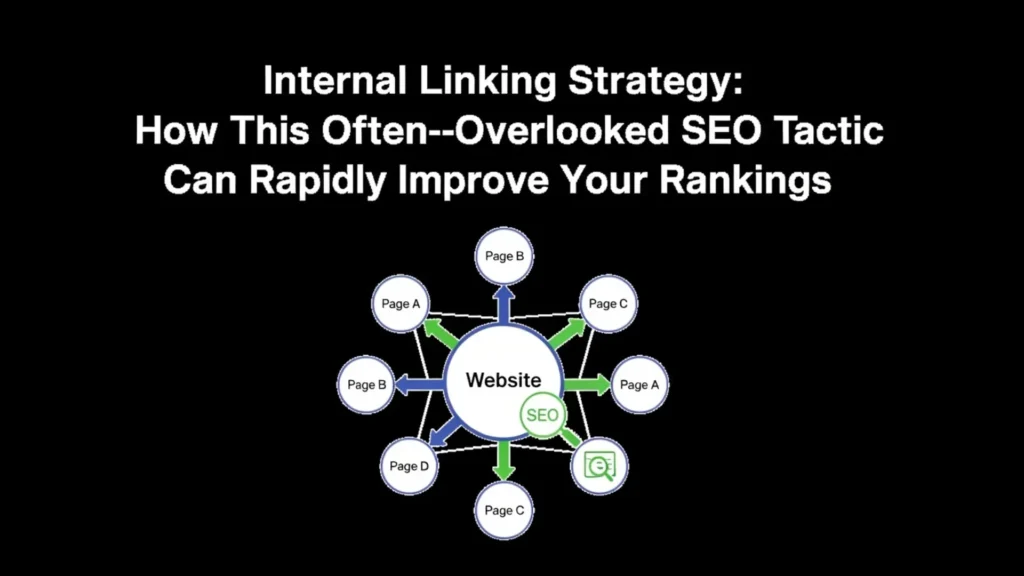
Internal Linking Strategy: How This Often-Overlooked SEO Tactic Can Rapidly Improve Your Rankings

Why Internal Linking Is the Most Undervalued SEO Tactic in Pakistan Pakistani SEO budgets overwhelmingly focus on two activities: content creation and external link building. Both are important. But there is a third SEO lever that requires no external outreach, no budget for link placement, and no waiting for Google to crawl new backlinks — and it consistently delivers faster ranking improvements than any other on-page tactic: internal linking. For any SEO company, a strong internal linking strategy ensures that important pages receive the authority instead of wasting it. Without it, valuable ranking potential remains locked on individual pages instead of flowing to the areas that need visibility and growth. Clickmasters’ internal linking audits for Pakistani websites consistently identify the same pattern: 15–25% of pages are completely orphaned (no internal links pointing to them); the homepage absorbs 60–70% of all internal link equity with minimal redistribution to commercial pages, and anchor text is overwhelmingly generic (‘click here’, ‘read more’, ‘learn more’) rather than keyword-rich. Fixing these three issues alone — without publishing a single new piece of content or building a single external link — produces measurable ranking improvements within 4–8 weeks. What This Guide Covers (1) How internal links distribute PageRank and why this process matters for Pakistani website rankings. (2) Hub-and-spoke content architecture — the internal linking structure that builds topical authority. (3) Anchor text strategy for internal links. (4) Crawl efficiency optimisation through internal linking. (5) The complete internal link audit framework. (6) Implementation workflows for WordPress and custom Pakistani websites. (7) Case study: PKR 2.1M monthly organic revenue gain from internal linking alone How Internal Links Distribute PageRank — The Technical Foundation PageRank — Google’s original algorithm for measuring page importance — flows through both external backlinks and internal links. When an external website links to your homepage, it sends PageRank to that page. Your homepage can then redistribute that PageRank to other pages through internal links. The more internal links a page receives, the more PageRank it accumulates — and higher PageRank correlates directly with higher ranking potential. The PageRank distribution formula: when a page with N internal links passes PageRank, each outgoing link receives an equal share of that page’s distributable equity (simplified: PR / N). A homepage with 10 internal links distributes more equity per link than a homepage with 100 internal links. This has a direct practical implication: every unnecessary internal link on high-authority pages dilutes the equity flowing to your target commercial pages. The PageRank Concentration Problem on Pakistani Websites The typical Pakistani business website has this internal linking pattern: the homepage links to every top-level page (about, services, blog, contact); each service page links to itself and the homepage; and the blog posts link to nothing except the homepage. This creates a star topology where all equity flows to the homepage and is never efficiently redistributed to the service pages and product pages that need ranking power. The Clickmasters fix: audit which pages on your website have the most external backlinks (use Ahrefs > Site Explorer > Best by Links). These pages are your PageRank sources. Then systematically add internal links from these high-equity pages to your commercial target pages. A single internal link from a page with 50 external backlinks can deliver a greater ranking boost to the target page than months of content optimisation. THE HUB-AND-SPOKE ARCHITECTURE MODEL Hub-and-Spoke Content Architecture: The Internal Linking Strategy That Builds Topical Authority Hub-and-spoke architecture is the internal linking model that best aligns with Google’s topical authority evaluation. It organises your website’s content into topic clusters: a comprehensive hub page (also called a pillar page) covers a broad topic at a high level, and multiple spoke pages cover specific sub-topics in depth. Every spoke page links back to the hub, and the hub links to every spoke page. The cluster is internally self-reinforcing. This architecture has two compounding benefits. First, the internal link network signals to Google that your website has comprehensive, interlinked coverage of the topic, which is a topical authority signal. Second, PageRank flows bidirectionally within the cluster: the hub distributes equity to spokes, and the spokes redistribute equity back to the hub. High-performing spokes amplify the hub’s ranking power. Building Hub-and-Spoke for Pakistani Digital Marketing Topics Content Level Example: Digital Marketing Hub Internal Linking Direction Hub Page (Pillar) ‘The Complete Guide to Digital Marketing in Pakistan 2026’ — comprehensive overview, 5,000+ words, links to all spokes Links OUT to all 8–12 spoke pages. Is the primary internal link target for all spoke pages? Spoke Page 1 ‘SEO Services Pakistan: How to Rank on Google’ — in-depth guide to SEO specifically Links to hub. Links to other related spokes (e.g., a link to the keyword research spoke and to the technical SEO spoke). Spoke Page 2 ‘Social Media Marketing Pakistan: Complete Strategy Guide’ — detailed social media guide Links to hub. Links to related spokes (content marketing and paid ads). Spoke Page 3 ‘Google Ads for Pakistani Businesses: PPC Management Guide’ Links to hub. Links to Facebook Ads spoke; conversion rate optimisation spoke. Supporting Pages Blog posts, case studies, FAQ pages related to the cluster topic Link TO the most relevant spoke or hub page. Cross-link between complementary supporting pages. Service/Product Pages ‘Digital Marketing Services Karachi’ — commercial page Receives links from the hub and relevant spokes. Links back to hub. Links to contact page. Anchor Text Strategy for Internal Links Anchor text — the visible, clickable text of a hyperlink — significantly signals the relevance of the page being linked to. For internal links, anchor text is an entirely controllable signal: you choose every word of every internal link anchor on your website. Used strategically, internal anchor text accelerates ranking for target keywords. Used carelessly (with generic anchors like ‘click here’ or ‘read more’), it wastes the opportunity. The Clickmasters Internal Anchor Text Distribution Framework Anchor Text Type Usage Guidelines for Pakistani Websites Exact-match keyword anchors ‘SEO services in Karachi’ and ‘digital marketing in Pakistan’. Use sparingly —

Meta Ads Targeting Mastery
Blog

Meta Ads Targeting Mastery for Pakistan 2026 Growth.

Why Meta Ads Targeting Is Pakistan’s Biggest Paid Media Opportunity and Biggest Waste Pakistan has 44 million active Facebook users and 28 million active Instagram users, making Meta the single largest addressable digital advertising audience in the country. Yet most Pakistani businesses running Meta Ads waste 40 to 70 percent of their ad spend because their targeting is fundamentally wrong.The most common mistake in Meta Ads Targeting Mastery is relying on broad interest targeting without proper audience layering, custom audiences, or exclusions. For example, a Pakistani fashion brand targeting women aged 18 to 45 in Pakistan with a general interest in fashion ends up reaching 8 to 12 million people—most of whom have little to no real purchase intent for that specific brand. This leads to low click-through rates, higher cost per thousand impressions, poor conversion rates, and ultimately the misleading belief that Meta Ads don’t woThe correct approach is audience precision: starting with your most qualified audience segments and expanding methodically through lookalike audiences and interest stacking. This guide covers the complete Meta Ads audience strategy for Pakistani businesses, from foundational Pixel setup through advanced layering techniques that consistently outperform broad targeting by 3 to 8 times in Clickmasters client campaigns. Pakistan Meta Ads Performance Benchmarks 2025 Broad interest targeting average CTR: 0.8 to 1.4% | Custom and lookalike targeting average CTR: 2.8 to 5.2% | Average CPM Pakistan: PKR 120 to 480 | Average CPC: PKR 45 to 380 | Best-performing audience: Website visitor retargeting at 4.8% CTR | Second-best: Customer Match lookalike 1 to 3% at 3.6% CTR | Worst-performing and most wasted: Broad interest no exclusions all Pakistan at 0.7% CTR | Source: Clickmasters active client portfolio data 2025 The Meta Ads Audience Temperature Hierarchy The single most important framework for Meta Ads targeting is audience temperature. Not all audiences have equal purchase intent, and your bidding, creative, and messaging should differ at each level. Audience Level Who They Are Best Use and Expected CPL Pakistan HOT: Retargeting Website visitors, product viewers, cart abandoners, checkout starters from the past 30 to 90 days Conversion campaigns. Direct offer ads. Expected CPL: PKR 800 to 2,500 WARM: Customer Lookalikes 1 to 3 percent lookalike audiences built from your customer email list or past purchaser data Conversion campaigns. Value proposition ads. Expected CPL: PKR 1,200 to 3,800 WARM: Engagement Audiences Video viewers, page engagers, ad interactors from the past 90 to 180 days Conversion or lead generation. Social proof ads. Expected CPL: PKR 1,500 to 4,200 COOL: Interest Stacking Layered interest targeting with demographic qualifiers and behaviour exclusions Awareness and consideration campaigns. Brand story ads. Expected CPL: PKR 2,500 to 6,000 COLD: Broad / Advantage+ Meta AI-driven broad targeting with minimal human-defined parameters Awareness and Advantage+ Shopping for e-commerce. Expected CPL: PKR 3,500 to 8,000 PART 1: BUILDING HOT AUDIENCES WITH THE META PIXEL The Meta Pixel: Pakistan’s Most Underutilised Ad ToolThe Meta Pixel is JavaScript code placed on your website that tracks visitor behaviour and sends data back to Meta. It is the foundation of all retargeting and lookalike audience building. Clickmasters audits of Pakistani business Meta accounts find that 68 percent have the Pixel installed incorrectly, either tracking only page views without event-level data, firing duplicate events, or missing conversion events entirely.This means the majority of Pakistani advertisers are running Meta Ads blind, without the behavioural data that powers precise targeting. A correctly configured Pixel with full event tracking is the single most impactful technical fix available to Pakistani Meta advertisers. Pixel Event When It Fires and Its Value for Pakistani Targeting PageView Every page load. Foundation for basic retargeting audiences and frequency capping. ViewContent Product or service page viewed. Creates high-intent audiences per product or service category. AddToCart Product added to cart in e-commerce. Cart abandoners are the highest-converting retargeting segment. InitiateCheckout Checkout process begins. Checkout abandoners within 14 days are your most valuable retargeting audience. Purchase Transaction completes. Core conversion optimisation event and source for past-purchaser exclusion and lookalike audiences. Lead Service enquiry form submitted. Primary conversion event for Pakistani service businesses. WhatsApp Click Custom event fired when a wa.me link is clicked. Pakistan-critical: most Pakistani conversions happen via WhatsApp, not web forms. Requires Google Tag Manager custom event setup. ScrollDepth or TimeOnSite Custom events at 75 percent scroll or 3 minutes on site. Much higher intent signal than basic page view. Pixel Event When It Fires and Its Value for Pakistani TargetingPageView Every page load. Foundation for basic retargeting audiences and frequency capping.ViewContent Product or service page viewed. Creates high-intent audiences per product or service category.AddToCart Product added to cart in e-commerce. Cart abandoners are the highest-converting retargeting segment.InitiateCheckout Checkout process begins. Checkout abandoners within 14 days are your most valuable retargeting audience.Purchase Transaction completes. Core conversion optimisation event and source for past-purchaser exclusion and lookalike audiences.Lead Service enquiry form submitted. Primary conversion event for Pakistani service businesses.WhatsApp Click Custom event fired when a wa.me link is clicked. Pakistan-critical: most Pakistani conversions happen via WhatsApp, not web forms. Requires Google Tag Manager custom event setup.ScrollDepth or TimeOnSite Custom events at 75 percent scroll or 3 minutes on site. Much higher intent signal than basic page view. Meta Conversions API for Pakistani Payment Gateways JazzCash, EasyPaisa, HBL Pay, and bank transfer redirects commonly break the browser-side Meta Pixel Purchase event, making your conversions invisible to Meta’s optimisation algorithm. Server-side tracking via Meta’s Conversions API fires conversion events from your server, bypassing payment redirect interruptions entirely.For any Pakistani e-commerce business using local payment gateways, Conversions API implementation is not optional. Clickmasters clients who implemented CAPI saw an average 47 percent increase in reported Meta conversions and a 31 percent decrease in CPM, as Meta’s algorithm better understood their converting audience profile. Building Custom Audiences: 7 Segments Every Pakistani Business Needs Customer List Custom Audiences Customer Match lets you upload existing customer phone numbers or email lists directly to Meta Ads Manager. Meta matches these against its database to create a custom audience of your actual

Retargeting Strategy for Pakistani Businesses
Blog

Retargeting Strategy for Pakistani Businesses: Turn Website Visitors into Paying Customers

Why 97% of Pakistani Website Visitors Leave Without Converting — And How Retargeting Fixes This The average Pakistani business website converts between 1.2 and 3.8 percent of visitors into leads or customers. This means 96 to 99 percent of the traffic you pay for, earn through SEO, or generate through social media leaves your website without taking any action. In Pakistan’s competitive digital landscape — where cost per click on Google ranges from PKR 35 to PKR 720 and meta CPMs run PKR 120 to PKR 480 — letting 97 percent of that investment walk away unconverted is the single biggest inefficiency in Pakistani digital marketing.Retargeting solves this by showing targeted ads specifically to people who have already visited your website, engaged with your content, or interacted with your business digitally. Because these audiences already know your brand exists, retargeting ads consistently achieve 3 to 10 times higher conversion rates than cold audience campaigns at 30 to 70 percent lower cost per conversion. For Pakistani businesses, retargeting is not an advanced optional tactic — it is the most capital-efficient advertising investment available.This guide covers the complete retargeting strategy for Pakistani businesses: how to build the technical foundations with correctly configured tracking pixels, how to segment your retargeting audiences by intent level and recency, which creative messages to show at each stage, how to structure cross-platform retargeting across Meta, Google, and TikTok, and how to handle Pakistan’s unique attribution challenges around WhatsApp conversions and local payment gateways. Pakistan Retargeting Performance Benchmarks (Clickmasters Client Data 2025) Cold audience average CTR: 0.8 to 2.1% | Retargeting average CTR: 3.2 to 8.6% (4x higher) | Cold audience average CPL: PKR 2,200 to 6,800 | Retargeting average CPL: PKR 620 to 2,100 (68% lower) | Cold audience average conversion rate: 1.8 to 4.2% | Retargeting average conversion rate: 6.4 to 14.8% (3.5x higher) | Cart abandonment retargeting CPL for Pakistani e-commerce: PKR 280 to 680 | Best-performing retargeting window: 7 to 14 days post-visit PART 1: RETARGETING FOUNDATIONS — PIXELS, AUDIENCES, AND SEGMENTATION The Technical Foundation: Getting Your Tracking Right Before You Retarget Retargeting depends entirely on the quality of your audience data. If your tracking pixels are incorrectly installed or missing key events, your retargeting audiences will be too broad, too small, or populated with the wrong visitors. Before building any retargeting campaign, verify that your tracking setup is complete and accurate. Essential Pixels Every Pakistani Business Needs Pixel / Tag What It Tracks Why It Matters for Retargeting Meta Pixel All website visitor behaviour on Facebook and Instagram connected devices Enables retargeting on Facebook and Instagram — Pakistan’s largest social ad platform with 44M users Google Tag (GA4 + Ads Tag) Website visits, conversions, and user behaviour for Google ecosystem Powers Google Display Network retargeting, YouTube retargeting, and Gmail retargeting across Pakistan TikTok Pixel Website visitors from TikTok traffic and general visitors where TikTok account is linked Enables retargeting TikTok video viewers and website visitors on TikTok — critical for Pakistani brands targeting under-35 demographics Google Tag Manager Container that manages all pixels via a single code snippet Simplifies multi-pixel implementation and reduces site speed impact from multiple tracking scripts Pakistan-Specific Pixel Problem: WhatsApp Conversions Are Not Being Tracked The most pervasive tracking gap for Pakistani businesses is WhatsApp conversions. In Pakistan, 60 to 80 percent of customer enquiries and purchases happen via WhatsApp — not web forms, not checkout buttons, and not phone calls. Standard pixel implementations track clicks on wa.me links but cannot track what happens inside WhatsApp, making the majority of Pakistani business conversions invisible to advertising algorithms.The consequence is severe: if Meta’s algorithm cannot see that users who click your ads are converting via WhatsApp, it optimises for the wrong signal (website visits or micro-conversions like page views) rather than actual business outcomes. Retargeting lists built from this incomplete data will miss your highest-intent visitors. WhatsApp Conversion Tracking Solutions for Pakistan Pakistan-Specific Pixel Problem: Payment Gateway Redirects Break Purchase Tracking JazzCash, EasyPaisa, and bank transfer payment gateways redirect users away from your website to complete payment. This redirect breaks the browser-side pixel Purchase event, making the conversion invisible. The result is that Meta and Google see traffic arriving at your checkout page but no purchases completing — leading to poor conversion campaign optimisation and incorrectly populated retargeting audiences.The solution is server-side tracking: Meta Conversions API and Google Ads Conversion API fire purchase events from your web server when payment confirmation is received, bypassing the browser redirect interruption entirely. Clickmasters clients who implemented server-side tracking for Pakistani payment gateways saw an average 43 percent increase in reported conversions — those conversions were happening all along, just not being recorded. Retargeting Audience Segmentation: The 5-Tier System for Pakistani Businesses Not all website visitors have equal purchase intent, and showing the same retargeting ad to every visitor wastes budget on low-intent users while potentially underselling to high-intent ones. The Clickmasters 5-tier retargeting segmentation framework organises Pakistani website visitors by intent level and recency to enable precision messaging at each stage. Tier Audience Definition Intent Level Recommended Window Primary Platform Tier 1: Checkout Abandoners Visitors who started checkout but did not complete purchase Highest — made decision to buy, stopped at final step 3 to 7 days Meta and Google Tier 2: Cart Abandoners Visitors who added to cart but did not reach checkout (e-commerce) Very high — strong product interest and purchase intent 7 to 14 days Meta and Google Tier 3: Product or Service Page Visitors Visitors who viewed specific product or service pages but did not add to cart or enquire High — clear category interest, researching options 14 to 30 days Meta and Google Tier 4: Blog and Content Readers Visitors who read educational content, guides, or blog posts Medium — researching problem, not yet committed to solution 30 to 60 days Meta and Google Display Tier 5: General Website Visitors Visitors who arrived at homepage or about page only and left within 30 seconds Low — brand

15-Essential-Google-Search-Console-Reports-
Blog

15 Essential Google Search Console Reports Every Pakistani Business Should Know

Why Google Search Console Is the Most Valuable Free Tool in Digital Marketing Google Search Console (GSC) is the only tool that provides direct, first-party data from Google ads about how your website performs in Google Search. Every other SEO tool — Ahrefs, Semrush, Moz — estimates search data using sampled panels and algorithmic modelling. GSC reports actual data: the exact queries users searched, the exact pages Google served, the exact clicks your site received, and the exact technical issues Googlebot encountered when crawling your pages. Understanding these insights becomes even more powerful when you explore the 15 Essential Google Search Console Reports that reveal the true performance of your website. For Pakistani businesses, GSC has even greater strategic importance than for Western markets. Pakistan’s search volumes are underestimated by third-party tools due to incomplete mobile data sampling. GSC’s impression and click data — drawn directly from Google’s servers — is the most accurate picture of your actual search presence in Pakistan. Clickmasters routinely finds that Pakistani clients’ true keyword footprint is 2–4x larger than Ahrefs or Semrush estimates when we compare tool data against GSC actuals. Yet despite its power and cost (completely free), fewer than 30% of Pakistani businesses have GSC properly set up, and fewer than 10% check it more than once a month. This guide changes that. We will walk through 15 specific GSC reports and — critically — tell you exactly what decisions to make from each one. Why Google Search Console Is the Most Valuable Free Tool in Digital Marketing How to Set Up Google Search Console for Your Pakistani Website THE 15 CRITICAL GSC REPORTS FOR PAKISTANI BUSINESSES SECTION 1: PERFORMANCE REPORTS (Reports 1–5) REPORT 1: Search Queries — Your Keyword Performance Dashboard REPORT 2: Landing Pages — Which Pages Drive Your Search Traffic REPORT 3: Countries & Devices — Pakistan Traffic Quality Report REPORT 4: Search Appearance — Rich Results & Feature Eligibility REPORT 5: Date Comparison — Traffic Trend Analysis SECTION 2: INDEXATION & COVERAGE REPORTS (Reports 6–9) REPORT 6: Index Coverage — Your Indexation Health Report REPORT 7: Sitemaps — Sitemap Health & Submission Status REPORT 8: Video & Image Indexing REPORT 9: Removals — Monitoring Content Removal Requests SECTION 3: EXPERIENCE & USABILITY REPORTS (Reports 10–12) REPORT 10: Core Web Vitals — Your Page Speed Report Card REPORT 11: Mobile Usability — Mobile Rendering Issues REPORT 12: HTTPS Report SECTION 4: ENHANCEMENT REPORTS (Reports 13–15) REPORT 13: Rich Results Enhancements — Schema Health Dashboard REPORT 14: Manual Actions — Google’s Penalty Notifications REPORT 15: Security Issues — Hack & Malware Alerts Building Your GSC Weekly Monitoring Routine GSC for Pakistani E-Commerce: Special Considerations GSC Advanced Features Pakistani Businesses Underutilise URL Inspection Tool GSC API for Automated Reporting Connecting GSC to Google Analytics 4 GSC Red Flags: 10 Warning Signs Pakistani Businesses Must Never Ignore Frequently Asked Questions: Google Search Console Q: How long does it take for GSC to show data after setting up? Q: Can I use GSC for multiple websites? Q: Is Google Search Console data accurate for Pakistan? How to Set Up Google Search Console for Your Pakistani Website If you haven’t set up GSC yet: (1) Go to search.google.com/search-console. (2) Add your property — use Domain property type (covers all subdomains and HTTP/HTTPS variants). (3) Verify ownership via DNS record (ask your hosting provider), HTML file upload, or Google Analytics if already installed. (4) Submit your XML sitemap: Settings > Sitemaps > Enter your sitemap URL (typically yourdomain.pk/sitemap.xml). (5) Wait 48–72 hours for initial data to populate. From that point, GSC tracks your search performance permanently — the longer it runs, the more valuable the historical data THE 15 CRITICAL GSC REPORTS FOR PAKISTANI BUSINESSES SECTION 1: PERFORMANCE REPORTS (Reports 1–5) Performance reports show you how your website is performing in Google Search — what queries it appears for, how often users click, and where you rank. These are the reports Pakistani businesses should review weekly. REPORT 1: Search Queries — Your Keyword Performance Dashboard Where: Performance > Search Results > Queries tabWhat It Shows: Every search query that caused Google to show your website in results, along with impressions (how often you appeared), clicks (how often users clicked), CTR (click-through rate), and average position. For Pakistani businesses, set the date range to 3 months and filter by country: Pakistan. What Pakistani Businesses Must Do: Sort by Impressions. Identify your top 20 impression-generating queries — these are the searches where Google considers your site relevant. Now look at position: queries with high impressions (500+) but position 11–20 are your quickest-win opportunities. Create or optimise content specifically for these terms to push to page 1. For queries with position 1–5 but CTR below 3%: rewrite your title tag and meta description to be more compelling REPORT 2: Landing Pages — Which Pages Drive Your Search Traffic Where: Performance > Search Results > Pages tabWhat It Shows: Your website’s pages ranked by the clicks and impressions they receive from Google Search. Shows which pages are your organic traffic workhorses — and which pages are invisible to Google despite your investment in them. What Pakistani Businesses Must Do: Sort by Impressions. Your top 5 landing pages by impressions are your SEO foundation — protect them with regular content updates, strong internal linking, and schema markup. Identify pages with zero or near-zero impressions despite being important to your business — these need either keyword optimisation (the page may target wrong terms) or technical fixes (the page may have indexation issues). Cross-reference with your keyword targets: are your highest commercial-intent pages earning impressions, or only your informational content? REPORT 3: Countries & Devices — Pakistan Traffic Quality Report Where: Performance > Search Results > Countries tab / Devices tabWhat It Shows: The Countries tab breaks down your search performance by user country. The Devices tab splits performance between Desktop, Mobile, and Tablet. For Pakistani businesses, this reveals the exact proportion of your traffic from Pakistan vs. international markets, and

Untitled design 43
Blog

How to Do Keyword Research for a Pakistan Market: A Step-by-Step Framework

Why Keyword Research for Pakistan Is Categorically Different Every SEO textbook, every Moz guide, every Ahrefs tutorial was written for English-speaking, Western markets where users type their queries in a single, standardized language and search volumes are large, reliable, and consistent. Pakistan operates under none of those conditions. Pakistani search behaviour is a complex, multilingual, culturally layered phenomenon—something every marketer must understand when learning how to do keyword research for a Pakistan market: a step-by-Step Framework. A single topic generates queries in formal English (“digital marketing services Karachi”), Roman Urdu (“digital marketing agency Karachi mein”), Urdu script, and hybrid mixed-language phrases that no international keyword tool models accurately. Google Keyword Planner’s Pakistan data significantly underestimates actual search volumes due to incomplete mobile query sampling. Moreover, the intent behind Pakistani queries frequently differs from superficially identical international searches—“digital marketing course” in the UK signals professional upskilling, while in Pakistan it often reflects a search for freelance income opportunities. This framework solves all of it. Clickmasters’ top SEO agency has developed this keyword research methodology over 4 years of managing SEO campaigns for 300+ Pakistani businesses, continuously refining it with every Google algorithm update, new tool feature, and Pakistan-specific search data insights. What you’re reading is a complete, field-tested playbook, not imported theory, but a proven system built for real results. What This Guide Delivers By the end of this guide, you will have: (1) A complete understanding of Pakistan’s unique search landscape — multilingual intent, volume data limitations, and seasonality patterns. (2) A step-by-step Ahrefs + Google Search Console keyword research workflow specifically calibrated for Pakistani markets. (3) A method for identifying and targeting Urdu, Roman Urdu, and mixed-language keyword opportunities your competitors miss. (4) A keyword classification and prioritization framework you can apply to any Pakistani business immediately. (5) A repeatable process for discovering new keyword opportunities as Pakistan’s search landscape evolves Understanding Pakistan’s Unique Search Landscape The Three-Language Reality of Pakistani Search Pakistan’s search queries exist in three distinct linguistic modes — and a complete keyword research strategy must address all three: Query Language Characteristics Volume & SEO Priority English Standard international English. Higher commercial value per click. Preferred by urban professionals, B2B buyers, and higher-income demographics. Largest volume for commercial queries. Primary focus for B2B and premium brands. Well-measured by international tools. Roman Urdu (Urdu in Latin script) Urdu words written in English letters: ‘best doctor paas mein,’ ‘mobile price kya hai’, ‘ghar banana ka tarika.’Dominant on mobile. Conversational tone. Rapidly growing. Huge untapped opportunity. Significantly under-reported by keyword tools. Often 2–4x higher actual volume than tools show. Urdu Script Proper Urdu in Arabic script. Growing with improved mobile keyboard adoption. Particularly strong in informational and entertainment verticals. Underestimated by all tools. Requires Urdu script keyword research using native speakers + Google Trends Urdu interface. Pakistan’s Search Volume Data Problem Every Pakistani SEO professional must understand this fundamental limitation: keyword tools dramatically undercount Pakistani search volumes. The reason: Google Keyword Planner and third-party tools like Ahrefs and Semrush build their Pakistan volume estimates from a sample of Google search data. In Pakistan, where a significant portion of mobile searches occur on 2G/3G connections, in private browsing mode, or through apps with limited tracking, the sample is incomplete. Clickmasters’ internal analysis comparing GKP volume estimates against Google Search Console actual impression data shows that for many Pakistani queries, actual search volume is 1.5x to 4x higher than tools report. Practical implication: Do not dismiss keywords with low reported volumes in Pakistan. A keyword showing 500 monthly searches in GKP may generate 1,500–2,000 actual impressions if you rank for it. Always validate using Google Search Console impression data for keywords your site already appears for, and use Google Trends Pakistan comparisons to contextualize relative search interest. THE 7-STEP PAKISTAN KEYWORD RESEARCH FRAMEWORK Step 1: Define Your Keyword Universe — Seed Keywords & Topic Mapping Every keyword research project begins with seed keywords — the core terms that define your business, products, or content topics. For Pakistani businesses, seed keyword generation requires thinking in all three language modes simultaneously. The Seed Keyword Generation Process Pakistan-Specific Seed Keyword Modifiers These modifiers are searched at high volumes in Pakistan and should be combined with your core seeds during expansion: ‘price in Pakistan,’ ‘in Karachi / Lahore / Islamabad,’ ‘Pakistan mein,’ ‘with COD,’ ‘original / authentic,’ ‘online,’ ‘near me,’ ‘best in Pakistan,’ ‘2026,’ ‘free delivery,’ ‘PTA approved’ (mobile devices), ‘government approved’ (professional services), ‘registered company Step 2: Ahrefs Keyword Expansion — Building Your Master List With seed keywords established, the expansion phase uses Ahrefs Keywords Explorer (set to Pakistan geo, or ‘All countries’ with Pakistan filter) to build a comprehensive master keyword list. The Clickmasters Ahrefs expansion workflow: Ahrefs Keywords Explorer — Pakistan Workflow Google Keyword Planner — Pakistan Volume Validation After Ahrefs expansion, validate and supplement with Google Keyword Planner (GKP). GKP has direct access to Google’s first-party data for Pakistan, making it particularly valuable for discovering keywords that Ahrefs’ panel-based methodology misses in Pakistani markets. Step 3: Google Search Console — Mining Your Existing Opportunity Google Search Console is the most underutilised keyword research tool in Pakistan. While Ahrefs shows potential keyword opportunities, GSC shows actual data from your own domain: queries where Google is already showing your pages to Pakistani searchers, your current position, and the performance gap between impressions and clicks. The GSC Keyword Mining Workflow Step 4: Competitor Keyword Gap Analysis Your competitors’ keyword rankings represent the most reliable signal of what drives traffic and revenue in your market. Systematically analysing competitors reveals keywords you are missing, content types that rank, and quick-win opportunities where their ranking content is thin and beatable. Ahrefs Competitor Keyword Gap Workflow Pakistan-Specific Competitor Intelligence Note When doing competitor analysis for Pakistani businesses, include both Pakistani competitors (local websites targeting Pakistani market) and international competitors that rank in Pakistan for your keywords. International sites frequently rank for Pakistani queries despite no local optimisation — because they have high domain authority. These are often

Progressive Web Apps PWA for Pakistani Businesses When It Makes Sense in 2026 1
Blog

Progressive Web Apps (PWA) for Pakistani Businesses: When It Makes Sense in 2026

The Mobile App Question Every Pakistani Startup Faces — and the Answer Most Get Wrong Pakistani startup founders and business owners planning a mobile product almost universally ask the same question in the same sequence: Should we build an iOS app or an Android app first? The right question is actually: Should we build a native mobile app at all, or would a Progressive Web App achieve our objectives for 40 to 60 percent less investment? Progressive Web Apps (PWAs) are web applications built with modern web technologies that deliver app-like experiences — including offline capability, push notifications, home screen installation, and fast load times — without requiring users to visit an app store or download a traditional mobile app. In Pakistan’s mobile-first market, where most internet usage comes from smartphones and storage limitations are common, PWAs offer a highly effective solution for businesses. When combined with professional SEO services, PWAs can improve user experience, increase engagement, reduce bounce rates, and support better search engine visibility, making them a compelling alternative to native app development for many Pakistani business use cases. This guide provides a complete PWA decision framework for Pakistani businesses: what a PWA can and cannot do, a PKR cost comparison versus native app development, the Pakistani business use cases where PWAs outperform native apps, the use cases where native apps remain necessary, performance benchmarks on Pakistani mobile connections, and case studies from Pakistani PWA deployments. PWA Quick Definition for Pakistani Business OwnersA Progressive Web App is a website that behaves like a mobile app. It loads instantly on Pakistani mobile devices, can be installed on the home screen without an app store, works offline or with poor Pakistani connectivity, can send push notifications to Pakistani users, and uses device features like camera and GPS. It is accessed via a URL (not the Play Store or App Store) and works on every Pakistani mobile device with a modern browser. The technology makes it possible to build once and run everywhere — iOS, Android, Windows, and desktop — from a single codebase PART 1: PWA CAPABILITIES AND LIMITATIONS What Pakistani PWAs Can Do in 2026 PWA capabilities have expanded significantly since the technology was introduced by Google in 2015. In 2026, a well-built PWA can deliver the following features that Pakistani users previously associated only with native mobile apps. Core PWA Capabilities Relevant to Pakistani Business What Pakistani PWAs Cannot Do in 2026 Despite extensive capability expansion, PWAs have genuine limitations relative to native apps that are particularly relevant for specific Pakistani business categories. Understanding these limitations is essential for the PWA vs native decision. PART 2: PWA VS NATIVE APP COST COMPARISON FOR PAKISTAN PKR Cost Comparison: PWA vs Native App Development in Pakistan Cost is the most decisive factor in the PWA vs native app decision for most Pakistani businesses. The cost difference between a well-built PWA and equivalent native iOS plus Android apps is substantial enough to change the strategic calculation for most Pakistani SMEs and startups. Development Category PWA (React or Next.js) Native Android (Kotlin) Native iOS (Swift) Native Android + iOS Combined Simple information app with offline cache and push notifications PKR 400,000 to 800,000 PKR 500,000 to 900,000 PKR 600,000 to 1,100,000 PKR 1,100,000 to 2,000,000 E-commerce app with cart, checkout, JazzCash payment PKR 700,000 to 1,400,000 PKR 900,000 to 1,700,000 PKR 1,100,000 to 2,200,000 PKR 2,000,000 to 3,900,000 Service booking platform with user accounts and GPS PKR 900,000 to 1,800,000 PKR 1,200,000 to 2,400,000 PKR 1,500,000 to 3,000,000 PKR 2,700,000 to 5,400,000 On-demand delivery app with real-time tracking PKR 1,500,000 to 3,000,000 PKR 2,000,000 to 4,000,000 PKR 2,500,000 to 5,000,000 PKR 4,500,000 to 9,000,000 Annual maintenance cost PKR 120,000 to 360,000 PKR 240,000 to 600,000 PKR 300,000 to 720,000 PKR 540,000 to 1,320,000 PWA Cost Savings for Pakistani BusinessesFor a standard Pakistani service booking platform, a PWA costs PKR 900,000 to 1,800,000 versus PKR 2,700,000 to 5,400,000 for equivalent native iOS plus Android development — a saving of PKR 1,800,000 to 3,600,000 on the initial build alone. Annual maintenance savings of PKR 420,000 to 960,000 compound this advantage over 3 years. A Pakistani startup that builds a PWA instead of dual native apps can redirect this saving to product development, Pakistani marketing spend, or team expansion. Pakistani Developer Availability for PWA Development PWAs are built with React, Vue.js, or Angular — the same JavaScript frontend frameworks that dominate Pakistani web development. Pakistani React developers are abundant and affordable, making PWA development accessible to businesses across all budget tiers. Developer Type Monthly Rate PKR Pakistani React/Next.js freelancer (mid-level) PKR 80,000 to 180,000 Pakistani React/Next.js freelancer (senior) PKR 180,000 to 400,000 Pakistani full-stack team (2 to 3 developers) PKR 350,000 to 800,000 per month Pakistani web development agency with PWA experience PKR 600,000 to 2,000,000 per project PART 3: PAKISTANI USE CASES — WHEN PWA WINS Pakistani Business Use Cases Where PWA Outperforms Native Apps Use Case 1: Pakistani E-Commerce with High App Store Friction Pakistani e-commerce businesses face a significant user acquisition challenge with native apps: Play Store installation requires Pakistani users to find the app, download it (consuming Pakistani data and device storage), and grant permissions before making a single purchase. PWA conversion funnels eliminate this friction — a Pakistani user who clicks a Meta ad lands directly on the PWA product page and can complete a JazzCash checkout without any installation. Nykaa Pakistan, several Pakistani fashion brands, and regional food delivery operators have deployed PWAs specifically to eliminate the Play Store funnel that was reducing paid advertising conversion rates. A Pakistani e-commerce PWA with Add to Home Screen functionality converts at rates 35 to 55 percent higher than native app download funnels for paid traffic, according to comparable international and regional market data. Use Case 2: Pakistani Service Businesses Adding Digital Booking Pakistani clinics, salons, restaurants, and training centres that want to offer digital booking without requiring their Pakistani customers to download an app are strong PWA candidates. A clinic

How to Brief a Web Development Agency The Complete Client Guide
Blog

How to Brief a Web Development Agency: The Complete Client Guide

Why Most Pakistani Web Development Projects Fail — And Why the Brief Is Usually the Cause Pakistani web development projects fail predictably. Not primarily because Pakistani developers lack skill, not because budgets are insufficient, and not because timelines are unrealistic — though all three can be factors. They fail most commonly because the client and agency begin the project with entirely different understandings of what is being built, for whom, and to what standard. The design brief is the document that aligns these understandings before a single wireframe is drawn or a single line of code is written. Clickmasters has managed or reviewed more than 200 projects for Pakistani businesses working with a digital marketing agency. Projects that began with a comprehensive brief were delivered on time and within budget at a rate of 74 percent. In contrast, projects that started with no brief or only a one-paragraph description achieved the same outcome just 23 percent of the time. While a detailed brief does not guarantee success, it significantly reduces the risk of scope creep, endless revision cycles, budget overruns, and final deliverables that fail to meet the client’s actual business and marketing objectives. This guide provides a complete, section-by-section brief template for Pakistani businesses engaging web development agencies. It covers every element that belongs in a professional brief, explains why each element matters for Pakistani web projects specifically, and includes worked examples from common Pakistani business categories. By the end of this guide, you will be able to produce a brief that gets you accurate quotes, prevents mid-project misalignments, and gives your Pakistani developer or agency everything they need to build what you actually want. The Business Case for a Proper Web Development BriefAverage cost of scope creep on Pakistani web development projects without a brief: PKR 120,000 to 380,000 in additional development charges | Average timeline extension without a brief: 6 to 14 weeks | Average number of major revision cycles without a brief: 4 to 7 | Average number of major revision cycles with a comprehensive brief: 1 to 2 | Time to produce a comprehensive brief: 4 to 8 hours | Time saved in project management with a comprehensive brief: 40 to 80 hours | Source: Clickmasters project management data 2023 to 2025 SECTION 1: BUSINESS AND PROJECT CONTEXT Brief Section 1: Business Overview and Project Background The first section of your web development brief gives the agency or developer the context they need to make intelligent decisions throughout the project. A Pakistani developer who understands your business, your customers, and your market will make better design and technical decisions than one who only knows the feature list. This section should take no more than one page but must answer the five questions below. The Five Essential Business Context Questions Brief Section 2: Project Scope Definition Scope definition is the most critical brief section for preventing Pakistani web development disputes. Scope creep — the gradual addition of features and pages not included in the original agreed scope — is the primary cause of budget overruns and relationship deterioration between Pakistani clients and agencies. A comprehensive scope definition prevents scope creep by making explicit what is included and, equally importantly, what is explicitly excluded. Scope Definition Components for Pakistani Web Projects SECTION 2: TECHNICAL AND DESIGN REQUIREMENTS Brief Section 3: Technical Requirements Pakistani web development agencies need explicit technical requirements to produce accurate quotes and avoid building on incorrect technical assumptions. Without technical requirements, Pakistani developers default to their preferred stack, which may not be compatible with your existing Pakistani business systems, your team’s management capabilities, or your future integration needs. Technical Requirement Category Questions to Answer in Your Brief Platform preference WordPress, custom development, Shopify, or another specific platform? If no preference, state that and ask the agency to recommend with justification. Hosting environment Do you have existing hosting? What is it? Or does the agency provide hosting recommendations? Specify Pakistani data residency requirements if relevant. Integration requirements Which existing Pakistani systems must the website connect to? CRM (HubSpot, Zoho), accounting (QuickBooks, FBR-integrated), ERP, WhatsApp Business API, JazzCash, EasyPaisa, specific Pakistani logistics APIs. Performance requirements Minimum acceptable Google PageSpeed score, target LCP on Pakistani mobile connections, specific uptime SLA if business-critical. SEO requirements Will the agency handle on-page SEO setup? Define: meta tag configuration, schema markup implementation, XML sitemap, Google Search Console setup, Google Analytics 4 implementation. Security requirements SSL type required, backup frequency and retention, security plugin requirements, specific compliance requirements under Pakistan’s Personal Data Protection Act 2023. Browser and device requirements Which browsers and devices must be tested? Minimum: Chrome, Safari, Samsung Internet on mid-range Android, and iPhone on iOS 16 plus. Any specific Pakistani device models required for testing? Brief Section 4: Design Requirements and Brand Assets Pakistani agencies frequently begin design work before receiving complete brand assets, creating rework when actual brand guidelines are provided later in the project. A complete design requirements brief section prevents this by specifying all brand asset requirements upfront and documenting design constraints, preferences, and references. SECTION 3: PROJECT MANAGEMENT AND COMMERCIAL TERMS Brief Section 5: Timeline, Milestones, and Deliverables Pakistani web development timelines are systematically underestimated by clients and, under commercial pressure, sometimes by agencies too. A realistic timeline brief section prevents timeline disputes by establishing explicit milestones with defined deliverables, client review periods, and the conditions under which timelines can change. Project Phase Typical Pakistani Timeline Client Deliverable Required Agency Deliverable Discovery and brief finalisation Week 1 to 2 Approved brief, all brand assets, content structure Detailed project plan, technical specification, finalised quote UX wireframes Week 2 to 4 Feedback on wireframes within 5 business days Low-fidelity wireframes for all page templates Visual design Week 4 to 7 Feedback on designs within 5 business days High-fidelity designs for all page templates Development Week 7 to 14 Content provided before content integration begins Functional website on staging server Content integration and testing Week 14 to 16 Final content in specified format Fully populated website, cross-device

Top Website Security Tips
Blog

Top Website Security Tips for Pakistani Businesses 2026

Why Pakistani Business Websites Are Disproportionately Targeted — And What Is at Stake Pakistan ranks among the top 10 countries globally for web application attack frequency according to multiple cybersecurity monitoring services. Pakistani business websites on shared hosting environments are targeted by automated scanning tools at a rate that Western website owners would find startling: Clickmasters security audits document an average of 340 to 1,200 automated attack attempts per day on an unprotected Pakistani WordPress installation. These are not targeted attacks by human hackers — they are automated botnets scanning the internet for known vulnerabilities in outdated Pakistani WordPress installations, unpatched plugins, and misconfigured hosting environments. The consequences of a successful top website Security Tips. Google Search Console flags hacked websites with a Security Issue warning that removes them from search rankings immediately — recovery can take 30 to 90 days and cost significant SEO equity. Customer data theft from Pakistani e-commerce stores exposes businesses to legal liability under Pakistan’s Personal Data Protection Act 2023. Website defacement destroys brand credibility with Pakistani clients who see an hacked page. Ransomware on hosting servers encrypts files and demands payment in cryptocurrency that most Pakistani businesses cannot easily access. This guide documents the 10 critical top website security tip protections every Pakistani business website must implement in 2026, in priority order from highest impact to supplementary layers. Each protection includes implementation instructions, cost benchmarks in PKR, and the specific Pakistani security risks it addresses. Pakistani Website Security Reality Check 2025Percentage of Pakistani WordPress sites running outdated core versions: 61 percent | Percentage with at least one vulnerable plugin installed: 78 percent | Average time for automated scanner to find a new vulnerable Pakistani WordPress installation: 4 to 7 hours after going live | Most common attack type on Pakistani business websites: Credential stuffing via wp-admin brute force (42 percent) | Second most common: SQL injection via vulnerable plugins (31 percent) | Third most common: File upload vulnerability exploitation (18 percent) | Source: Clickmasters security audit data from 120 Pakistani business websites 2024 to 2025 THE 10 CRITICAL SECURITY PROTECTIONS Protection 1: SSL/TLS Certificate — The Non-Negotiable Foundation An SSL/TLS certificate encrypts all data transmitted between your Pakistani website and its visitors. Without SSL, every piece of information a Pakistani user submits through your website — contact form data, login credentials, payment information, and WhatsApp enquiry details — is transmitted in plain text that can be intercepted on any network the data traverses. Google Chrome marks all HTTP websites as Not Secure in the address bar, a signal that Pakistani users have learned to distrust. Pakistani e-commerce websites without SSL lose approximately 38 percent of potential customers at the checkout stage, according to Clickmasters conversion tracking analysis. Google ads also uses HTTPS as a ranking signal — HTTP websites receive a ranking penalty relative to equivalent HTTPS sites. SSL Implementation for Pakistani Websites SSL Cost for Pakistani Businesses Free: Let’s Encrypt via cPanel or Cloudflare — appropriate for most Pakistani business websites | PKR 8,000 to 15,000/year: Standard DV SSL with trust seal — suitable for Pakistani service businesses handling sensitive enquiries | PKR 15,000 to 25,000/year: OV SSL — recommended for Pakistani e-commerce stores | PKR 40,000 to 120,000/year: EV SSL with green bar — appropriate for Pakistani financial services and high-value transaction sites Protection 2: Web Application Firewall (WAF) — Blocking Attacks Before They Reach Your Site A Web Application Firewall (WAF) sits between the public internet and your Pakistani website, analysing all incoming traffic and blocking requests that match known attack patterns. A WAF blocks SQL injection attempts, cross-site scripting (XSS) attacks, brute force login attempts, and the automated scanning tools that probe Pakistani websites thousands of times per day. Without a WAF, these attacks reach your web server and application code directly. WAF Options for Pakistani Business Websites Protection 3: Strong Authentication — Closing the Most Common Attack Vector Brute force attacks against Pakistani WordPress admin accounts represent 42 percent of all successful Pakistani website compromises in Clickmasters digital marketing agency security data. Automated tools attempt thousands of username and password combinations per hour against Pakistani wp-admin URLs. The solution requires three layers: changing the default admin username, implementing strong passwords, and adding two-factor authentication. Strong Authentication Implementation for Pakistani WordPress Sites Protection 4: Automated Backups With Off-Site Storage Automated backups are not a security attack prevention — they are the recovery mechanism that determines whether a Pakistani business can restore normal operations within hours or weeks of a security incident. Pakistani business websites without current backups that experience a ransomware attack, database corruption, or hosting provider failure face a situation where months of content, customer data, and configuration work is permanently lost. Backup Strategy for Pakistani Business Websites Protection 5: WordPress Core and Plugin Updates — Eliminating Known Vulnerabilities Seventy-eight percent of Pakistani WordPress website compromises exploit known vulnerabilities in outdated plugins or WordPress core versions that have been patched in available updates. The vulnerability information is public — attackers run automated tools that identify Pakistani websites running vulnerable versions and exploit them within hours of vulnerability disclosure. Update Management for Pakistani WordPress Sites Protection 6: Malware Scanning and Monitoring Malware can be injected into Pakistani WordPress files or databases without immediately visible symptoms. Pakistani websites are frequently compromised and used as spam relay platforms, cryptocurrency mining hosts, or phishing page servers for months before the business owner notices. By the time visible symptoms appear — Google blacklisting, hosting suspension, or Pakistani customer complaints — the malware has been active for weeks. Malware Scanning Implementation for Pakistani Websites Protection 7: Security Headers Implementation HTTP security headers are instructions your Pakistani web server sends to browsers that instruct them to enforce specific security policies. Implementing security headers closes several attack vectors with minimal performance impact and zero cost beyond development time. Security Header What It Does for Pakistani Sites Implementation Priority Strict-Transport-Security (HSTS) Forces browsers to always use HTTPS for your Pakistani domain. Prevents protocol downgrade attacks. High —

UX Design Principles for Pakistani Business Websites What Local Users Expect in 2026 2
Blog

UX Design Principles for Pakistani Business Websites: What Local Users Expect in 2026

Why Generic UX Principles Fail Pakistani Website Users Most UX design guidance is written by designers in the United States or United Kingdom for audiences who share their assumptions about how websites work, how trust is established, and what a credible online business looks like. These assumptions do not hold in Pakistan. A Pakistani website visitor arrives with a different set of expectations, different scepticism triggers, different communication preferences, and a different device context than their Western counterpart. Applying Western UX frameworks without Pakistani adaptation is one of the primary reasons professionally designed Pakistani websites underperform their design investment. Pakistan’s internet user base in 2026 is 130 million strong, 85 percent mobile-first, predominantly under 35, and shaped by a digital experience anchored in WhatsApp, YouTube, and Facebook rather than LinkedIn, Twitter, or email. Pakistani users have developed specific interaction patterns, trust evaluation heuristics, and communication preferences that differ meaningfully from global UX norms. Understanding these patterns is not a cultural footnote — it is the core of effective Pakistani website design. This guide documents Pakistan-specific UX research findings from Clickmasters’ user testing, heatmap analysis, session recordings, and SEO conversion rate data across Pakistani business websites in e-commerce, professional services, healthcare, real estate, and education. As part of effective SEO services, it explores the six most impactful UX design dimensions for Pakistani audiences: mobile interaction patterns, trust signals, WhatsApp-first contact design, Urdu and bilingual user experiences, form optimization, and visual design expectations. By aligning UX improvements with SEO services, businesses can enhance user engagement, increase conversions, and achieve stronger search engine performance. Pakistani Website UX Benchmarks 2025Average mobile session duration on Pakistani business websites: 52 seconds | Average pages per session mobile: 1.8 | Average bounce rate on Pakistani SME websites: 74 percent | Primary reason Pakistani users do not convert: Cannot find contact information quickly (31 percent) | Second reason: Website does not load fast enough (28 percent) | Third reason: Does not look trustworthy (24 percent) | Source: Clickmasters UX audit data from 85 Pakistani business websites 2024 to 2025 PART 1: MOBILE-FIRST UX FOR PAKISTAN The Pakistani Mobile User Context: Design Starts Here Pakistani website designers frequently fall into the trap of designing on desktop computers for desktop experiences and then adapting responsively for mobile. This workflow produces websites that work on mobile but are not truly designed for the Pakistani mobile-first reality. A Pakistani user visiting your website on a mid-range Android device on a 4G connection in Lahore has a fundamentally different experience requirement than the desktop-browsing Western user most UX frameworks assume. Pakistani Mobile Device Context Mobile Navigation Patterns That Work for Pakistani Users Above-the-Fold Design for Pakistani Mobile: The 3-Second Rule Pakistani mobile users make their stay-or-leave decision within 3 seconds of a page loading. The content visible above the fold — before any scrolling — must communicate four things immediately: what this business does, who it is for, why it is trustworthy, and what to do next. Failing to communicate all four within the visible viewport loses the majority of Pakistani mobile visitors. Above-the-Fold Element Pakistani UX Best Practice Common Pakistani Mistake Headline Specific outcome for a specific Pakistani audience. Visible, readable at 22px minimum without zooming. Vague welcome message or business name. Too small to read without zooming on Pakistani mid-range screens. Sub-headline Specificity: client count, city names, credentials. Visible without scrolling. Generic or copied corporate description with no Pakistan-specific relevance. Primary CTA button Full-width on mobile. 48px height minimum. WhatsApp green for WhatsApp CTAs. Visible without scrolling. Small centred button that blends into background. Requires precise tapping. Located below fold. Trust signal One visible Pakistani trust element: client count, certification badge, or media mention. Above fold. No trust signal above fold. Trust section buried 3 to 4 scrolls down. Loading speed Critical content (headline, CTA) renders within 1.5 seconds on Pakistani 4G. Not dependent on full page load. Heavy hero images or video backgrounds that delay above-fold rendering until full page load completes. PART 2: TRUST SIGNALS FOR PAKISTANI USERS How Pakistani Users Evaluate Website Credibility — And What Makes Them Leave Pakistani internet users have developed heightened scepticism from exposure to fraudulent Pakistani websites, fake social media accounts, and online scams that are more prevalent in the Pakistani digital environment than in Western markets. A Pakistani user visiting an unfamiliar business website applies a mental credibility checklist in the first 10 to 15 seconds that is more demanding than the equivalent Western user’s evaluation. Clickmasters session recording analysis of Pakistani business websites reveals specific trust-breaking patterns that cause Pakistani users to abandon within the first 20 seconds. Understanding these patterns helps designers eliminate them from client websites. Pakistani Trust-Breaking Patterns to Eliminate Pakistani Trust-Building Elements to Include PART 3: WHATSAPP-FIRST CONTACT UX Designing for Pakistan’s WhatsApp-First Contact Culture WhatsApp is not simply a messaging app in Pakistan — it is the primary business communication channel for the majority of Pakistani SMEs and a preferred customer service channel across demographics. A Pakistani user who wants to enquire about your service or product will, in most cases, prefer to WhatsApp you rather than fill a form, send an email, or make a phone call. Designing your website to accommodate this preference is not optional for Pakistani business websites targeting conversion. The UX design implications of WhatsApp-first Pakistani contact culture are significant. Contact forms should exist as secondary options, not primary CTAs. Email is largely irrelevant as a primary contact mechanism for most Pakistani business categories (B2B enterprise being the exception). Phone calls are preferred by older Pakistani demographics. WhatsApp is the universal Pakistani conversion mechanism across age groups, city types, and product categories. WhatsApp UX Design Implementation for Pakistani Websites Form UX Design for Pakistani Users: When Forms Are Necessary When contact forms are necessary — for B2B lead qualification, appointment booking with required information, or e-commerce checkout — Pakistani-specific form UX principles significantly improve completion rates. Pakistani form abandonment rates average 58 to 72 percent on first-generation Pakistani business website

Scroll to Top